Get Full Government Meeting Transcripts, Videos, & Alerts Forever!
Get email alerts on the State Budget topic
No spam. Unsubscribe anytime.
Senate passes biennial budget after tense floor debate over Medicaid, vouchers and cuts
Summary
The Senate approved the conference committee report for the state’s biennial budget (House Bill 1001) after hours of debate about Medicaid spending, a cigarette-and-vape tax, expanded school vouchers and cuts to public health and other programs.
The Indiana Senate approved the conference committee report for House Bill 1001, the state’s 2025-27 budget, after extended floor debate that split lawmakers along policy and fiscal lines.
Senator Micheller presented the conference committee report and outlined the topline tradeoffs, saying the package used across-the-board reductions and targeted revenue changes to cover a projected $2.4 billion shortfall: “A lot of tough decisions, but so all the agencies, the statewides, the courts, and the higher ed, we cut everything 5%,” he told colleagues.
The report funds K-12 at a 2% increase each year (net of new voucher students), increases Medicaid appropriations substantially and raises tobacco taxes to help cover Medicaid spending. The plan also reduces funding for local public health from a previously proposed $100 million a year to $40 million, cuts some programs for older Hoosiers, and expands vouchers into a second-year universal eligibility for private-school scholarships. Provisions cutting or reducing public broadcasting and narrowing eligibility for childcare subsidies drew repeated criticism on the floor.
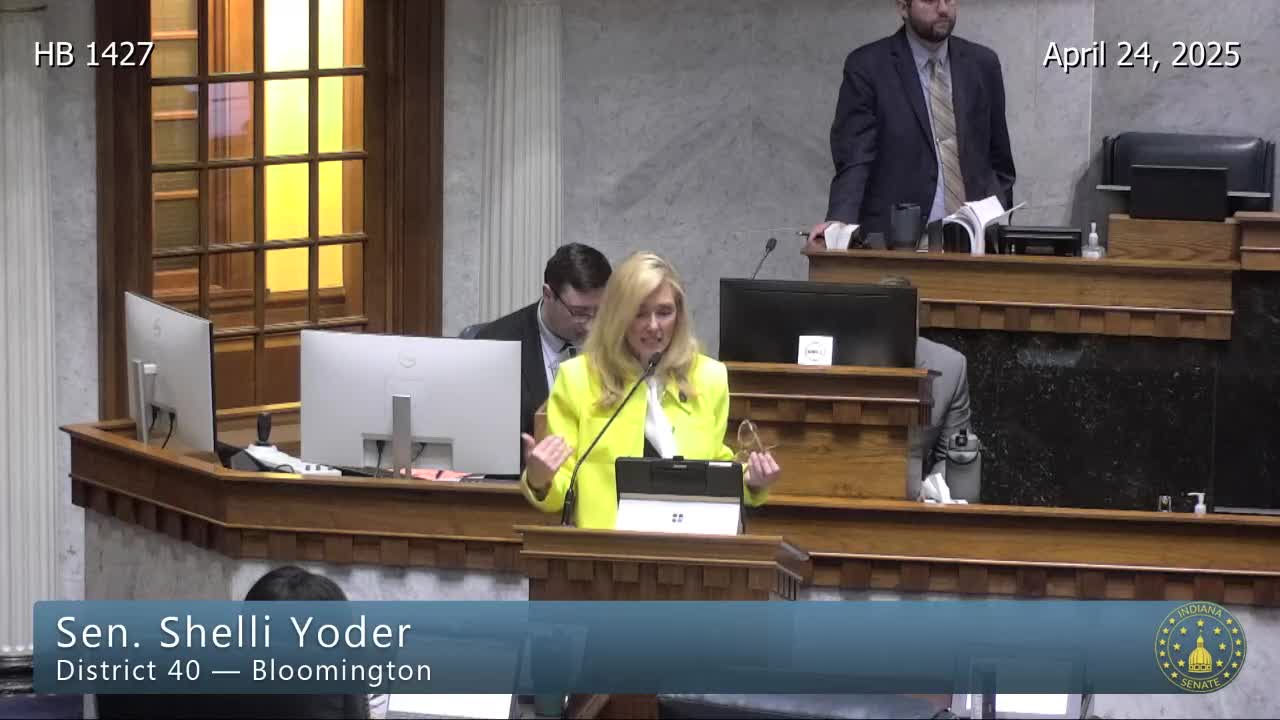
Senate Democrats and several Republicans said the budget prioritizes tax relief and other measures for higher-income Hoosiers and businesses while expecting working families to shoulder more of the burden. “This budget sacrifices special education funding” and shrinks childcare eligibility, said Senator Yoder, who announced a no vote. Senator Taylor, another opponent, criticized new or increased taxes on cigarettes and other items aimed at funding Medicaid, calling the approach regressive: “We’re gonna tax the poorest, most impoverished, most critical infrastructure that we have… We’re gonna take $2 a pack of cigarettes… and then we’re gonna use it to pay for the Medicaid hole,” he said.
Supporters argued the Legislature faced limited choices after a downward revenue forecast and said the bill protects core services. Senator Micheller emphasized that much of the new spending is for entitlement-type programs: “There’s $2,100,000,000 increase in Medicaid… [and] $960,000,000 total in the school funding formula of new money,” he said. Several supporters pointed to pension funding and cuts elsewhere as responsible fiscal choices.
Lawmakers also debated an array of late-added policy provisions tied into the budget, including changes to hospital Medicaid billing that could reduce reimbursement to in-state nonprofit hospitals, a step several senators said was inserted at the last minute without adequate public review. Senator Yoder urged colleagues to consider the provision’s effect on access to care for Medicaid patients, saying it could reduce office-based services and shift costs to employers.
Other contested items included a $2 per-pack increase in the cigarette tax (and increased taxes on vapes and some cigars) designated for Medicaid, changes that adjust eligibility thresholds for On My Way pre-K and child-care programs, and an expansion of vouchers that opponents said would redirect public dollars to wealthier families. Supporters argued this package preserves essential services in a difficult revenue environment and reduces the state’s pension liabilities.
The Senate closed the roll and recorded the passage of the budget conference committee report by a vote of 39 ayes and 11 noes. The Secretary was instructed to inform the House of the passage.
The bill’s immediate next steps include transmittal to the House for final message handling and any necessary implementing steps required by statute.