Get Full Government Meeting Transcripts, Videos, & Alerts Forever!
Get email alerts on the Property Tax Exemptions topic
No spam. Unsubscribe anytime.
Committee advances bill allowing local property tax exemptions after contentious amendment votes
Summary
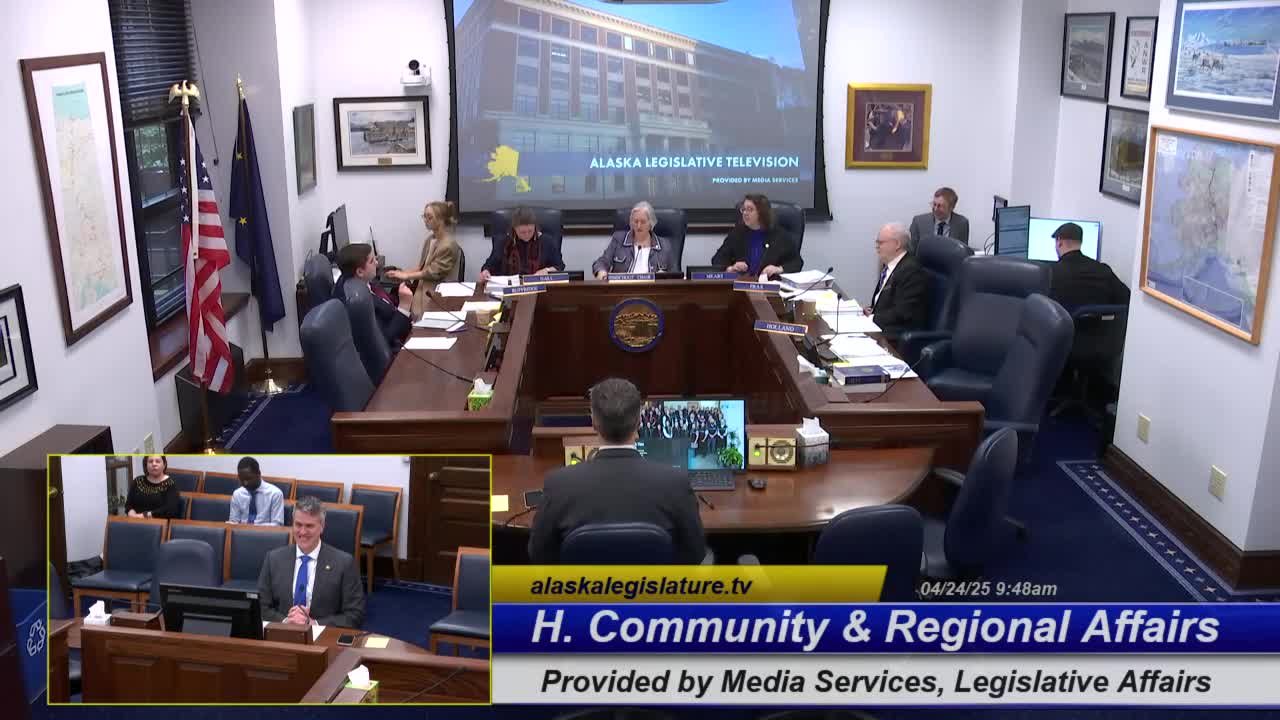
House Bill 13, a proposal to authorize municipalities to adopt or expand property‑tax exemptions, advanced from the House Community and Regional Affairs Committee on April 24 after a 4–2 committee vote.
House Bill 13, a proposal to authorize municipalities to adopt or expand property‑tax exemptions, advanced from the House Community and Regional Affairs Committee on April 24 after a 4–2 committee vote.
The bill, sponsored in committee by Representative Gray, would give local governments statutory authority to adopt a set of optional property tax exemptions described in draft sections AA through EE. Committee members debated whether some or all of those exemptions should require direct voter approval or fiscal-impact studies before adoption, and whether limits are needed to protect homeowners whose assessed values have risen rapidly.
Amendment votes and debate: Representative Reffridge offered several amendments intended to add fiscal safeguards or voter-approval requirements. The committee considered four numbered amendments; all failed on roll calls.
- Amendment 1 (change the definition of "long term rental" to 1 year): defeated, 2 yeas, 4 nays. Recorded roll call: Representative Prox — Yes; Representative Reffridge — Yes; Representatives Hall, Holland, Mears, and Himshoo — No.
- Amendment 2 (require municipalities to conduct a fiscal-impact study before adopting exemptions): defeated, 2 yeas, 4 nays. Recorded roll call: Representative Prox — Yes; Representative Reffridge — Yes; Representatives Hall, Holland, Mears and Himshoo — No.
- Amendment 3 (allow municipalities to cap year‑to‑year assessment increases by ordinance at 5%, with exceptions for new information or property improvements): defeated, 2 yeas, 4 nays. Recorded roll call: Representative Prox — Yes; Representative Reffridge — Yes; Representatives Hall, Holland, Mears and Himshoo — No.
- Amendment 4 (require voter approval before municipalities adopt these exemptions): defeated, 2 yeas, 4 nays. Recorded roll call: Representative Prox — Yes; Representative Reffridge — Yes; Representatives Hall, Holland, Mears and Himshoo — No.
Sponsor and majority position: Representative Gray opposed the amendments and said the bill preserves local control and flexibility. She told the committee that communities differ considerably in size and need — what a long‑term rental means in one borough may differ from another — and that municipal assemblies should retain discretion.
Final committee action: Co‑chair Mears moved to report HB13 from committee with individual recommendations and attached fiscal note. The motion carried on a roll call vote of 4 yeas, 2 nays. Recorded roll-call on final motion: Representatives Hall, Holland, Mears and co‑chair Hemshoo — Yes; Representatives Prox and Reffridge — No. The committee record shows the bill advanced as Work Draft 34‑LS‑0194 with an attached fiscal note.
Context and concerns: Opponents of removing voter-approval requirements argued repeated, discretionary exemptions shift tax burdens and can harm "vulnerable homeowners" — households near the edges of affordability — while proponents said elected municipal officials have fiduciary duties and localities need tools to respond to unique local circumstances. Committee members also raised technical concerns about assessment timing and how a cap on year‑to‑year assessment changes might interact with assessment cycles and mill‑rate adjustments.
Ending: HB13 will proceed from committee; members who requested additional analysis said they expect follow-up conversations about implementation and local fiscal impacts.