Get Full Government Meeting Transcripts, Videos, & Alerts Forever!
Get email alerts on the Bfd Grants And Wellness topic
No spam. Unsubscribe anytime.
Boston Fire Department tells council state and federal grant cuts have reduced training and wellness resources
Summary
At an April 25 hearing, Boston Fire Department officials told the City Council that reduced state earmarks and uncertainty over federal awards have shrunk funding for the training academy, HAZMAT response and wellness programming; two grants still require council approval.
At a Boston City Council Committee on Public Safety and Criminal Justice hearing on April 25, 2025, Boston Fire Department officials told councilors that reductions in state earmarks and uncertainty over federal grant awards have reduced funding for the department’s training academy, HAZMAT response and health-and-wellness programs and that two grants remain pending council approval.
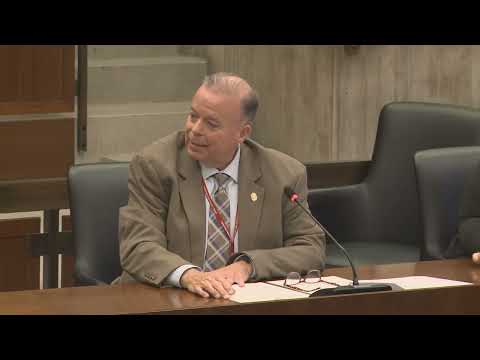
The council hearing, led by Councilor Henry Santana, chair of the committee, was convened to give the council an overview of “all City of Boston grants administered by the fire department,” including competitive federal awards and state-allocated funds. “The purpose of today’s hearing … is to allow the city council to be well informed when BFD grants come, before this body, for review and approval,” Santana said.
Julie Devon, Boston Fire Department financial grants manager, told the committee the department currently administers 13 active awards — “8 are federal and 5 are state funded and they total more than $3,000,000.” Devon said the department is administering two Assistant to Firefighter (AFG) programs, two Fire Prevention and Safety grants, a port security grant (about $86,000 in federal funds for shipboard training) and a $260,000 award from the U.S. Consumer Product Safety Commission for carbon monoxide detectors and outreach to vulnerable populations.
Devon said the three-year SAFER (Staffing for Adequate Fire and Emergency Response) grant period ended Feb. 24, 2025. “We’ve submitted and received payment request amounts totaling over $10,000,000 of the $24,000,000 awarded to the department to fund the hiring of 85 firefighters,” she said.
The department reported sharp reductions in recurring state earmarks that historically supported the Training Academy and the HAZMAT team. Devon said the annual training academy allotment has varied historically (she referenced an allocation as far back as 02/2008 of $1,750,000 and a fiscal year 2019 allocation of $2,250,000). She told the committee that the academy’s allocation was reduced to $1,125,000 in fiscal 2024 and to $500,000 in fiscal 2025 — a 56 percent decrease from fiscal 2024 and a 78 percent decrease from fiscal 2023 levels as described by department staff. The HAZMAT earmark was reported as $593,750 in fiscal 2025, down from $1,600,000 in fiscal 2024.
Department leaders told the council those reductions have practical consequences for training and operations. Kevin Coyne, deputy commissioner for administration and finance, said grants “provide essential funding for equipment, training, and staffing,” and that cuts “reduce our efficiency.” Chief Patrick Ellis and Deputy Chief Rodney Marshall emphasized training and readiness: fewer training dollars, they said, reduce the department’s ability to maintain the same level of field readiness for complex responses, including HAZMAT incidents and shipboard fires.
Health and wellness programs were a major focus. Deputy Chief Joseph Shea, head of the Safety, Health and Wellness Division, outlined the department’s Health and Ladders program and screening efforts. Shea summarized morbidity and screening data discussed in the hearing: “Firefighters, on average, die 10 years younger than the civilian population,” and “female firefighters have a 39 percent increased risk of dying from breast cancer,” he said. Shea said the department has screened members through a partnership with United Diagnostics (calcium scoring, low-dose chest scans); he said a recent skin-cancer clinic screened 400 members and 76 required follow-up.
Devon said the department applied in December 2024 to DHS/FEMA (an AFG solicitation) requesting $1,400,000 to continue Health and Ladders staffing (nutritionist, clinical director, injury-prevention specialist), provide a crisis-intervention callback capacity, and fund a staff clinician one day per week; she said the department had not received notice of an award as of the hearing.
Councilors pressed department leaders on mental-health supports and peer programming. Department staff said they are building a peer-support program and running trainings (a May course was full and another was planned for June). Shea and other leaders told the council they seek clinicians familiar with fire department culture; the department said many wellness and peer-support efforts are funded by grants and that the loss of grant funding could end specific initiatives.
PFAS in bunker gear and equipment replacement also drew questions. Deputy Chief Scott Malone and others discussed a Massachusetts prohibition effective Jan. 1, 2027, on selling PPE with intentionally added PFAS. Department staff said the moisture barrier and some outer-layer treatments historically used PFAS; PFAS-free alternatives are becoming available but may reduce durability and increase replacement frequency and cost. The department said bunker gear is cleaned with extractors (machines funded by foundations) and professionally laundered and inspected twice a year.
Fire prevention programming was described as targeted to seniors, families receiving financial assistance and residents for whom English is a second language. The department said federal and state fire prevention grants support smoke- and carbon-monoxide alarm installation and multilingual education; the CO detector program funded by the U.S. Consumer Product Safety Commission was cited as focused on vulnerable populations.
Panelists described port and marine readiness funded through a port security grant and city capital investments. Devon said federal port-security funds — and smaller port training awards — support shipboard training. Kevin Coyne and other officials detailed recent and upcoming marine acquisitions and said the city has invested roughly $10 million for three new marine units, a new dive boat already in service at UMass Boston and additional larger boats expected in the coming year. Department leaders said they have requested a marine-unit engineer in the budget to maintain the more sophisticated vessels.
Two grants were specifically listed as not yet approved through the city’s accept-and-expend process: an FY25 firefighter safety equipment grant that is in the KK02 system and ends June 30, and an FY19 fire prevention and safety grant for $58,000 that was awarded in 2020 but requires retroactive approval because it predates the current KK01/KK02 process. Councilors were told staff expect to bring those accept-and-expend requests for suspension and passage at a forthcoming council meeting so councilors can vote with the benefit of this briefing.
The hearing included multiple councilors’ expressions of support for continuing wellness and training investments. Councilor Ed Flynn, a lead sponsor of the hearing order, said he intended to support the grants and emphasized the importance of health and wellness programs. Council President Nguyen and others thanked department staff for the presentation and said they expected to review the pending accept-and-expend items when they are placed on a council agenda.
No formal votes were taken during the hearing; staff said there were no members of the public signed up for testimony.
The City Council committee will consider the department’s pending accept-and-expend requests at a subsequent council meeting and the department continues to monitor federal and state grant notifications and to coordinate with the city’s finance offices about potential budget impacts.