Get Full Government Meeting Transcripts, Videos, & Alerts Forever!
Get email alerts on the Transportation topic
No spam. Unsubscribe anytime.
Sedro-Woolley commenters urge stronger transit, electrification and housing policies in comp plan update
Summary
Residents and presenters at a Sedro-Woolley public meeting recommended that the city strengthen targets and actions in its draft comprehensive plan to reduce vehicle miles traveled, accelerate vehicle electrification, add bus shelters and support workforce housing to keep jobs local.
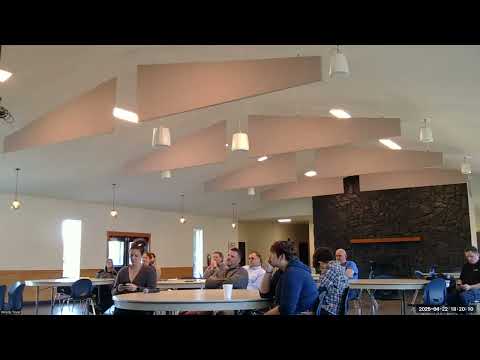
At a public meeting in Sedro-Woolley, residents and presenters pressed city planners to strengthen the draft comprehensive plan’s transportation and land-use policies, urging clearer targets for cutting vehicle miles traveled, faster electrification of cars and buses, more bus shelters and incentives for workforce housing to reduce long commutes.
Speakers said the draft plan’s goals need sharper, locally focused actions. “If commerce wants this, commerce wants that,” Speaker 3 said, arguing the plan should explicitly promote job creation inside Sedro-Woolley to reduce commuting. A presentation cited a numeric target — “60% by 2048” — as a benchmark for emissions or mode-shift goals, though presenters said targets are meant as guides rather than firm mandates (Speaker 1).
The commenters tied transit service and housing shortages to vehicle miles traveled. Gary, who identified himself as a representative of RJ, said workforce housing and city incentives are needed to let employers expand locally. “We need alignment with the city and incentives that allow us to build workforce housing such as in the 60 to 80% AMI range,” Gary said, adding that one large local employer “is trying to double their headcount in the next five years” and cites housing supply as the primary constraint.
Residents highlighted gaps in transit access and reliability. One commenter described lengthy, multi-transfer trips for medical appointments and school runs and said recent service changes appear to rely on census counts that underrepresent some outskirts neighborhoods. That commenter said the result can be trips that take hours rather than minutes and discourage use of transit.
Several speakers proposed immediate, practical steps. One suggested the city require a bus shelter at every stop to protect seniors from the elements and improve ridership. Presenter remarks emphasized that converting passenger trips to electric vehicles is only part of reducing emissions: “Transit is efficient and an opportunity to convert transit to lower emissions,” Speaker 1 said, adding that a full bus can avoid many single-occupant car trips and deliver a bigger emissions reduction per dollar spent.
Commenters also raised revenue and equity concerns tied to electrification. A resident asked how the state will replace declining fuel-tax revenue as more vehicles electrify and whether shifting tax burdens could raise property taxes and worsen affordability. Presenters and commenters acknowledged those funding questions remain largely decisions for state policymakers rather than the city.
Speakers urged the city to address outreach and equity. One commenter said about 43% of survey responses came from people outside city limits and that a notable share of respondents omitted some answers; another urged that public information materials be provided in multiple languages (English, French, Korean and Russian were mentioned) and distributed through community groups.
City staff and presenters did not take formal votes at the meeting. Instead, the session collected public comment and technical input that speakers said should be translated into clearer implementation steps in the comp plan update: specific job-creation strategies tied to land-use decisions, targeted transit improvements (including shelters and route adjustments to serve undercounted neighborhoods), and mechanisms for supporting affordable workforce housing to shorten commutes.
Looking ahead, speakers asked the city to return with more detailed options on funding and implementation, including how local policies would interact with state-level revenue changes and how the city will measure progress on mode-shift and electrification targets.