
Virginia Beach schools report expanded short-term counseling, after-hours alerts and Care Solace use
Get AI-powered insights, summaries, and transcripts
Sign Up Free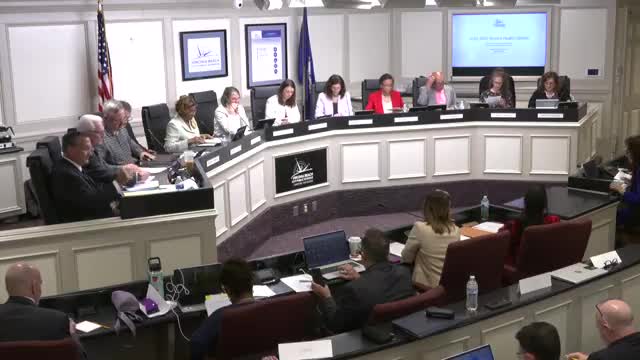
Summary
School staff updated the school board on expanded partnerships with CHKD and City child-and-youth behavioral health, after-hours Securly alerts and Care Solace usage; officials said brief counseling, bridge services and rapid response referrals have increased and staff will add social-service coordination next year.
Robert Jamieson, executive director of the Office of Student Support Services, told the Virginia Beach City School Board on May 20 that the division has expanded in-school mental health supports and after-hours response systems.
Jamieson said the division has processed 22 rapid-response referrals this school year, expanded brief counseling (41 referrals since launch at Renaissance Academy), and received 95 bridge referrals for students at risk of psychiatric hospitalization or recently discharged. He said Securly internet filters generate after-hours alerts that are routed to security, emergency management and, when appropriate, CHKD clinicians; CHPD responded to 54 such cases this year compared with 41 after-hours alerts all of last year. "I cannot stress enough the importance and impact of these proactive and responsive mental health supports," Jamieson said.
The update described three partnership tracks: brief solution-focused counseling through city child-and-youth behavioral health (six to 12 sessions during the school day); a CHKD "bridge" program for high-risk secondary students now extended to some elementary students; and Care Solace, launched in May 2023, which helps families find and schedule community mental-health providers. Jamieson said the top presenting concerns on Care Solace remain anxiety and depression and that the platform coordinated roughly 372 appointments, with the top 10 providers fulfilling about 65% of those appointments. He noted that Medicaid was the most-listed insurance among families using Care Solace this year.
Board members asked about access and consent. Jamieson said the division requires active parental consent for programs described on the slides and that referrals typically come from assistant principals, principals, school counselors, social workers, psychologists or nurses via a Google Form that routes to the Office of Student Support Services. He described a December case in which school staff, Care Solace and CHKD worked with a family so clinicians could meet a student at school when the parent could not miss work, and he said CHKD scheduled follow-up appointments during winter break.
Jamieson also outlined prevention and awareness work: task-force outreach at school events, a webinar series planned with the Office of Family and Community Engagement, and division participation in a community "Celebrating Children" event co-sponsored with Grow Smart and the city. He said Care Solace will expand next school year to include coordination of social services such as food, transportation and financial-assistance referrals at no extra cost.
Board members praised the effort and pressed for details about insurance gaps and after-hours processes. Dr. Green asked whether CHKD or other providers can fill care gaps when families lose Medicaid; Jamieson said Care Solace will work with families who have no insurance and the city child-and-youth behavioral health program operates on a sliding scale, sometimes as little as one dollar per session.
The presentation concluded with Jamieson saying the task force will continue to expand brief counseling, report outcomes to stakeholders and coordinate community events. "This concludes the presentation, and I'm ready to answer any questions you may have at this time," he said.