Get Full Government Meeting Transcripts, Videos, & Alerts Forever!
Get email alerts on the Licensing Protest 51pct topic
No spam. Unsubscribe anytime.
Liquor board finds 51% protest met, denies authority to grant Falls Road license
Summary
The Board of Liquor License Commissioners for Baltimore City denied a motion to dismiss and found protestants met the statutory 51% threshold under Alcoholic Beverages and Cannabis Article §12-15-08, which deprived the board of authority to grant the proposed Class B license for 4001 Falls Road (Tucker's Golf LLC).
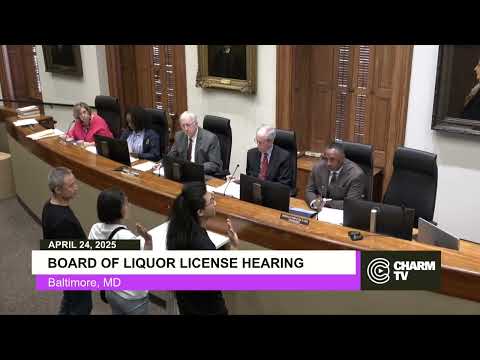
The Board of Liquor License Commissioners for Baltimore City on April 24 denied a motion to dismiss a challenge to the statutory “more than 50%” protest provision and found that protestants within 200 feet had met the threshold, preventing the board from granting a new Class B license for 4001 Falls Road (Tucker’s Golf LLC).
The decision followed oral argument on a facial constitutional challenge to Alcoholic Beverages and Cannabis Article §12-15-08 (the so-called 51% rule). The board’s chair said he would deny the applicant’s motion to dismiss and that, after counting submitted affidavits, opponents had satisfied the statutory protest threshold. The chair concluded that the existence of a valid protest under §12-15-08 “deprives the board of the authority to grant the license under those circumstances,” and the board concluded the case without granting the license.
Why it matters: The board’s finding relies on the city/state protest provision that allows owners or residents within a defined radius to block a license if more than half of the affected property-owners (or votes as defined by statute) oppose the application. The ruling ends the board’s authority to act on this application and leaves further relief to the parties and any possible court review.
What happened at the hearing: Applicant counsel filed a motion to dismiss, arguing the statutory 51% rule is constitutionally defective because it delegates decision-making authority to private citizens and, in counsel’s view, improperly substitutes a private veto for a governmental licensing determination. Counsel cited out-of-state precedents and doctrinal arguments about improper delegation and due process.
Opposing counsel (Community Law Center on behalf of the Hampden Community Council) argued the board lacks authority to adjudicate a facial challenge to the state statute and that, under Maryland law cited at the hearing, a liquor license is a privilege rather than a constitutional property right. Counsel also pointed the board to state statutory language in the Alcoholic Beverages and Cannabis Article that, according to the board’s counsel, supports treating licensing as a legislative privilege.
The board received mapping and affidavit materials from the Planning Department and the liquor-board staff. Nicholas Oguera, a GIS analyst with the Planning Department, testified about the 200-foot universe of properties; Deputy Executive Secretary Michelle Wertzberger explained the board’s affidavit procedures and confirmed receipt of 38 protest affidavits in the packet (34 owner affidavits and 4 tenant affidavits, with one affidavit excluded as not legally sufficient). The board debated whether joint owners and multiple properties owned by one person count as separate votes, but the chair declined to make a new statutory interpretation on that narrow point because the protest total as counted met the threshold in either reasonable calculation.
After hearing argument and testimony, the board denied the applicant’s motion to dismiss and then determined the protest threshold for §12-15-08 was met. The chair stated the statutory protest “deprives the board of the authority to grant the license,” and the commissioners agreed, concluding the case.
What the board did not decide: The board did not rule on the facial constitutionality of §12-15-08 (the parties were told they may pursue that issue in court). The board’s action was a threshold procedural determination (that a valid protest exists), not a final judicial decision on the statute’s constitutionality.
Next steps: The chair noted the motion and opposing brief would be part of the hearing record. Parties may seek relief in circuit court on the constitutional arguments or other legal claims.
Ending note: Commissioners recessed the hearing and reminded participants that the board’s next hearing on May 8 will be in the new hearing room at 200 Saint Paul Place, Suite 2300.