Get Full Government Meeting Transcripts, Videos, & Alerts Forever!
Get email alerts on the Resilience Hazard Mitigation topic
No spam. Unsubscribe anytime.
City staff outline countywide update to Santa Cruz County multi‑jurisdictional Hazard Mitigation Plan
Summary
Capitola staff presented an update on the county‑led multi‑jurisdictional hazard mitigation plan (MJHMP) funded by a $250,000 FEMA grant; plan will profile local hazards, tie into FEMA mitigation grant eligibility and seeks public input via an English/Spanish survey due to be submitted to FEMA in October 2025.
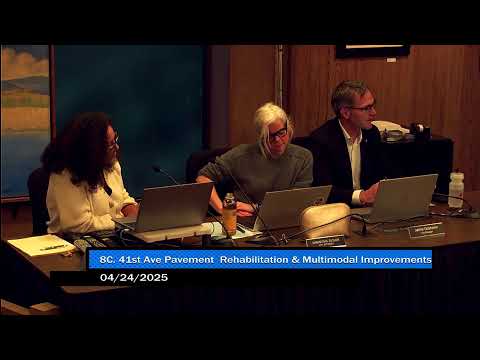
City staff and a county representative briefed the Capitola City Council on April 24 about the city’s participation in a countywide update to the Santa Cruz County Multi‑Jurisdictional Hazard Mitigation Plan (MJHMP), a project led by the County Office of Response, Recovery and Resilience (OR3) with FEMA grant funding.
The county applied for and received a $250,000 FEMA grant to develop a consolidated plan across 11 jurisdictions; the city’s local annex will document Capitola‑specific hazards, critical facilities and priorities. Staff said Capitola’s previous plan was adopted in 2013 and updated in 2020 and that hazard mitigation plans must be refreshed every five years to remain eligible for FEMA mitigation grants.
The consultant retained for the update, Dynamic Planning and Science, is working with OR3 and city staff; the target for FEMA submission and approval is October 2025. City staff stressed that a fully adopted, FEMA‑approved annex keeps Capitola eligible for Hazard Mitigation Grant Program funding for projects such as drainage upgrades, vegetation management, seismic retrofits and other resiliency investments.
Public outreach and inputs: OR3 and the consultant have launched a public survey (available in English and Spanish) and plan in‑person outreach events across the county this summer. Staff encouraged the council to post the project link on the city website to increase local participation. Claire Peabody of OR3, present in the meeting, thanked Capitola staff and noted the public survey and materials available on the County project site.
Why it matters: the plan profiles hazards (coastal erosion, flooding, wildfire and severe storms) and evaluates mitigation options for public infrastructure and private properties. Staff noted the effort also aims to better integrate hazard priorities with Capitola’s general plan, climate action planning and capital improvement planning.
Council members supported the regional approach and noted that hazards do not respect jurisdictional boundaries. Several councilmembers asked that Capitola‑specific outreach and a local meeting be included so residents can participate directly.