Get Full Government Meeting Transcripts, Videos, & Alerts Forever!
Get email alerts on the Procurement topic
No spam. Unsubscribe anytime.
Procurement working group seeks faster reviews, higher sole‑source threshold and four more buyers
Summary
The Budget & Finance procurement working group summarized interviews with seven departments and recommended streamlining contract review, better tracking, staff additions and raising the sole‑source approval threshold to reduce long procurement timelines.
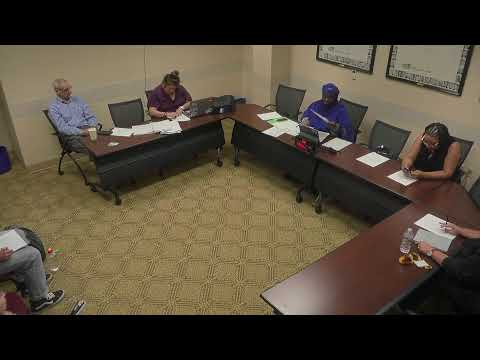
Working Group Chair (chair of the Budget & Finance procurement working group) told members at a regularly scheduled working‑group meeting that the group had met with seven city departments and compiled recommendations to shorten procurement timelines and improve transparency.
The group recommended streamlining contract approvals, clearer thresholds for what requires council sign‑off, better vendor and department training, a centralized contracts management approach and additional procurement staff. The working group also proposed raising the current $250,000 sole‑source approval threshold, and asked staff for data comparing alternatives (a roughly inflation‑adjusted $340,000 threshold, a $500,000 option, or elimination of the threshold).
The recommendations respond to repeated concerns from departments about speed and visibility. “Not everybody was at every meeting. So I hope you guys had the opportunity to watch those,” the Working Group Chair said as the meeting began, noting the subgroup had met with ITS, Metro Action Commission, General Services, Metro Parks, Library, Metro Animal Care and other departments to build the report.
Why it matters: procurement affects the city’s ability to deliver services and manage contractors across a roughly $2,000,000,000 annual goods-and-services spend referenced by staff. Working‑group members repeatedly cited long timelines and uneven visibility as principal problems: procurement staff reported the average sourcing cycle for a competitive RFP currently takes about 397 days, and buyers are carrying substantially more active projects than industry benchmarks.
Procurement staff described new tools to address the visibility gap. Zach, procurement staff, told the group: “Departments sign a confidentiality agreement and then they submit their requisitions and they can track them through the life of there.” He said the division also runs an automated weekly email that notifies the department contact where the project sits in the pipeline.
Staffing and workload: procurement staff reported seven full‑time buyers, each carrying about 20–21 active projects. A Harvard Kennedy School benchmarking review cited by staff showed a sustainable workload is about 12–13 active projects per buyer. Based on that benchmark, procurement requested four additional staff in its FY26 budget submission to reduce workload and provide redundancy for intermittent leaves.
Sole source and thresholds: the working group discussed raising the formal sole‑source approval threshold, currently set at $250,000. Staff offered three options: raise to an inflation‑adjusted level (about $340,000), raise to $500,000, or eliminate the council approval requirement entirely. Members asked procurement for retrospective data on how many sole‑source approvals would be affected by each option before deciding which to endorse.
Other code and policy issues: procurement staff and council members noted that cooperative agreements and certain contract types are required by state law to come before council, and therefore cannot be removed from council review. The group also discussed specialized cases: sanitation contracts have historically come to council under a 1995 local decision, some HR‑related contracts (the injured‑on‑duty clinic contract) are competitively bid but still require council approval by ordinance, and contracts longer than 60 months have special authorization rules.
Accountability tools: the working group praised two items already implemented during the review process — a monitoring/tracking system allowing requisitioners to follow projects and a clearer sole‑source justification and approval letter that consolidates procurement analysis. “I love the fiscal analysis now because I can go straight to the sole source justification letter and the approval letter,” the Working Group Chair said, adding the documents give council more confidence when signing off on these items.
Sports Authority policy: the group reviewed a procurement policy drafted for the Sports Authority. Procurement staff said the policy mirrors the Metro procurement code and that the Sports Authority’s finance committee voted the proposed policy down; it is not currently a Sports Authority policy. Staff indicated that if the Sports Authority sends projects through Metro purchasing, they will follow Metro code and regulations. The working group agreed to meet with the Sports Authority representative in a small follow‑up session to resolve open questions.
Next steps: the working group asked procurement and legal staff to provide data on how many contracts would shift under each proposed sole‑source threshold, to continue discussions with legal on whether some contract approvals could be converted from ordinance to a faster resolution process, and to present a short follow‑up meeting to finalize recommendations for council consideration.
No formal votes were recorded in the meeting minutes; the group discussed consensus positions, and planned to gather further data and meet again before forwarding formal legislation or recommendations to the full council.