Get Full Government Meeting Transcripts, Videos, & Alerts Forever!
Get email alerts on the State Legislation topic
No spam. Unsubscribe anytime.
Commission hears legislative update on ADUs, Live Local and other state bills with potential local impact
Summary
City staff outlined multiple Florida bills — including ADU rules, changes to the Live Local affordable housing framework, and emergency-related restrictions — and described how the measures could constrain local zoning, moratoria and development review if adopted as drafted.
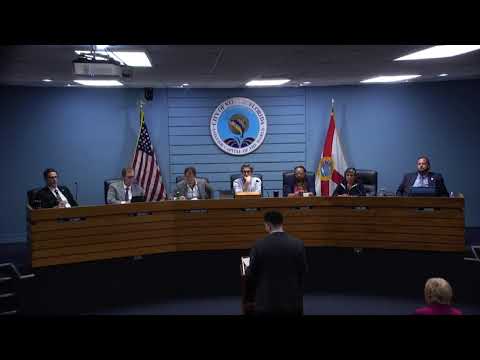
Ben Hogarth, community services staff for the City of Stuart, briefed the commission late in the meeting on a set of state legislative proposals that city staff said could materially affect local planning, permitting and revenue tools.
Hogarth framed the presentation as a review of bills that had already moved through some committee stages and that could change again before the Legislature adjourns. “Everything that we're gonna talk about today has been moving through committees, is on the house or senate floor or has already passed one of the chambers,” he told the commission, and he cautioned that the last weeks of session typically focus on budget conference and bill trade-offs.
Why it matters: The packages of bills would change what local governments can require or review, potentially limiting local review of certain multifamily or “infill” projects, changing accessory-dwelling-unit (ADU) requirements, and constraining local moratoria and redevelopment rules. Staff cautioned that some language had been added late in the process and that similar language has reappeared across multiple bills.
Key takeaways from the staff briefing
- ADUs: Hogarth said the ADU bill under consideration would require local governments to allow accessory dwelling units where single-family residential is permitted and would prevent some local restrictions on leasing terms. Staff noted the measure included reporting obligations so the state can track ADU permit activity.
- Live Local / Affordable housing changes: A set of bills (discussed as amendments to the Live Local framework) would push for administrative approvals in some affordable housing cases, reduce parking requirements for qualifying developments, limit moratoriums (maximum 90 days and with a required needs assessment for local governments before imposing a moratorium) and add reporting obligations. Hogarth described multiple amendments and said the bills had been heavily revised.
- Infill/administrative approvals: Hogarth warned that earlier versions of certain bills would have removed quasi‑judicial or public hearing review for many infill or multifamily developments, moving approval authority to administrative staff; he said the most troubling language of one bill was removed in the most recent amendment, but staff is watching similar language appear in other proposals.
- Emergency/retroactivity language: One late amendment in a bill concerning post-disaster planning would, as drafted at one point, have restricted local governments in counties covered by certain federal disaster declarations from adopting comprehensive-plan or land-development regulation changes for multiple years; Hogarth said Martin County appeared in federal declarations related to recent storms and the draft retroactive clause was concerning because it could backdate restrictions.
- Fiscal and program items: Staff said the city’s state funding request was in a favorable position in both house and senate budgets (a project referenced as Guy Davis, with an ask in the $250,000–$500,000 range depending on the chamber’s allocation), and noted other bills (CRA terminations, local business tax caps, changes to impact-fee processes) that could affect local revenues if adopted.
What commissioners and staff noted
Commissioners asked clarifying questions about ADU setbacks, parking and whether local limits on height or density would remain; staff said some definitions remain in flux but cautioned that state language, if adopted, would limit local discretion in certain areas. "If they pass it the way it reads, that we wouldn't be able to prohibit ADUs," Hogarth said, describing the bill’s effect in plain terms.
Hogarth said the most concerning provisions included administrative approval of projects that historically received public hearing review and a retroactive restriction tied to declared storm emergencies. He urged commissioners to take a position where they wanted to, and commissioners later authorized staff to draft and transmit short resolutions opposing specific bills (see separate item on commission actions).
Ending: staff recommended continued monitoring and targeted outreach
Hogarth recommended the commission and staff continue to monitor bill language closely, coordinate with the Florida League of Cities and other regional partners, and transmit formal positions to the city’s legislative delegation and committee chairs when a unified city view is desired. The commission asked staff to prepare short, targeted resolutions opposing specific provisions and to transmit them quickly while the legislative process was active.