Get Full Government Meeting Transcripts, Videos, & Alerts Forever!
Get email alerts on the Intermodal Facility topic
No spam. Unsubscribe anytime.
Residents urge delay, commissioners vote to deny intermodal plat despite automatic approval rule
Summary
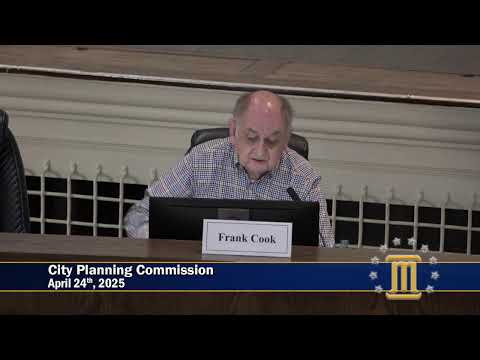
Montgomery Planning Commission voted 5-1-1 to deny final approval for the Montgomery Intermodal Container Transfer Facility plat, after residents voiced safety and quality-of-life concerns over 18-wheelers using Burnsdale/Burnside Drive. Staff said the plat could become effective automatically in 30 days if it meets subdivision and zoning rules.
The Montgomery Planning Commission voted to deny final approval of the Montgomery Intermodal Container Transfer Facility plat after extended public comment raising traffic and neighborhood-safety concerns.
The motion to deny carried with a reported tally of five votes in favor of denial, one vote against and one abstention. Planning staff told the commission that, if the plat meets zoning and subdivision regulations, it may take effect automatically 30 days after submission despite the commission's vote.
Residents from the South Lawn neighborhood told the commission they oppose primary access to the proposed intermodal site on or near Burnsdale (also referenced as Burnside) Drive because they said 18-wheelers would have to pass close to apartment buildings, a Dollar General and a CVS. Geraldine Cheeseboro, president of the South Lawn Community Organization, said the apartments near the site house many elderly residents and that heavy-truck traffic would be disruptive and unsafe. Cheeseboro requested a delay and repeated requests for the Port Authority to meet with the neighborhood.
Planning staff and commission members described ongoing planning and state-level jurisdiction questions about which road would serve as the facility entrance. A staff member identified in the meeting as Robert Smith explained that if the plat complies with the city's zoning ordinance and subdivision regulations, the plan would be approved automatically in 30 days even if the commission votes against it.
Commission discussion centered on traffic safety and quality-of-life tradeoffs against the economic scale of the Port Authority project. One planning participant described the project as "nearly a hundred million dollar project," and supporters noted its job-creation potential for the wider area; neighbors said the project's chosen access points would put heavy trucks close to homes, a school and other neighborhood facilities.
After the vote, several commissioners and residents reiterated a desire to pursue further meetings between neighborhood representatives and the Port Authority to seek alternative access points. Commissioners also recorded that a denial at the commission does not necessarily stop the plat because of the 30-day automatic approval provision when plans comply with applicable regulations.
The commission moved to the next agenda item after voting; staff advised that affected parties remain able to engage with the Port Authority and the city while the regulatory timeline runs.
Notes: The planning commission's motion carried by the counts reported at the meeting; individual commissioner votes were recorded as a tally (5–1–1) in the transcript but the transcript did not link each vote to a specific commissioner name. Planning staff explained the 30-day automatic approval based on compliance with zoning and subdivision rules.