Get Full Government Meeting Transcripts, Videos, & Alerts Forever!
Get email alerts on the Lgbtq Protections Ocr topic
No spam. Unsubscribe anytime.
Hundreds of residents urge Delaware Valley board to keep OCR protections as some press for rollbacks
Summary
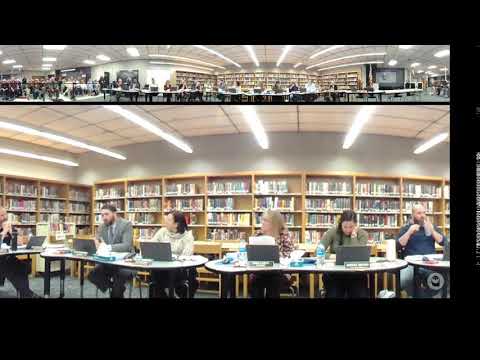
Public comment at a Delaware Valley School District meeting on Oct. 12 centered on whether the board should keep its Office for Civil Rights (OCR) agreement and current policies that explicitly protect LGBTQ+ students.
Public comment at a Delaware Valley School District meeting on Oct. 12 centered on whether the board should keep its Office for Civil Rights (OCR) agreement and current policies that explicitly protect LGBTQ+ students.
Multiple residents and students urged the board to retain the OCR protections and related nondiscrimination policies as essential safety and mental-health safeguards for transgender and gender‑nonconforming students. Taylor James, a Milford Borough resident and executive director of Traverse City Pride Center, told the board that "without the protections outlined in DB's OCR agreement, achieving our mission to support every student becomes much harder and less unified." James said students he spoke with felt accepted under existing policies and asked the board to keep the protections in place and to form an advisory committee that includes students and community groups.
The meeting drew repeated references to legal and financial risks. Joe Kimberly, a Milford Township resident, warned that withdrawing from the OCR could prompt more students to enroll in cyber schools and cause a fiscal shortfall for the district, telling the board that cyber schools charge the district more than brick‑and‑mortar enrollment. The board’s solicitor cautioned that developments in federal litigation — including a U.S. Department of Justice lawsuit filed that day against Maine — could change the legal landscape and said counsel will continue to monitor and advise the district.
Speakers described personal and medical harms they said would follow policy rollbacks. Robin Oakes, a longtime resident, said her daughter moved to Canada to secure safety for her transgender grandchild. Several speakers cited mental‑health research and advocacy groups — including statistics referenced from the Trevor Project and other studies — to argue that removing protections correlates with higher risks of suicide attempts among transgender and nonbinary youth.
Students and youth speakers stressed the practical role of the protections. Bella Cuomo, a senior at Delaware Valley High School, said a children’s book used in the district, The Terrible Things, illustrated how inaction against targeting of minority groups eventually harms everyone: "To persecute children who express themselves as a different [gender] is to risk the lives of those children," she said.
Other public commenters raised concerns about privacy and girls’ athletics. Doris Smith, a Westfall resident, and others urged the board to prioritize what they described as protecting girls’ locker rooms and sports teams and advocated for separate or additional facilities. Eunice Smith, a speaker from Ray Riv, said physiological differences after male puberty can give trans girls advantages in athletic competition. Those speakers requested policy changes or alternative arrangements such as additional single‑occupancy restrooms.
Board and district staff repeatedly told the public that some elements being raised already exist in district practice. The superintendent’s remarks — relayed by district counsel — noted that the high school already includes unisex/gender‑neutral restrooms and that district policies are reviewed on a regular cycle. The solicitor told the board and attendees that executive orders, federal guidance, state law, and court decisions all factor into counsel’s advice and that members should avoid "knee‑jerk reactions" while legal developments proceed.
Several commenters requested concrete steps beyond retaining the OCR: forming a standing committee of students and community members, offering training for educators, and engaging local LGBTQ organizations to help connect students with resources. Taylor James proposed an advisory committee including local LGBTQ organizations, students, educators and community members to present periodically to the board.
At the meeting’s close the board said commenters’ questions and statements would be compiled and addressed in future materials and meetings. The board scheduled an executive session after the public portion to discuss real‑estate and student matters; no formal vote on the OCR agreement or policy changes occurred at the session.
Ending: The board did not take a formal action during the public comment period. Counsel said legal developments in pending federal litigation could influence next steps and that counsel would continue to brief the board before any formal policy changes.