Get Full Government Meeting Transcripts, Videos, & Alerts Forever!
Get email alerts on the Transportation Fleet Routing topic
No spam. Unsubscribe anytime.
Kennewick School District delays major bus purchases pending low-emission rule clarity; votes not taken
Summary
District transportation director presented fleet size, mileage and a recommendation to wait on ordering new buses until Washington emission rules or manufacturer solutions are clearer; board discussed routing-software upgrades and parent app options but did not vote to purchase.
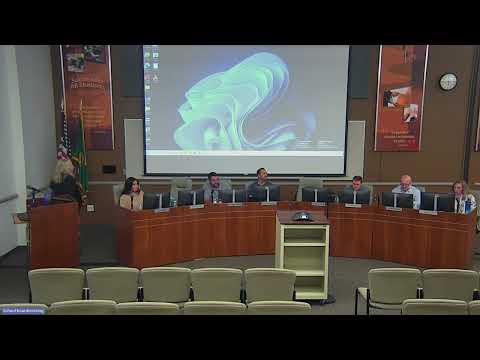
April Heiser, the district’s transportation director, told the Kennewick School District Board of Directors that the district transports roughly 10,678 students daily and logged nearly 1.3 million annual miles, and that the fleet presently includes 138 buses with nine additional vehicles on order for next year.
Heiser said the district has 15 air-conditioned buses now and will have 24 when current orders arrive; the district’s target is 25–30 air-conditioned buses to support summer-school routes. He also described the district’s current routing software as “antiquated,” saying dispatchers must redraw new housing and manually change speeds and idle times to keep stop times accurate. He urged the board to consider a routed-software replacement that includes live GPS, driver navigation tablets, and a parent app so families can see their child’s bus in real time.
The presentation put a potential recurring cost for routing software at roughly $120,000–$138,000 per year for the full fleet, with one vendor proposal near $1,000 per bus per year and another showing first-year charges near $200,000 followed by roughly $83,000–$88,000 in subsequent years. Heiser said the district currently pays about $6,800 annually for tech support for its existing system.
Heiser also summarized the district’s bus-purchase considerations under new low-emission laws. She described two regulatory drivers: the Advanced Clean Truck-type manufacturer mandates and a California Air Resources Board (CARB)-style regulation that requires manufacturers to meet a low-emission diesel engine standard with a stamp date; the district cannot currently order buses with a 2026 engine-stamp date because no diesel manufacturer meets the standard. She said manufacturers expect compliant diesel engines for delivery in 2027 and warned that some suppliers had stopped accepting diesel-bus orders for 2026 delivery. Heiser recommended that the board wait to place any major orders until (a) the state/OSPI/Ecology clarifies whether the rules will be lifted or (b) compliant engines become available, and that the board consider buying off the state bid later in the year if the laws are lifted.
Board members pressed on several points. Mr. Connors asked how much time dispatchers spend updating routes; Heiser said the desk team updates routes daily. Mr. Valentine described regional electric-grid constraints raised at a recent PUD commissioners meeting and questioned the feasibility of a large electric-bus rollout without major utility upgrades. Other board members and staff discussed potential operational savings from more efficient routing and the safety benefits of driver navigation tablets.
The district’s transportation-vehicle fund balance and cash flow were part of the presentation: after paying for the nine buses currently on order, Heiser said the fund would have about $275,000 remaining; a subsequent depreciation payment from the state would add roughly $1.4 million, leaving about $1.7 million available to support purchases in the future. He emphasized that the total-cost-of-ownership comparison OSPI and Ecology are developing would include infrastructure (charging stations) and maintenance over 13 years and would govern a requirement to buy electric buses when parity is reached.
The board discussed whether a formal vote was required at this meeting. Staff advised that the agenda item is typically the time to vote on a bus-purchase plan but that there is not yet an actionable plan to approve. The board did not take a purchase vote and signaled it would expect a recommendation back if conditions change.
Board members asked staff to return with more precise cost/efficiency calculations showing potential miles and fuel savings from improved routing software so the board could weigh operations savings against the recurring software cost.
The board did not take formal action to buy buses or software at this meeting; instead district staff were directed to monitor regulatory developments and pricing and to bring a purchase proposal to the board if the emission-rule landscape or vendor pricing changes.