Get Full Government Meeting Transcripts, Videos, & Alerts Forever!
Get email alerts on the Water Storage topic
No spam. Unsubscribe anytime.
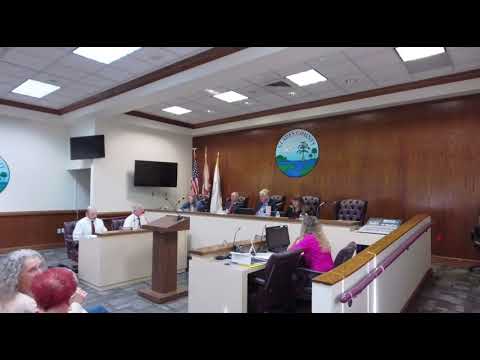
Glades County commissioners agree to press state and water managers on water storage impacts
Summary
Commissioners discussed a draft resolution and agreed to ask the chair to send letters to the county’s legislative delegation and the South Florida Water Management District outlining concerns about water storage projects’ effect on county tax rolls and services.
Glades County commissioners on Tuesday discussed a draft resolution on water storage and “water farming” projects that county officials say remove land from the local tax roll and reduce ad valorem revenue.
The commission agreed to direct staff to draft a letter for the chair to send to the county’s legislative delegation and to the South Florida Water Management District outlining the county’s concerns and asking for compensation or conditions to offset lost revenues.
The discussion opened with an explanation that a previously prepared draft resolution did not make the agenda and is a rough outline of potential county positions. Commissioners stressed that while they are not categorically opposed to storage projects, they want the county to be compensated when projects remove property from the taxable base or otherwise reduce county revenue.
Commissioners said the county faces measurable losses when land is taken off the tax roll. One commissioner cited a current project that will reduce the county’s annual ad valorem revenue by about $25,000 and warned that making up that revenue through future development could take many years. Another commissioner said roughly two-thirds of county land is already in non-taxable ownership (state, federal, tribal or similar), reducing locally available taxable acreage and limiting the county’s fiscal flexibility.
Members discussed options short of litigation — negotiating with state lawmakers and the water management district, asking for revenue-sharing, set-asides or state compensation for counties that host storage projects, and seeking a seat at the permitting table so local concerns (including impacts on surrounding property uses) are considered. Several commissioners urged caution about passing a resolution with “hard” clauses that could provoke immediate legal challenges and drain county resources.
Commissioners also raised environmental and community concerns tied to storage projects, including potential seepage and impacts on nearby residents and on Lake Okeechobee’s water quality. Commissioners said they have begun conversations with water-management board members and believe there is growing understanding of the county’s position.
The board did not adopt a formal resolution at the meeting. Instead, commissioners reached a working consensus to have staff prepare a letter to the legislative delegation and the South Florida Water Management District describing the county’s fiscal and community concerns and requesting conditions or compensation; commissioners said they will use that letter in upcoming March legislative meetings.