Get Full Government Meeting Transcripts, Videos, & Alerts Forever!
Get email alerts on the Workplace Safety Osha topic
No spam. Unsubscribe anytime.
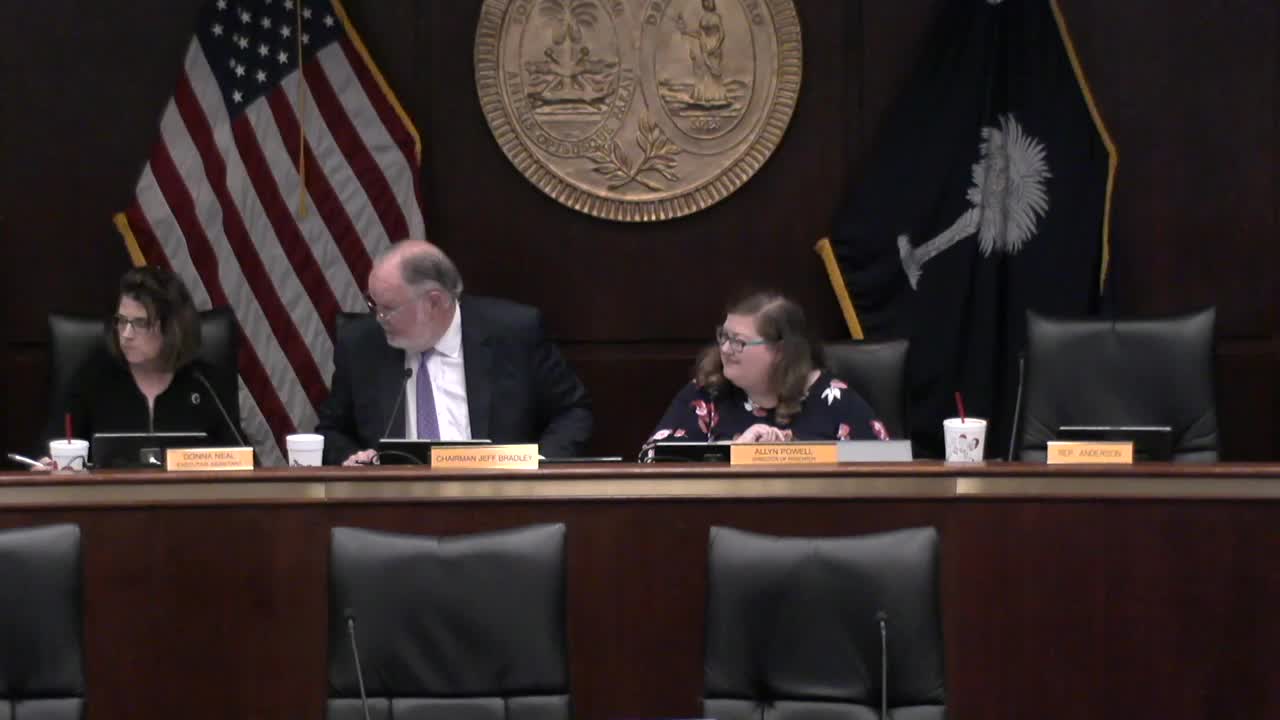
Committee approves OSHA ‘walk-around’ rule update; members seek narrower third‑party language
Summary
The committee approved updated language on who may accompany OSHA compliance officers during a workplace walk-around to keep South Carolina’s state OSHA plan aligned with federal changes, while some lawmakers urged narrowing who may act as a third‑party representative.
The committee voted 9-0 to approve the proposed update to South Carolina OSHA’s worker walk-around representative rule (Document 53-38), a change the panel’s staff said is needed for the state to remain “at least as effective” as federal OSHA and therefore retain the state plan.
Christina Baker, deputy director of labor for the South Carolina Department of Labor, Licensing and Regulation, told the committee: “I am Christina Baker. I'm the deputy director of labor for the South Carolina Department of Labor, licensing and regulation. And under my leadership does come South Carolina OSHA.” She explained the rule change adds language describing that a third party may, in some circumstances, serve as an employee’s representative during a walk-around when the compliance officer determines that person would add value.
Baker said surprise visits remain standard practice and that an opening conference on-site precedes the walk-around to determine who should participate. She said the compliance officer will judge whether a proposed third party “adds value and or who might even be disruptive and shouldn't be on the walk around.”
Several legislators supported the surprise-inspection element as important to public safety. Representative Taylor said unannounced inspections are “critically important” because advance notice can allow sites to hide hazards. Representative Martin raised concerns that the rule’s wording could be broad, allowing attorneys, family members or other nonemployees to accompany inspections; he urged narrowing the language and adding clearer screening or vetting standards. Representative Gilliard described past experience pressing for surprise inspections at hazardous sites.
Representative Neese moved approval of the regulation and included a request that LLR promulgate emergency regulations to remove the new provisions if federal changes later make them unnecessary; a second was recorded and the committee approved the motion on a 9-0 roll-call vote.
The agency warned that, if South Carolina did not adopt a rule at least as effective as the federal standard, federal authorities could withdraw approval of the state plan or give additional time — outcomes the agency said it could not predict.
Votes at a glance: Document 53-38 — approved 9-0. Members recorded as voting yes were Alexander; Gilliard; Guffey; Hart; Long; Martin; Neese; Taylor; and Bridal.
The committee requested follow-up work to refine language on third‑party representation and indicated staff and committee members would continue negotiating precise vetting procedures outside the hearing.