Get Full Government Meeting Transcripts, Videos, & Alerts Forever!
Get email alerts on the Revenue topic
No spam. Unsubscribe anytime.
Sponsors propose severance tax to replace most harvest tax; public testimony split over small owners and REITs
Summary
Sponsors of House Bill 3,489 told the House Committee on Revenue that replacing much of the current forest products harvest tax with a 5% value‑based severance tax would make large, out‑of‑state timber REITs pay more toward wildfire costs while largely protecting small Oregon timber owners.
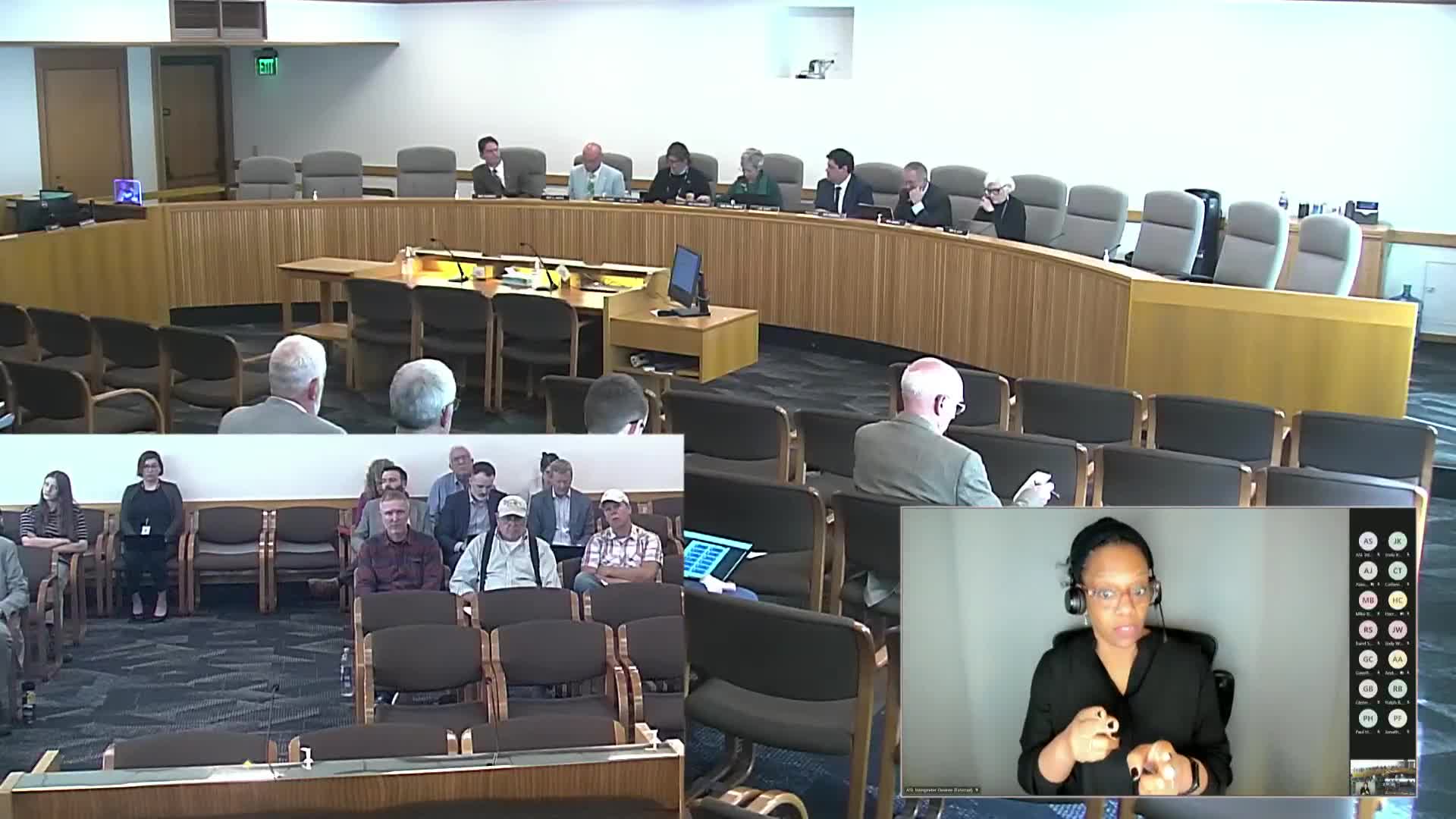
Representative Mark Gamba and Senator Jeff Golden presented House Bill 3,489 and its dash-1 amendment at a public hearing of the House Committee on Revenue on April 24, proposing to replace most of the existing forest products harvest tax with a value-based severance tax targeted at large timberland REITs and similar owners.
Representative Gamba said the goal is to have large, out‑of‑state real estate investment trusts "start helping us pay for the wildfire services they benefit from," and argued the state has been paying wildfire costs from the general fund while REITs generally pay little or no Oregon corporate income tax. He described the dash-1 amendment as structured so that "the little guy will not see any extra burden and that the large timber REITs will suddenly start pitching in for the state's wildfire costs." He also stated the amendment "will not cut funding for OFRI. We are holding it harmless." (Representative Mark Gamba, sponsor)
Senator Jeff Golden said the bill would restore a severance tax generally at a 5% rate on the value of timber sales above 25,000 board feet per year and reiterated that the bill's nonrefundable tax credit would allow companies that already pay Oregon income tax to offset much or all of their severance tax liability. "If XYZ Timber Products paid $50,000 in 2028 Oregon income taxes…and their severance tax liability in 2029 was $50,000 they would pay no severance tax," he said, adding the exemption for the first 25,000 board feet is intended to protect small owners. (Senator Jeff Golden)
Committee staff Michael Dowdy (Legislative Revenue Office) provided a background primer on the forest products harvest tax and summarized four bills with potential impacts on the tax. Staff explained the current harvest tax is composed of multiple components, some with sunsets that the legislature addresses in odd-numbered years, and described which components can be adjusted administratively and which require legislative action.
During two hours of public testimony, opinions were sharply divided. Supporters — including Oregon Wild (Casey Kula), Southern Oregon Climate Action Now (Alan Jorne), the League of Women Voters of Oregon (Josie Kerner), Oregon Physicians for Social Responsibility (Katherine Thomason), Tax Fairness Oregon (Jody Weiser), and multiple residents and small landowners — said the bill restores fairness by requiring large out-of-state owners to contribute to wildfire funding and by directing revenue back to timber counties.
Opponents — including representatives of Oregon Business and Industry (Derek Singston), Oregon Forest Industries Council (Tyler Ernst), Oregon Small Woodlands Association (Nicole Mann), and several small‑to‑medium timber operators — warned the shift to a 5% value-based severance tax would dramatically raise costs for many operators, could accelerate mill closures, and harm small private owners who harvest only episodically. Opponents also urged retaining funding for the Oregon Forest Resources Institute (OFRI) and cautioned that the severance approach was rejected by the Fire 35 work group.
Key policy details recorded in testimony and staff summaries: - The dash‑1 amendment would largely replace components of the current forest products harvest tax with a value‑based severance tax set at 5% of sale value on timber sold in excess of 25,000 board feet per year. (Sponsor remarks and Senator Golden) - The amendment includes a nonrefundable tax credit equal to 100% of a timber company's Oregon corporate income tax paid in the prior year, intended to protect companies that already pay income tax in Oregon. (Sponsor remarks) - Sponsors and some witnesses said the dash‑1 would "hold harmless" the Oregon Forest Resources Institute (OFRI); other witnesses said uncertainty remained about OFRI funding if the harvest‑tax components change. (Representative Gamba; Nicole Mann, OSWA) - Alternatives and related bills were noted: HB 2,072 and HB 2,816 (extend sunseted components), HB 3,940 (would extend some components and raise the land‑protection component from 62.5¢ per thousand board feet to $1.00 per thousand board feet adjusted annually by the West CPI), and HB 3,489 (dash‑1 severance approach). (Michael Dowdy, LRO) - Sponsors said the state drew $218,000,000 from the general fund in a recent special session to respond to wildfire costs. (Representative Gamba)
Witnesses raised implementation questions and offered suggested refinements (all recorded in testimony): change the 25,000 board‑feet exemption to a dollar threshold or allow unused exemptions to carry forward for owners who harvest only intermittently; clarify the definition of taxable entities (REITs, TIMOs, corporate structures) and the precise timing and mechanics of the tax credit; ensure OFRI and other industry programs retain funding or have explicit substitutes; and analyze projected revenue and local county impacts.
Chair Nathanson limited presentations and testimony to the posted time limits and closed the public hearing at the scheduled end of the meeting; the committee did not take a committee vote on the bill at this session.