Get Full Government Meeting Transcripts, Videos, & Alerts Forever!
Get email alerts on the Economic Development topic
No spam. Unsubscribe anytime.
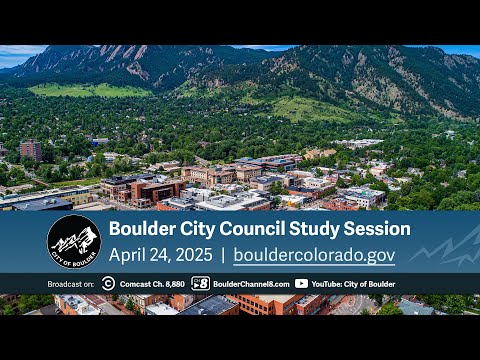
Boulder presents draft economic vitality strategy, council presses for specifics and urgency
Summary
City staff presented a draft economic vitality strategy covering the next two to three years and targeting equity, resilience, vibrancy and innovation. Council members praised the framework but repeatedly asked for more near-term specifics, measurable benchmarks and clearer communications to business owners about existing supports.
City staff on Tuesday presented a draft economic vitality strategy intended to guide Boulder’s economic development work over the next two to three years, emphasizing equity, resilience, vibrancy and innovation.
The strategy, led by Jennifer Pinsonow, economic vitality manager, lays out programs to support micro and small businesses, expand access to capital and workforce pathways, and explore tools such as a downtown development authority to address long-term funding gaps. “The strategy is designed to broadly describe projects and programs for creating a stronger, more resilient economy in a post pandemic environment,” Pinsonow said.
Council members broadly welcomed the plan but pressed staff for concrete, near-term actions and clearer communications so businesses can see how public input was used. “We need to understand what concrete actions we’re going to be asked to take so that we can evaluate them,” Mayor Aaron Brockett said. Council member Matt Benjamin and others asked for a shorter-term rollout with items the city can deliver in the next 6–12 months to show urgency and build trust.
Why it matters: staff described the strategy as a response to economic headwinds that have produced higher commercial vacancy rates, slow retail and office recovery since 2019 and other pressures that are not unique to Boulder. Jennifer Pinsonow said the city last updated an economic development plan in 2013 and that gaps in city capacity and funding mean the plan will be used to prioritize work, inform the Boulder Valley comprehensive plan update and shape department work plans and consultant scopes.
Key elements: staff organized the draft strategy into four focus areas: - Equity: expand support for micro businesses, improve access to capital and procurement opportunities, and use a racial equity instrument to guide program design. - Resilience: create a disaster-response playbook, expand business-preparedness programs and promote sustainability for business operations. - Vibrancy: pilot grants and programs to reduce commercial vacancies, activate commercial areas, and coordinate tourism-related investments tied to the new conference center and Sundance Film Festival. - Innovation: support advanced-industry attraction, workforce pipelines and possible chip-zone designation to qualify companies for state and federal incentives.
Staff said partners including the Boulder Chamber of Commerce, Downtown Boulder Partnership, Visit Boulder, the Boulder Small Business Development Center (SBDC) and Progressive Urban Management Associates (PUMA) helped shape the strategy. “A healthy and vibrant business community is absolutely essential for a healthy and vibrant community as a whole,” City Manager Nuria Rivera Vandermeid said when introducing the topic.
Questions from council: multiple members sought specifics about how resident and business input from the city’s community forum and microbusiness outreach will be validated and reflected in implementation. Council members asked for a public repository or dashboard that would track how community suggestions are being used and what constraints staff discover (for example, financing requirements that keep rents high on certain commercial properties). Mark Wolf, assistant city manager, said staff plan to include more detail in department work plans and scopes of work with partners as the council’s priorities become clearer.
Programs already in progress: staff described current and near-term actions that are already underway, including expanded SBDC operations, a Boulder microloan program with the Colorado Enterprise Fund, increased outreach about permitting and code simplifications, promotional efforts to attract tenants into vacant spaces, and grants to create below‑market shared commercial spaces.
Council direction and uncertainties: speakers emphasized prioritizing actions the city can control (code simplifications, process improvements, business navigation) while also investing in projects that can generate city revenue. Several council members urged staff to front-load work that improves vibrancy and business retention, and to treat employee ownership and worker co‑op options as explicit program elements. Council members also asked staff to make explicit how the strategy supports lower‑income residents and workers, not only business owners.
Next steps: staff will refine the draft strategy based on council feedback, finalize benchmarking metrics to track outcomes, post the final plan online and fold actions into departmental work plans, budgeting and partner contracts. Pinsonow said staff expect the strategy to inform the Boulder Valley comprehensive plan update and guide implementation across 2025–2026.
Ending: Council members expressed general support for the strategy’s goals while asking staff to return with measurable near‑term actions and clear communications so the business community can see results and the public can track progress.