Get Full Government Meeting Transcripts, Videos, & Alerts Forever!
Get email alerts on the Cannabis Policy topic
No spam. Unsubscribe anytime.
House Judiciary hears cannabis omnibus bill; sponsors highlight authority to destroy unsafe illegal 'hoop houses'
Summary
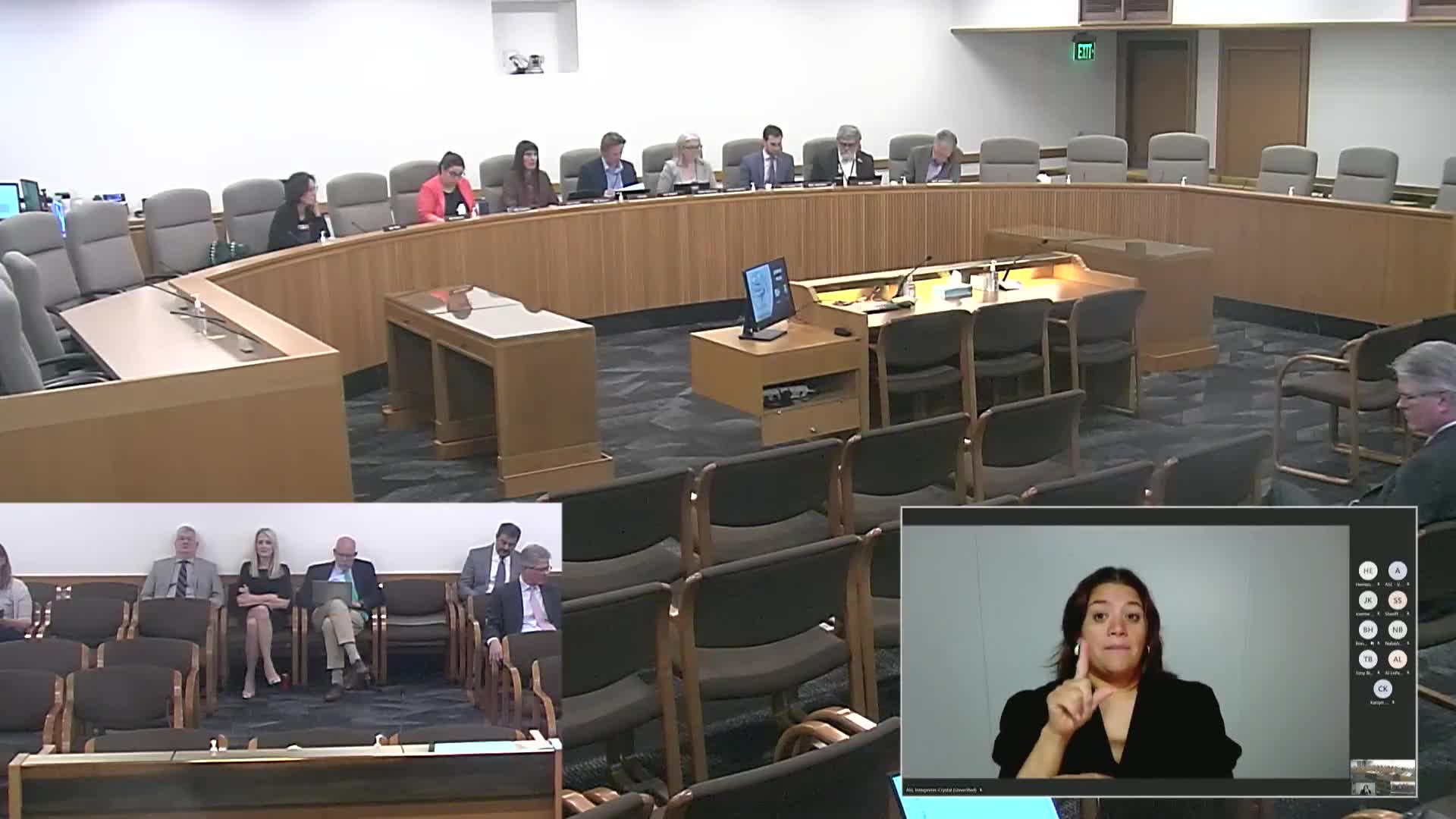
The House Committee on Judiciary heard Senate Bill 162A on April 24, an omnibus cannabis measure that sponsors say would authorize destruction of makeshift 'hoop houses' used in illegal marijuana grows and make several regulatory and licensing changes.
The House Committee on Judiciary held a public hearing April 24 on Senate Bill 162A, a cannabis omnibus measure that sponsors said combines law enforcement tools, regulatory clarifications and licensing changes.
A committee presenter summarized the bill as authorizing destruction of hoop houses used in unlawful marijuana production when executing a search warrant; expanding agency access to a statewide map of licensed marijuana and industrial hemp operations; removing proximity prohibitions that had barred marijuana retailers from locating within 1,000 feet of prekindergarten or kindergarten programs; permitting the Oregon Liquor and Cannabis Commission to renew licenses for terms up to five years for producers, processors, wholesalers, retailers and laboratories; allowing inspection of industrial hemp biomass by the Oregon Department of Agriculture; and declaring an emergency effective on passage.
Senator Noah Robinson (State Senator, District 2) said he voted for the measure on the Senate floor reluctantly because the provision authorizing destruction of hoop houses addressed a pressing public-safety problem in his area. "The sheriff in our county has a special problem with all the illegal marijuana grows, all the hoop houses, and he was going in and tearing them down with bulldozers," Robinson said. Robinson cited chemical exposures and harm to officers who have entered some sites and urged the committee to consider narrowing other provisions if members wished.
Rob Bovette, an adjunct professor of law at Lewis & Clark Law School and long-time drafter of the omnibus cannabis bill, described the hoop houses as "clear visqueens strapped over a makeshift structure" commonly built with PVC or wood, with unsafe wiring and volatile chemicals that endanger first responders. Bovette said some judges include explicit destruction authority in warrants but others do not, and he argued for statutory clarity and statewide consistency. He also said the bill’s multiyear licensing provision is intended as an administrative efficiency and does not reduce license fees or expand substantive rights.
Sheriff Nate Sickler (Josephine County) testified the structures pose a direct risk to officers and described cases where deputies required manual removal of plants in confined, contaminated spaces. "These structures are intentionally designed to allow for multiple rapid growth cycles of marijuana plants," Sickler said, and he asked the committee to support the bill to protect first responders and address illegal cultivation.
Tony Birch, a cannabis business owner who operates retail, manufacturing and distribution outlets and said he employs about 50 people across 11 locations, urged support for the bill’s repeal of the 1,000-foot setback for certain kindergarten programs. Birch told the committee the 1,000-foot restriction, added in 2022, created uncertainty and financial risk for licensed businesses and contributed to vacancy and investment problems in some commercial areas.
Members asked about legal analogues and liability. Committee members and witnesses discussed the difference between common-law authority to address officer safety and the desire for statutory clarity to avoid protracted litigation or uncertainty for prosecutors and law enforcement.
The committee closed the public hearing on SB 162A after receiving testimony from law enforcement, industry representatives and other stakeholders. The record showed the bill had passed the Senate prior to the House hearing; witnesses described that vote as supporting the measure but did not provide a House committee vote tally during the hearing.
What happened next: no committee vote was taken at this hearing; the committee moved to the next item on the agenda.