Get Full Government Meeting Transcripts, Videos, & Alerts Forever!
Get email alerts on the Childrens Health Reporting topic
No spam. Unsubscribe anytime.
Oregon Health Authority seeks to update children's-health reporting to include outcome data
Summary
OHA testified that updating the biannual Children’s Health Report under SB 846 to include newer Medicaid and CCO metrics would shift the report from process-focused items to outcome- and equity-focused data that could better inform policy.
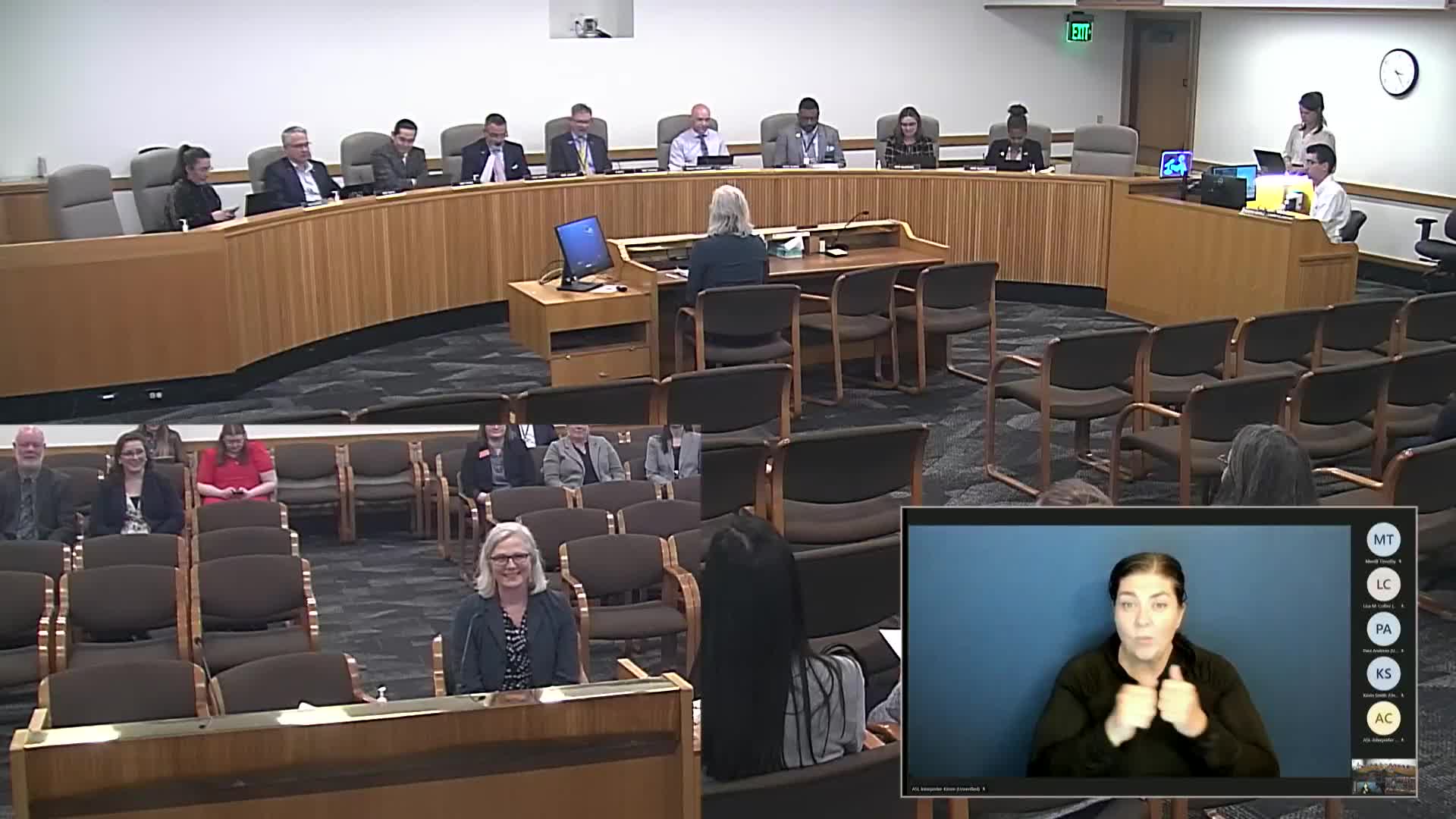
Oregon Health Authority staff told the Senate Committee on Health Care on April 24 that Senate Bill 846 would revise statutory reporting requirements for the biannual Children’s Health Report so it can incorporate newer, child-specific Medicaid and coordinated care organization (CCO) data to better surface equity and outcomes.
Susan Otter, director of Health Information Technology and Analytics Infrastructure at OHA, said the current report (established in 2015 by Senate Bill 902) is “process focused” and relies on data that do not allow the agency or the Legislature to judge whether local actions improved health outcomes for children. SB 846 would authorize OHA to add newer data sources — including the CCO performance metrics dashboard and Medicaid enrollment and demographics dashboards — so the report can present child-specific, service-focused and outcomes-based measures, disaggregated by race, ethnicity, language and disability where available.
Otter said the change would not remove existing statutory requirements for CCOs’ community health improvement plans; instead, the update aims to keep the transparency and accountability function while making the legislature-facing report more useful for policymaking about inequities in children’s health. “We’re merely seeking to refocus the biannual report on current data to allow for more impactful and actual reporting,” she said.
Committee members asked why the change must be in statute rather than adopted by rule. Otter replied that legislative authority is needed to expand the sources OHA may include in the report to the Legislature and that the bill would preserve the accountability function while broadening the report’s content. Members also asked whether fee-for-service Medicaid members and children in foster care would be included; Otter said the bill would allow OHA to produce a statewide Medicaid children’s health report covering both CCO and fee-for-service members, but that specific outcomes for foster-care children would require follow-up.
Why it matters: Lawmakers and advocates have said better, disaggregated data are necessary to track inequities and to design targeted interventions for children across Oregon; the bill would allow OHA to bring multiple dashboards and new metrics into the legislatively mandated report.
Ending: The hearing closed with questions noted for follow-up; OHA offered to provide additional details on how foster-care populations and other subgroups would be reflected in future reporting.