Get Full Government Meeting Transcripts, Videos, & Alerts Forever!
Get email alerts on the State Hospital Statutory Fix topic
No spam. Unsubscribe anytime.
Oregon Health Authority seeks technical fixes to Oregon State Hospital statute
Summary
Oregon Health Authority staff told the Senate health committee that Senate Bill 834 would align statute with current practice at the Oregon State Hospital by clarifying age limits, updating language on treatment providers and job titles, and tightening forensic evaluation language.
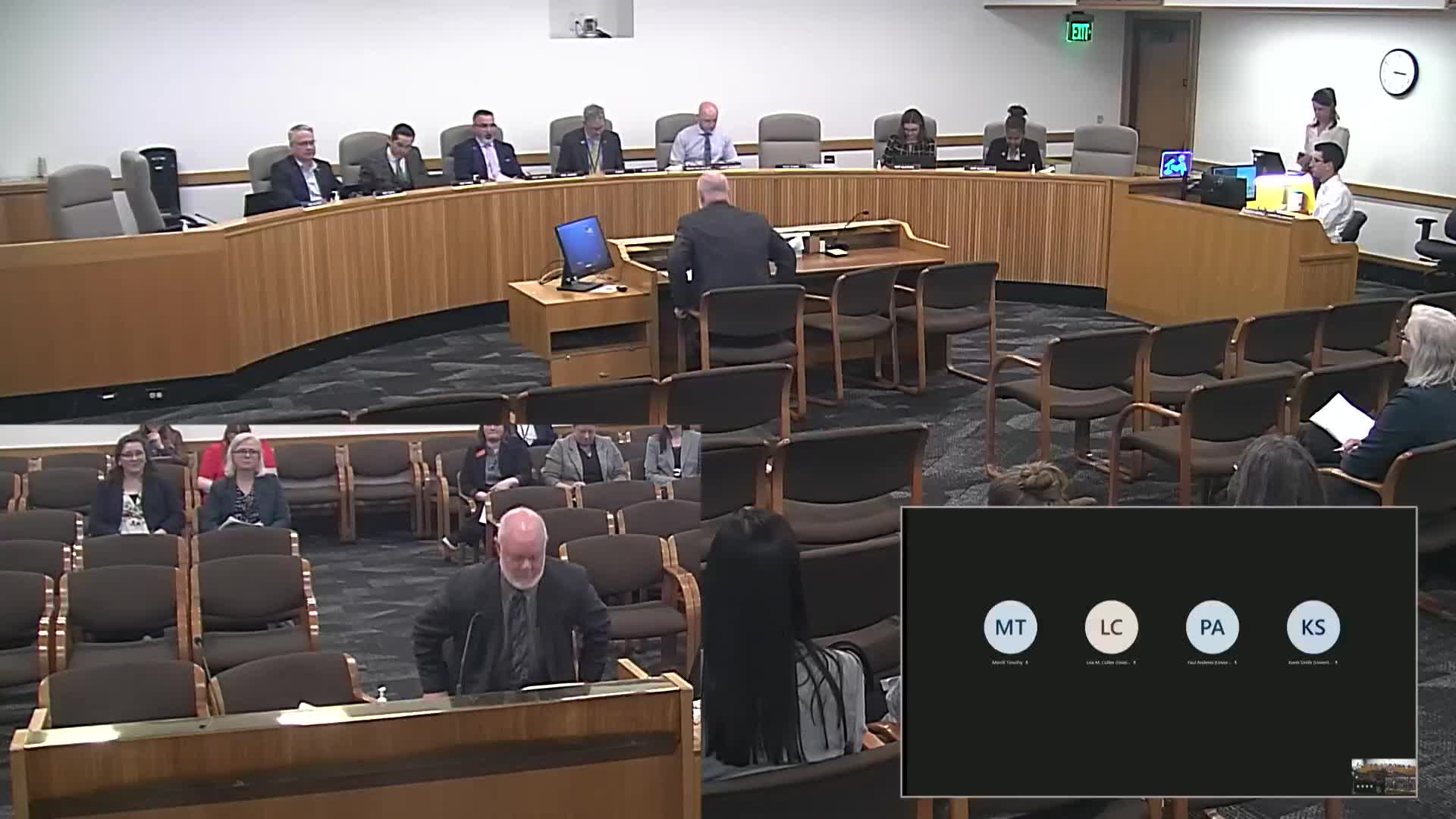
Oregon Health Authority officials briefed the Senate Committee on Health Care April 24 on Senate Bill 834, a technical corrections bill that would update several statutory provisions affecting Oregon State Hospital operations and related legal procedures.
OHA staff described five changes intended to align statute with current practice, including clarifying that state hospitals provide inpatient services to adults only (no one under age 18); recognizing psychiatric mental health nurse practitioners when statutes list psychiatric treatment providers; separating the superintendent and chief medical officer roles; modernizing clinical terminology such as replacing archaic terms like “symptomology”; and clarifying who may perform certain forensic evaluations tied to aid-and-assist proceedings.
Matthew Green of the Oregon Health Authority told the committee the changes are “technical” and “not substantive policy changes,” and said the hospital has not admitted anyone aged 18 or younger for about two decades. “The statute never caught up,” Green said, describing confusion that can arise when statutes still describe a process by which a parent could apply to commit a child to the state hospital despite the hospital’s current adult-only practice.
Green said some statutes identify “psychiatrists” as the treatment providers whose records matter to civil-commitment determinations; the proposed language would ensure psychiatric mental health nurse practitioners are included as providers whose treatment history should be considered. He also said the statutory language that requires the superintendent, if a physician, also to be the chief medical officer was antiquated and could inadvertently limit hiring options.
Committee members asked clarifying questions about why the changes were needed and why they generated any dissent in prior votes; Green said he could not explain earlier no votes and offered to follow up. The chair closed the public hearing and signaled a work session would follow.
Why it matters: The requested changes are described by OHA as statute clean-up to reflect present-day clinical practice and roles, reduce confusion in court-ordered processes, and avoid unintended hiring or procedural constraints.
Ending: The committee closed the public hearing and will consider the technical fixes at an upcoming work session.