Get Full Government Meeting Transcripts, Videos, & Alerts Forever!
Get email alerts on the Behavioral Health Workforce Certification topic
No spam. Unsubscribe anytime.
Credentialing board describes rapid growth in unlicensed behavioral-health workforce, new Spanish-language exams and supervision training
Summary
Christy McKinney, director of credentialing, told the Senate committee that the unlicensed behavioral-health certification board has grown sharply, added Spanish-language exams and is piloting supervision training to improve retention and career ladders.
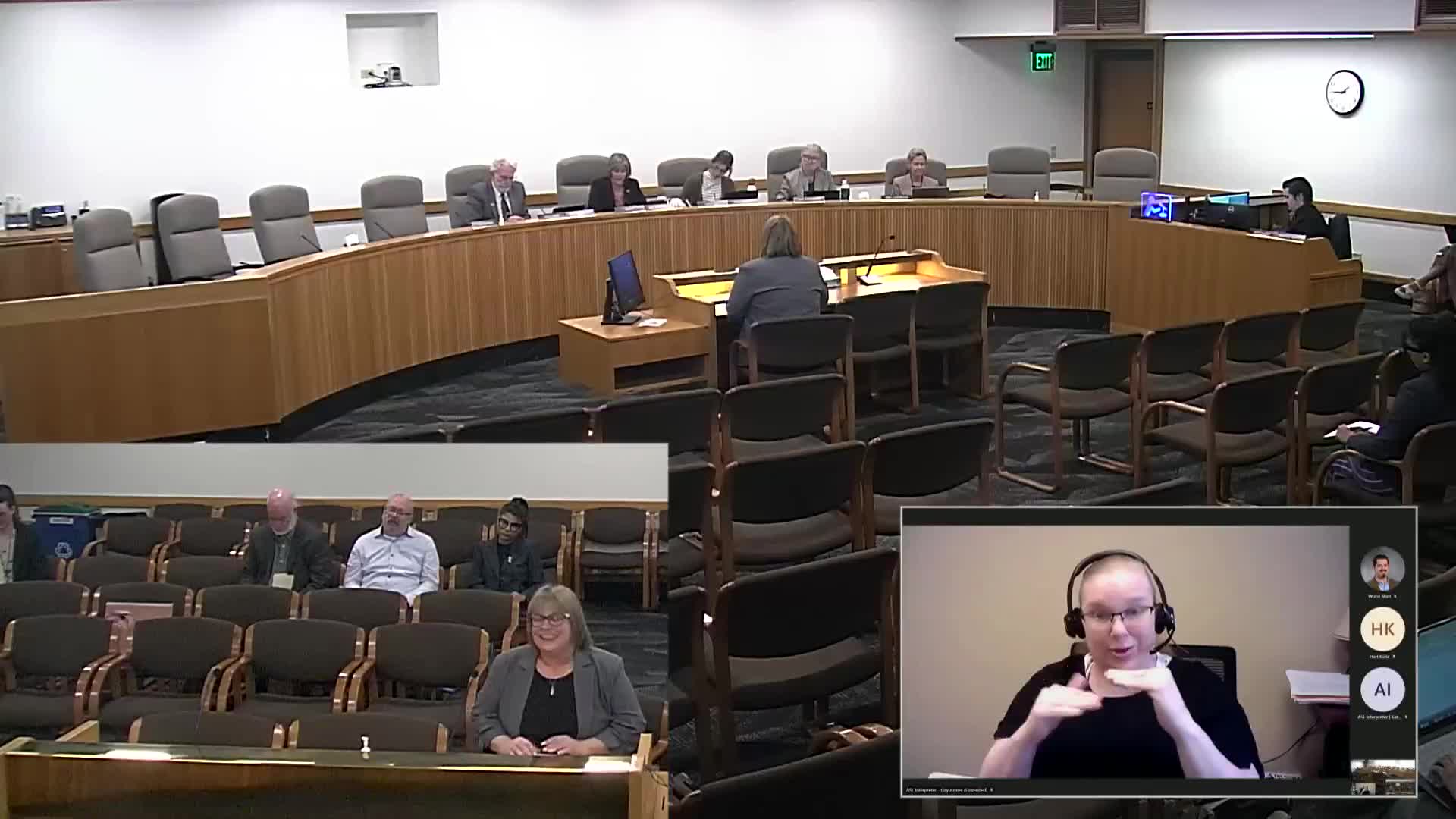
Christy McKinney, director of credentialing, compliance and testing at the board commonly referred to in testimony as MACBO, told the Senate Committee on Early Childhood and Behavioral Health that the organization has grown from roughly 3,000 certified members to 17,000 and now manages about 21,000 active credentials.
McKinney described the board’s role as certifying unlicensed behavioral-health workers — including addiction counselors, peer mentors and mental-health associates — and said the board recently focused on Spanish-language exams and applications because “22% of the Medicaid population is Hispanic, and only 8% of our counselors and clinicians are Spanish speaking or from that culture.” She said the board arranged to have every exam available in Spanish and developed a Spanish-language certified peer-mentor training through Instituto Latino.
McKinney told the committee the board now certifies roughly 12,000 mental-health workers and that it is partnering with about 11 community colleges to create a clearer career ladder from entry-level credentials (Qualified Mental Health Associate) to higher credentials and degrees. She said the board is piloting a 12-hour training to improve clinical supervision for addictions counselors; successful completion will lead to a national exam and an endorsement for supervisors. McKinney summarized workforce retention as the board’s central challenge and said the biggest reasons for turnover are lack of career advancement and poor supervision.
She also said the board helped cover fees for 7,900 behavioral-health certifications through a partnership with the Oregon Health Authority and noted it operates with six staff managing 21,000 credentials. McKinney said the board has worked with other states to form a first unlicensed national board and is exploring reciprocity and recognition across jurisdictions.
Committee members asked whether better supervision translates to career advancement and living wages for workers with varying degrees; McKinney said average entry-level wages have increased over time and that a master’s-level licensed clinician typically earns more but that “master’s level, that’s not tons of money.”
McKinney’s overview was presented as an informational item; it did not include a committee vote but was used to contextualize ongoing workforce and licensing discussions.