Get Full Government Meeting Transcripts, Videos, & Alerts Forever!
Get email alerts on the Psilocybin Services Hb 2387 topic
No spam. Unsubscribe anytime.
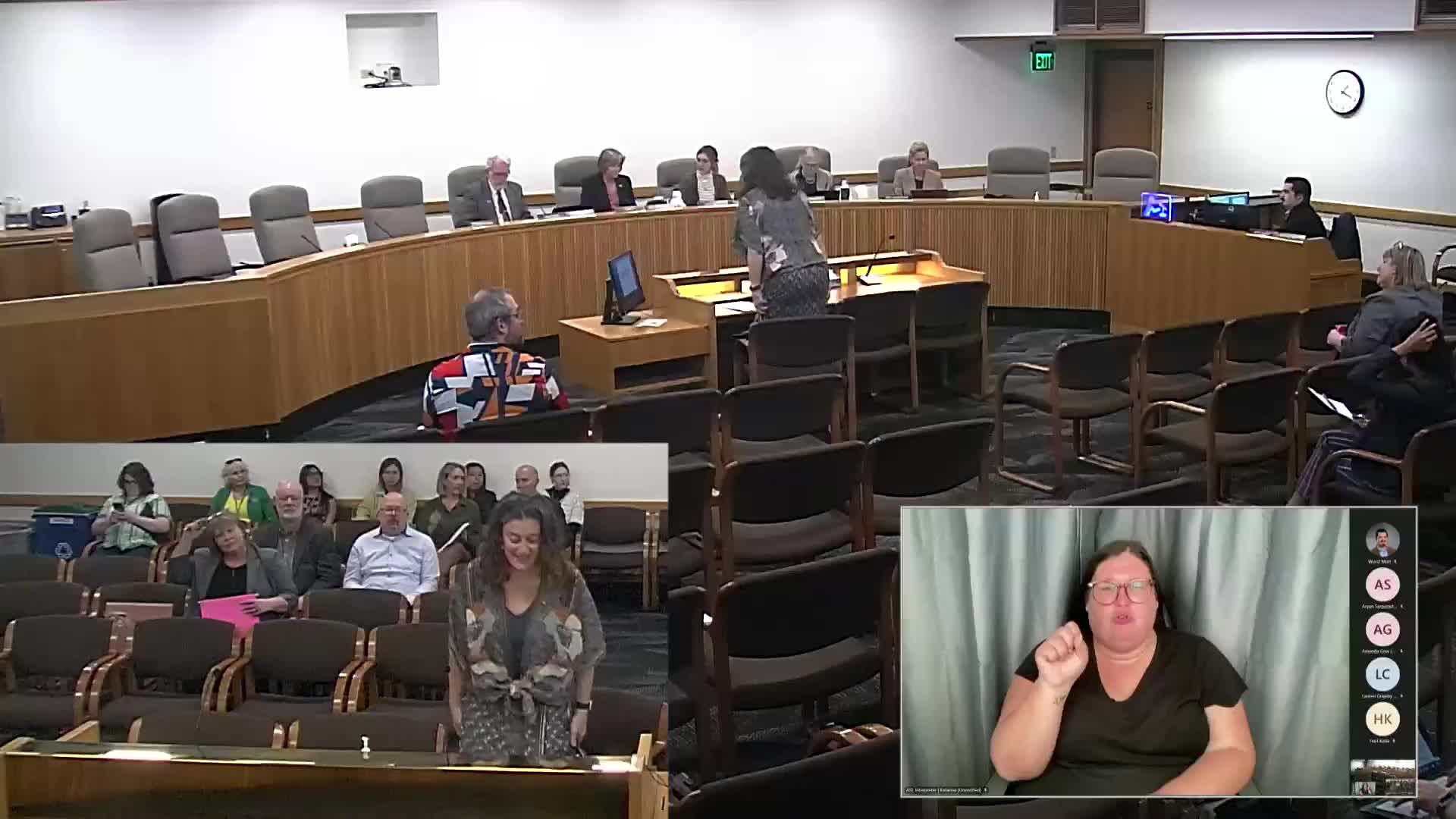
Senate committee hears testimony on HB 2387 to tighten rules and broaden clinical participation in Oregon psilocybin program
Summary
State lawmakers heard proponents describe House Bill 2387 as a technical “program improvement” bill for Oregon’s psilocybin services program, proposing confidentiality for investigations, clearer roles for licensed health professionals, new labeling requirements and collection of veteran status data.
The Senate Committee on Early Childhood and Behavioral Health opened a public hearing on House Bill 2387 on April 2025 to consider changes to the Oregon Psilocybin Services Program, sponsor State Representative Dacia Graber told the committee.
Rep. Dacia Graber, chief sponsor of HB 2387, said the bill makes “technical changes to the Oregon Psilocybin Services Program that are widely supported by the communities impacted and the service providers who deliver these critical mental health services.” She described provisions to allow health-care providers to discuss psilocybin with patients, require fingerprinting for license applications, and permit application denials after a failed criminal background check. “I encourage you as community leaders and as my colleagues to support these technical improvements,” Graber said.
The hearing included prepared testimony from program implementers and clinicians. Heidi Pendergast, Oregon director of the Healing Advocacy Fund, said HB 2387 would “ensure safety and access through technical program changes and bridges the gap between psilocybin services and behavioral health.” Pendergast summarized the program’s three-step model — preparation, administration at a licensed service center, and optional integration — and provided program counts she said came from OHA: 28 licensed service centers, about 370 trained facilitators and “over 10,000 clients served.” She also cited the program’s reported adverse-event rate as “one tenth of 1 percent” as defined by OHA (calls to emergency services).
Testifying as a clinician, Dr. Arianne Sarprast, a board-certified psychiatrist who works at Oregon Health & Science University but said her testimony reflected her personal professional views, said HB 2387 would “meaningfully strengthen public health safeguards and improve access to safe, effective psilocybin services.” She highlighted two provisions: allowing clinicians to speak openly with patients about psilocybin without fear of disciplinary action for discussing it, and permitting dually licensed professionals to bring their full clinical skill set to pre- and post-session care.
Providers offering services in rural Oregon also testified. Amanda Gao, co-founder and executive director of Bendable Therapy in Bend, said an informal survey of her clients showed 68% found their psilocybin session “extremely effective.” Gao said some health professionals decline to discuss psilocybin for fear of professional discipline, limiting informed consent and continuity of care for people with complex mental-health histories.
A Marine Corps veteran, Lauren Connolly, described participating in a veteran cohort and urged protections so licensed therapists, psychiatrists and doctors can discuss psilocybin care with patients. Testimony from multiple speakers urged clearer confidentiality for complaint investigations and closer coordination between licensing boards and the psilocybin program.
Speakers described several specific statutory and technical changes in HB 2387: adding veteran status to program demographics collected; requiring labels and pre-treatment discussion of psilocin (which Pendergast said is about 40% more potent than psilocybin); and creating confidentiality for OHA investigatory processes “in a manner similar to all the other licensing boards in the state,” to encourage reporting of misconduct. A staff presenter also summarized earlier draft language saying the bill “restricts the Oregon Health Authority from sharing certain kinds of information obtained in an investigation of a psilocybin training program licensee or applicant,” requires fingerprint submission for applicants and allows OHA to deny applications after failed criminal-background checks.
Committee members asked clarifying questions about the production and supply chain for the psilocybin product, whether facilitators touch the product, and the economics of services. Witnesses said licensed manufacturers supply service centers, facilitators typically do not handle the product during an administration session, and that facilitators’ time rather than the product itself represents the bulk of the service cost. One witness said the maximum allowed psilocybin analyte dose under current rules is 50 micrograms (as stated in testimony).
No formal action or vote on HB 2387 occurred during the hearing. The committee closed the public hearing segment and moved to scheduled informational presentations later in the meeting. The committee’s agenda materials indicated a more technical presentation by OHA would follow the sponsor and provider testimony.