Get Full Government Meeting Transcripts, Videos, & Alerts Forever!
Get email alerts on the Artificial Intelligence topic
No spam. Unsubscribe anytime.
State IT officials outline AI action plan, stress human oversight and privacy
Summary
State Chief Information Officer Terrence Woods presented a 70+ page AI action plan to the General Government Subcommittee, emphasizing human oversight, data ethics, privacy and workforce training; officials said the plan is informational and will be rolled out with interim guidance and published use-case inventories on OLIS/OLISS.
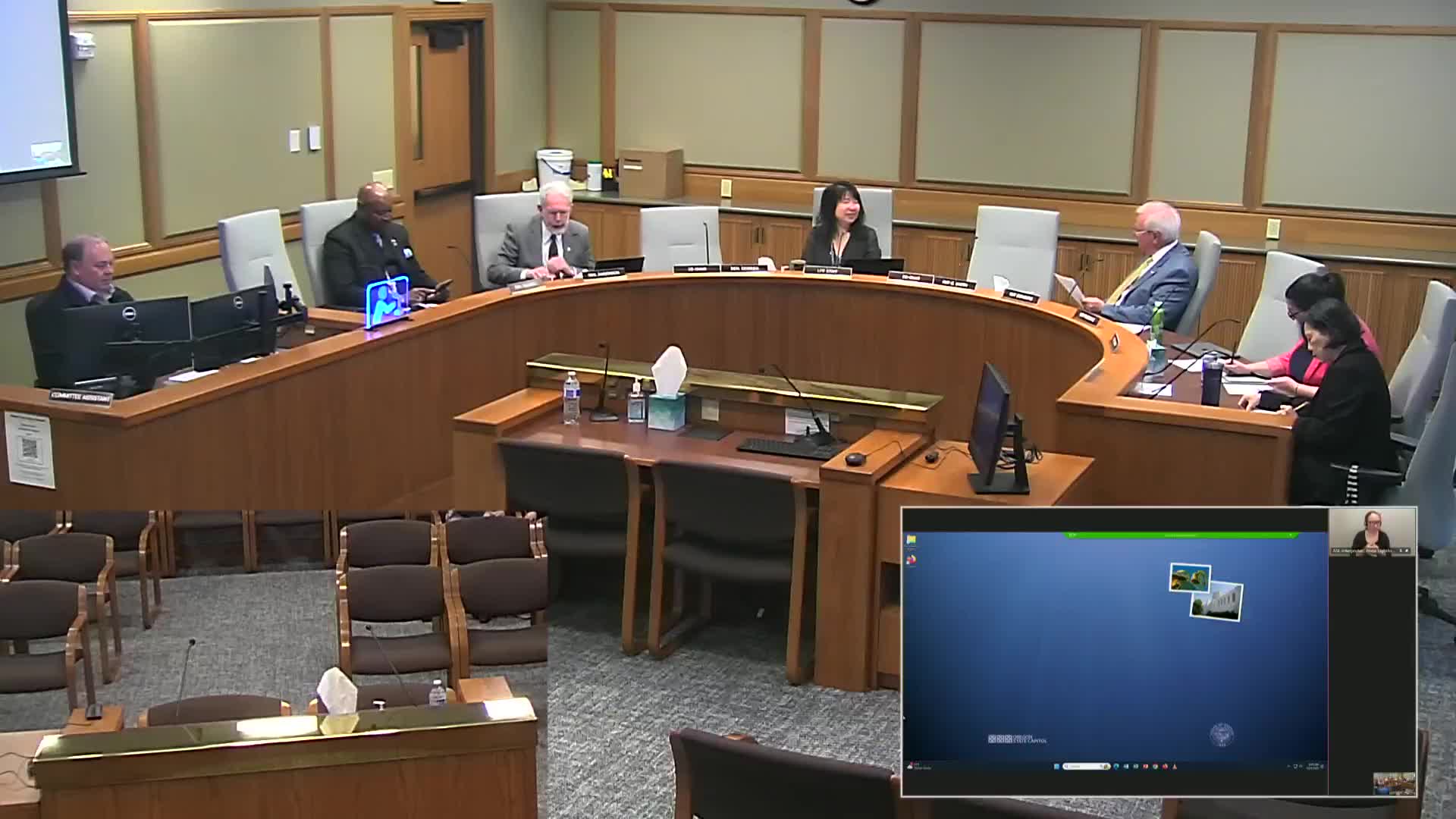
State Chief Information Officer Terrence Woods told the General Government Subcommittee of Ways and Means that an executive order-driven AI task force produced a comprehensive action plan to guide how the executive branch uses artificial intelligence.
Woods said the document — “about 70 plus pages” — lays out recommendations including human oversight, data-ethics checks and privacy protections. “AI obviously needs data more than data needs AI,” Woods said, adding that the state’s approach will limit data access to what is necessary and minimize unnecessary exposure.
The action plan grew from a year-long task force that included representatives from the Department of Administrative Services’ Enterprise Information Services (DAS EIS), the governor’s office and legislative members. Woods said the plan is grounded in 12 guiding principles and five executive actions, and recommends publishing agency use cases, creating deployment documentation, and developing a reference architecture or blueprint for AI adoption. “We aim to foster a responsible AI ecosystem that enhances government efficiency, accountability, and public trust while upholding the highest standards of privacy and ethical integrity,” he said.
Why it matters: Committee members pressed officials on workforce impacts, oversight, environmental costs and intergovernmental coordination — issues that determine how, and how quickly, agencies can adopt AI. Representative Thuy Tran asked directly whether the state intends to replace employees; Woods replied that the governor’s direction is to use AI to enhance, not replace, the workforce. “We’re definitely not doing anything to try and replace humans or our workforce using artificial intelligence,” he said.
Key recommendations and safeguards in the plan include: public inventories of use cases, documentation and checklists for deployment; “human in the loop” governance; training for executive-branch staff and public-facing materials for counties, cities and residents; and stronger privacy leadership (Woods noted the state currently has a security officer and a data officer but not a chief privacy officer). Woods said some items in the plan will require funding to implement and that certain positions (for example, a chief AI officer or privacy officer) are dependent on position authority and budget approvals.
Comparisons and limits: Woods said the task force surveyed other states and found a range of approaches. “Some of them limit any artificial intelligence use case to $10,000,” he said, explaining those limits reflected other states’ risk appetites and a finding that roughly half of procurements do not meet expectations. He also said the state will restrict access from state-owned devices to high-risk external AI platforms — citing DeepSeek as an example of a platform the state would block from state equipment due to security concerns.
Interim guidance and next steps: Because agencies are seeking to use AI before the whole plan is completed, Woods said interim guidance was published last year and recently updated. Next steps he listed include updating that guidance, publishing the inventory of use cases as agencies submit them, minimum training requirements for the executive-branch workforce and continued cross-agency policy work.
Concerns raised: Committee members asked about environmental impacts of compute-heavy AI workloads (power and water usage), coordination with other states, and whether the plan accounted for sovereign nations and data sovereignty. Representative Chi Chi asked specifically about the plan’s environmental discussion; Woods said compute power and carbon footprint are addressed in the action plan. Representative Tran asked about training for staff to avoid accidental misuse; Woods confirmed workforce training is among the recommendations.
Process note: The briefing was informational; committee members did not take formal action on the plan during the session. Woods directed members to the presentations posted on OLISS and said the full action plan will be posted to OLIS on request.
The Subcommittee noted it would invite the CIO back for follow-up and to brief further on the implementation timeline and funding needs.