Get Full Government Meeting Transcripts, Videos, & Alerts Forever!
Get email alerts on the Labor And Business Economic Development topic
No spam. Unsubscribe anytime.
Business Oregon bill would simplify program rules for ports, brownfields, water and childcare funds
Summary
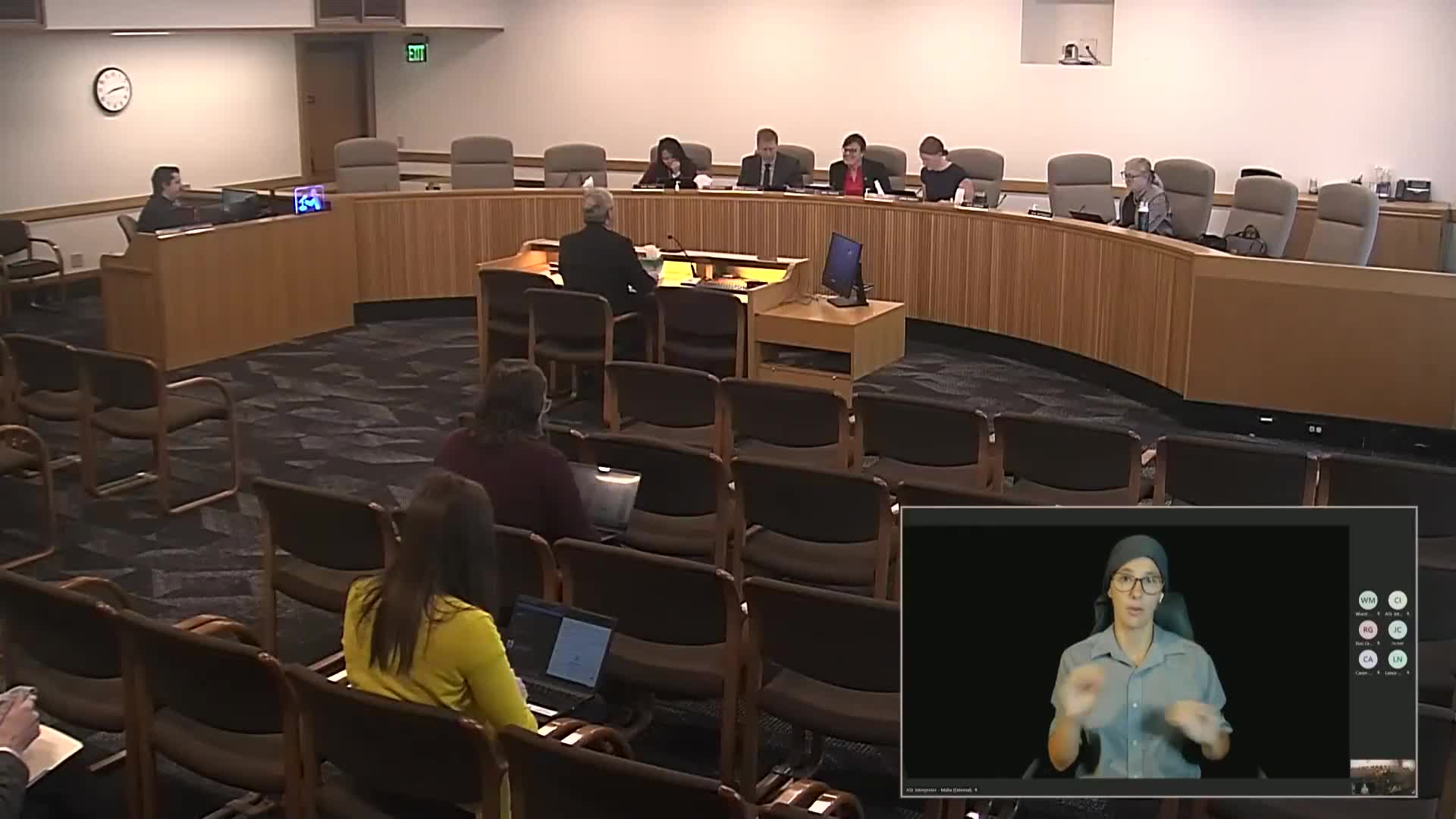
Business Oregon told the Senate Committee on Labor and Business that House Bill 2,348 will reduce duplicated requirements and make several program adjustments affecting the Oregon Growth Board, brownfield funding, port grants, water finance and childcare infrastructure.
House Bill 2,348, sponsored by Business Oregon, drew detailed testimony from Chris Cummings, deputy director of Business Oregon. The bill arrived in the Senate Committee on Labor and Business with a -1 amendment and 51 aye / 7 no votes from the Oregon House.
Cummings said the measure makes administrative adjustments across five program areas overseen by Business Oregon to reduce duplication and ease administration for both the agency and grant recipients. Key changes he described:
• Oregon Growth Board appointments: the dash‑1 amendment modifies board membership appointments to require two members who are not from the same political party, with specific recommendation rules for the speaker and senate president (and minority leader when applicable). Cummings said the change “makes it a bit easier… to work with the legislature to appoint members of the Oregon Growth Board.”
• Brownfield Property Revitalization Fund: the bill removes redundant deed‑restriction requirements for properties seeking Brownfield funds intended for housing and assigns deed‑restriction administration to the Department of Housing, because Business Oregon is “not involved in the deed restriction business.”
• Oregon Port Revolving Fund and Port Planning & Marketing Fund: the measure would allow the Port Planning & Marketing Fund to receive repayments from the Port Revolving Fund (not just interest) and explicitly include dredging among eligible activities; Cummings said ports had requested help with dredging costs and stakeholders (including the ports association) were consulted.
• Water/Wastewater financing: the bill removes a statutory requirement that every financed project include an asset‑management plan component, because many systems face emergency projects or DEQ orders that make tying project funding to whole‑system asset management impractical. Business Oregon will still offer funding to build asset‑management programs but will not require the plan on each project.
• Childcare Infrastructure Fund: the bill removes a requirement that tribes be participants in the Preschool Promise program to be eligible for childcare infrastructure funds; Cummings said only three tribes are currently members of Preschool Promise and the change would broaden eligibility; he noted tribes received about $2,000,000 of the $10,000,000 first round of funding.
Committee members asked for detail about what would replace the project‑level asset‑management requirement. Cummings replied the agency will use a “carrot rather than a stick” approach, offering targeted funding for districts to develop asset plans rather than requiring them for emergency projects. The committee closed public testimony and scheduled the bill for further consideration.
No formal vote on the bill was recorded in the transcript; Cummings said stakeholders including SDAO, League of Cities, AOC and ports had been involved in drafting the changes.