Get Full Government Meeting Transcripts, Videos, & Alerts Forever!
Get email alerts on the Budget topic
No spam. Unsubscribe anytime.
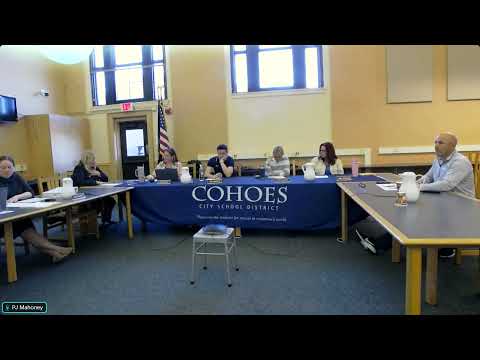
Cohoes board hears $54 million proposed budget; officials warn state aid uncertain
Summary
At its April 23 meeting the Cohoes City School District presented a proposed 2025-26 budget of roughly $54 million, citing heavy reliance on state and federal aid and small property tax increases under the cap; public hearing and final vote are scheduled for May.
The Cohoes City School District Board of Education on April 23 heard a presentation of the proposed 2025–26 budget, which the district said is $54,000,008.65 and represents a modest increase from the current year amid uncertainty about final state aid.
Stacy Mackey, presenting the budget on behalf of district staff, said the proposal has not changed since the last board meeting and that the district remains “heavily dependent” on state and federal aid. Mackey said about 63% of the district’s revenue comes from state and federal sources, roughly 33.5% from property taxes and about 2–2.5% from other revenues.
The proposed budget stays under the state tax cap: the district included a 2% property tax levy increase, which Mackey said would generate about $362,000 in new revenue. She said that, for a homeowner with a $150,000 assessed value, the levy change would amount to roughly $5 a month (about $60 a year) before considering changes to the STAR exemption. Mackey also noted that changes to STAR benefits are outside the district’s control and would alter household impacts.
Why it matters: the district is operating with an asterisk beside state aid because the New York State budget had not been finalized at the time of the presentation. That uncertainty affects the final revenue the district will receive and therefore the final adopted budget.
District officials described spending priorities and cost drivers. Instruction remains the largest expense line, the presenters said, and program-related costs (teacher salaries, pupil services, textbooks and instructional materials, and transportation) make up the majority of spending. Employee benefits rose by $542,000 and account for about 26% of the overall budget, administrators said. Utilities and transportation costs were called out as areas with significant increases.
Budget highlights presented by Mackey and other staff include:
- Safety staffing: the proposed budget adds a 0.5 campus safety monitor at the middle school and funds a stipend for a districtwide school safety coordinator to oversee security districtwide.
- Instructional programs: an alternative program for grades 8–10 is included.
- Technology support: the budget adds one computer technician position to support student devices; the district plans Chromebook replacements for fifth- and ninth-graders and new classroom displays.
- Facilities planning: staff noted HVAC audit results and discussed potential capital-reserve planning and local health-and-safety projects; debt service will normalize next year after a temporary decrease.
On English-language learners, Superintendent O’Shea (reporting to the board) said the district will start an expanded ELL program in the 2026–27 school year and that staff are identifying teachers now and planning professional development and site visits for staff to Harmony Hill, Lansing and Van Schaik. O’Shea said the district expects to use Title III ESL and Title III immigrant grants to help cover some translation and program support costs.
Administrative next steps and deadlines listed in the presentation include filing the property tax report card and the board petition deadline on April 28, a public budget hearing on May 7, and the annual budget vote on May 20 (polling locations at the district’s elementary schools, noon–9 p.m.). Mackey said the district planned mailings and website and ParentSquare updates ahead of the hearing.
The board did not take a final vote on the budget at the April 23 meeting; staff reminded the board of the upcoming hearing and the May 20 vote.
Ending: The district’s finance presentation emphasized constrained choices pending the state budget and rising costs for benefits, utilities and transportation. The board will hold a public hearing May 7 and voters will decide the budget at the districtwide vote on May 20.