Get Full Government Meeting Transcripts, Videos, & Alerts Forever!
Get email alerts on the Student Transportation Technology topic
No spam. Unsubscribe anytime.
District hears presentation on BuzzRite tablet GPS and parent-notification system; board to consider limited pilot
Summary
A vendor demonstrated BuzzRite’s tablet-based GPS, routing and parent-notification platform for school vehicles. Board members discussed pilot testing, data privacy, costs (about $1,100–$1,200 per tablet), potential state support and phased rollout options.
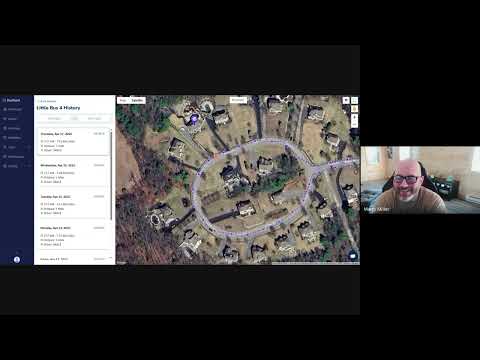
Marty, a regional sales manager for BuzzRite, demonstrated the company’s tablet-based routing, two-second GPS tracking and parent-notification features to the RSU 40/MSAD 40 School Committee during the transportation discussion. The presentation described live tracking of buses and vans, historical run storage and configurable parent alerts, and prompted questions about privacy, coverage in low-cellular areas and implementation scope.
The vendor said each vehicle would get a tablet that automatically loads the driver’s route when the bus is started, provides turn-by-turn visual and audible directions and sends location updates every two seconds. Marty said the system stores every run “indefinitely,” allowing staff to review stop times and vehicle speed to respond to parent complaints or investigate incidents.
Committee members asked how much information parents would see. Marty said parents would only see their child’s stop and an approximate ETA, and the district can limit map detail to roughly a quarter-mile so parents cannot track entire vehicles. Holly Doe asked whether BuzzRite signs a data-privacy agreement; Marty responded that the vendor would sign a DPA and offered to confirm whether an agreement has already been executed with nearby districts. Sarah Davis noted the district participates in the Student Data Privacy Consortium and that any vendor would be required to sign the consortium’s agreement or an addendum.
Board members discussed next steps: several favored a phased approach (a small pilot at one school or a limited number of vehicles) rather than outfitting the entire fleet immediately. Committee members asked about cellular coverage in rural areas and were told BuzzRite operates in remote Maine regions and reported successful coverage; Marty said the tablets continue to function in low-coverage areas the vendor serves. Cost estimates presented to the committee were about $1,100–$1,200 per tablet per year under a multi-year contract; that figure includes training and replacement tablets. Marty said districts typically sign a four-year agreement but indicated the vendor might accept a shorter term for an initial test.
Board members also discussed potential partial state funding for the purchase; participants said the amount varies by district and the vendor had identified that some state funding may be available but that exact shares were not yet confirmed. Several members asked staff to pursue more detail on cost, possible state contribution and the scope of a pilot before committing to a full rollout.
The committee did not take formal action at the meeting; members asked staff to return with a proposal for a limited pilot (for example, using one school’s regular runs and a small number of vans) and with information on exact pricing, state funding availability and executed data-privacy agreements.
The district will decide whether to pursue a pilot and whether to include parent notifications, the map limitation settings, and the number of vehicles to equip in an initial phase.