Get Full Government Meeting Transcripts, Videos, & Alerts Forever!
Get email alerts on the Land Use Development topic
No spam. Unsubscribe anytime.
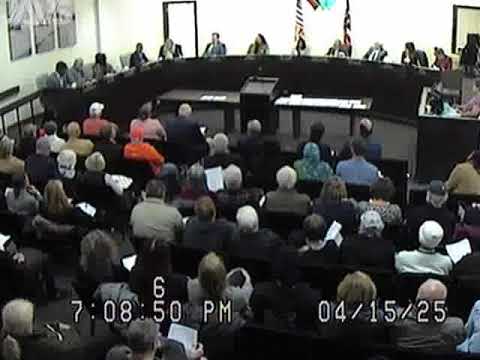
Whitehall council approves Fairway Cliffs incentives after heated public hearing
Summary
After a two-hour public hearing and extensive public comment, Whitehall City Council approved three ordinances establishing a community authority, a Community Reinvestment Area (CRA) tax abatement and a Tax Increment Financing (TIF) district to support the Fairway Cliffs housing project on 11 acres along Fairway Boulevard and Etna Road.
Whitehall City Council voted to approve three enabling ordinances for the Fairway Cliffs housing project on April 15, 2025, after a lengthy public hearing in which neighbors, developers and city staff argued over tax incentives, school impacts and preservation of Fairway Boulevard’s character. The measures passed after council votes that left the emergency clauses removed or not applied.
The project, presented by Mike Shannon on behalf of the applicant, would develop roughly 11 acres owned by Dan Schmidt into attached single‑family homes intended as owner‑occupied product. Shannon told the council the package of incentives and the creation of a community authority would reimburse developer costs for public infrastructure and set aside about $75,000 a year for the Whitehall City Schools for the first 15 years, increasing school receipts compared with current annual property tax receipts of about $9,140 on the two parcels.
The debate centered on trade‑offs: supporters, including Mayor Bevins and city staff, argued the incentives make owner‑occupied housing economically feasible and can spur generational wealth and market‑rate for‑sale product not seen in Whitehall for decades. Opponents, including many neighbors on Fairway Boulevard and speakers at the public hearing, said the development would violate the spirit of the city’s comprehensive plan, erode the boulevard’s historic character and divert tax revenue that they said should remain in the general fund.
Shannon said the development would dedicate parkland and a pedestrian path, construct public streets and utilities, and include buffering required by code. He told council the development team expects to reimburse the developer for capital improvements (roads, lights, utilities) over about 15 years and that the community authority’s payment flows would return more to the city and schools in years 16–30 once reimbursements end. He estimated developer reimbursement for infrastructure at roughly $1,807,487 (figure provided in presentation) and said the project would create between 130 and 150 construction jobs with about $13 million in payroll on a $21 million project.
Opponents questioned both the economics and the process. Multiple residents said the site is identified in local planning documents as a preservation priority and urged council to deny TIF/CRA incentives for a residential greenfield project. Speakers said the incentives shift tax burden from the developer and future homeowners to current taxpayers and asked the council to require a sliding‑scale abatement or other alternatives. Several public speakers also asked that the ordinances not be adopted as emergency measures so the public could pursue a referendum or have more time for review.
Council members asked technical questions about student generation rates, bond issuance and how service payments would be collected and distributed. Economic development staff and a city representative explained that service payments in lieu of taxes would be collected by the community authority and distributed annually to the city, school district and developer according to the approved formula until developer reimbursement is complete; after that point the funds would be available to the city and schools and could be used in the TIF area or elsewhere as council appropriates.
Council action: the three enabling ordinances—establishing the Fairway Cliffs Community Authority, approving a CRA property tax exemption application and creating the Fairway Boulevard TIF district—were each adopted by council vote. The council voted down or removed emergency clauses where required so the measures will proceed on the non‑emergency schedule outlined in each ordinance.
The council record shows substantial public engagement: dozens of residents and community groups spoke in opposition and in support, and council members debated terms and oversight. The project team said site‑specific commitments would be detailed in the development agreement, preliminary plat and final site plan steps that follow zoning and incentive approval.
Votes at a glance: Ordinance 9‑20‑25 (Fairway Cliffs Community Authority): adopted (emergency clause removed); recorded majority yes votes (4 yes recorded in roll commentary). Ordinance 10‑20‑25 (CRA exemption and infrastructure agreement): adopted (emergency clause removed/not applied); recorded votes: majority in favor. Ordinance 11‑20‑25 (Fairway Boulevard TIF district): adopted (emergency clause removed); recorded votes: majority in favor.
What’s next: The approvals authorize the city to proceed with the community authority and incentive framework; the developer and city officials still must finalize a development agreement, platting and site plan approvals. Council and staff said they expect follow‑up documents and further public engagement at permitting and platting stages.