Get Full Government Meeting Transcripts, Videos, & Alerts Forever!
Get email alerts on the Parks And Recreation topic
No spam. Unsubscribe anytime.
Village staff and consultants present neighborhood-park concepts for four Mount Pleasant parks; commission to forward to board
Summary
MSA Professional Services presented conceptual plans and high-level cost estimates for four neighborhood parks (Dierksy, Drose, James Turick and Pheasant Creek). Concepts emphasize accessible paths, native prairie restoration, playground upgrades and phased implementation; commissioners requested further detail on access, parking and budgets.
Consultants from MSA Professional Services presented conceptual improvement plans and high-level cost estimates for four neighborhood parks to the Village of Mount Pleasant Plan Commission on April 23. The parks under review were Dierksy Park, Drose Park, James Turick Park and Pheasant Creek Park.
Why it matters: The concepts aim to modernize and make the parks more accessible while balancing neighborhood character and budget constraints. Staff said the intent is to produce plans the village board can adopt and then implement over multiple years as capital budgets and grant opportunities allow.
Scope and key recommendations MSA’s landscape architect Kevin Byrne and landscape designer Hannah Kramer described the consultant team’s site analysis, public engagement and concept development. The work included on-site inventory, GIS and historical aerial review, and public input sessions. High-level elements across the four parks include accessible paved loop paths and playground surfacing options, native prairie restoration, small shelters, bike racks and bike-repair stations, and improvements to athletic elements where appropriate.
Dierksy Park: Convert the existing gravel trail to a paved, accessible loop with a larger accessible playground, bike racks and a small open shelter; estimate shown in the packet includes alternates for poured-in-place rubber surfacing or engineered wood fiber for play surfaces.
Drose Park: The most heavily used park. Two concepts were presented: Concept A emphasizes accessibility upgrades (paved routes, a larger playground, a covered picnic shelter, improved storage and relocated active play elements). Concept B is larger in scale and includes water and sewer extensions and a restroom shelter with permanent restrooms, expanded recreation features (half-court basketball, consolidated activity areas) and additional parking as a longer-term option.
James Turick Park: Preserve the central wooded wetland and restore native prairie in surrounding areas; add a mowed-loop walking path, a small shelter, a consolidated playground, and potential future connections to assumed development to the south.
Pheasant Creek Park: A low-intensity concept with a loop path around the stormwater pond, interpretive signage, a smaller nature-style playground and limited, informal parking improvements; the plan emphasizes visual screening and native restoration to buffer nearby homes.
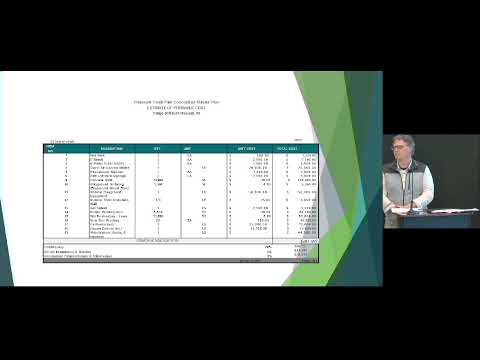
Costs and implementation MSA provided high-level, line-item cost estimates for each concept and alternate bid items to give the village options for phased implementation. The consultants said their cost estimates are based on current bidding experience and include contingencies, engineering and construction administration. Dierksy’s concept in the packet showed a probable total in the mid-six-figure range (the packet separated line-item alternates so the village can prioritize elements). The consultants and staff noted outside grants and partnerships (for example with local restoration groups) could reduce village capital costs for native-plant/restoration components.
Public and commission input Commissioners asked about likely user populations and the rationale for different surfacing materials; MSA said the parks were evaluated as neighborhood parks with typical walkable service radii and that alternate surfacing was provided in cost estimates. Commissioners also discussed right-of-way and future access improvements, especially at Drose where the original park access was platted for a future public street; staff said decisions on improving the access road and whether to pursue water/sewer extensions would be a village-board budget decision.
There was no recorded public opposition during the parks presentation. Staff said the consultants will finalize plans and a report for presentation to the village board for formal adoption; the packet and public input materials will be made available online.