Get Full Government Meeting Transcripts, Videos, & Alerts Forever!
Get email alerts on the Zoning Commercial Kitchens topic
No spam. Unsubscribe anytime.
Shorewood planners consider allowing commercial kitchens at churches and other institutional sites
Summary
The Shorewood Plan Commission heard a petition to permit commercial kitchens in the village's P‑1 institutional zoning district, including a presentation from North Shore Presbyterian Church and a local entrepreneur proposing a shared kitchen model; no formal rezoning action was taken and staff was asked to research code and outreach options.
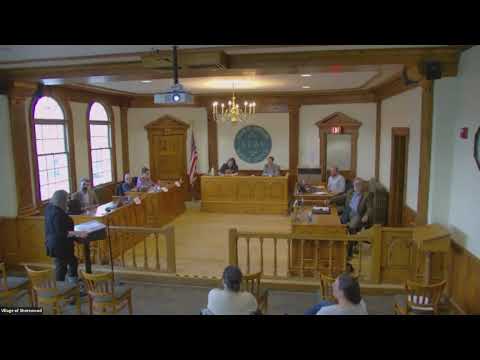
The Plan Commission of the Village of Shorewood discussed a petition to allow commercial kitchens as a permitted principal use in the village’s P‑1 (public and semi‑public) zoning district during its meeting that began at 6:30 p.m.
Director Griegentag, the village planning director, said the proposal would amend the principal use table in Section 5‑35‑25 of the Shorewood zoning code to add commercial kitchens in P‑1 properties and noted the change would affect all P‑1 parcels, including school district buildings, village facilities and four houses of worship. He told the commission the applicant seeks to use an underused church kitchen to provide shared facility access for small food businesses and said the commission must confirm the amendment “furthers or does not conflict with the objectives, goals, and policies contained within the comprehensive plan,” citing Act 391 (2015) as the state statute the village follows when considering zoning updates.
Reverend Janine Oakes Doherty, pastor at North Shore Presbyterian Church, described the church’s neighborhood programming and the congregation’s intent to make its underused commercial kitchen available to local food entrepreneurs as a way to support small business and neighborhood programming. “We’re hoping to open that up to a whole block,” she said, and described uses such as a weeklong camp and after‑school programming that could pair with teaching food skills.
Joby Murray, a cottage baker who said she would operate in a shared‑kitchen model, told commissioners she envisions “one to two makers at a time in the building,” limited access tied to the church’s schedule and no storefront retail from the kitchen. Murray said the shared space would be intended as an affordable production option for entrepreneurs who outgrow cottage‑scale operations but are not ready for a brick‑and‑mortar bakery.
Commissioners asked for clarifications about prior requests, demand beyond the applicant, potential effects on schools and other institutional users, and whether the change should be limited to food uses or broadened to the existing artisan/hand‑production category. Director Griegentag said he has no record of formal recent requests for commercial kitchens in P‑1 and offered to contact the school district and the area churches to ask whether they’d been approached about shared commercial kitchen use. He also outlined two code‑update choices for the commission to consider: add artisan production (the existing grouped category) to P‑1; or create a separate, food‑specific category; and whether to make the use permitted or conditional (conditional uses require additional public review and cannot be denied).
Resident Barbara Kiley Miller asked whether fire and health inspections would be required; Director Griegentag confirmed those reviews—fire inspections for hoods and health‑department permits—would be part of the occupancy review if a separate operator occupied the space. He also said the village does not require proof of liability insurance for an occupancy permit, but landlords commonly require insurance in lease agreements.
No formal rezoning motion or vote was taken. The planning director described a best‑case procedural timeline if the commission chose to pursue a recommendation: a potential commission recommendation at the May 27 meeting followed by a June 2 public hearing before the Village Board, but he emphasized those dates were projections and that the commission could take more time. Commissioners asked staff to prepare draft language and outreach information, including contacts with the school district and business groups, and to return with materials at a subsequent meeting for formal action.
The item was left open for future consideration; commissioners suggested topics for staff research include limiting retail to artisan goods if retail is considered, hours and location conditions for conditional uses, and clarifying the permit and occupancy steps that would apply to independent operators.