Get Full Government Meeting Transcripts, Videos, & Alerts Forever!
Get email alerts on the Elementary Math Curriculum topic
No spam. Unsubscribe anytime.
Bethlehem Central presents Tang Math rollout, cites stronger early-grade number sense
Summary
District staff detailed the Tang Math elementary curriculum, its alignment to New York standards, a phased K–5 rollout and supports for teachers and families; board members asked about parent access and transition to middle school.
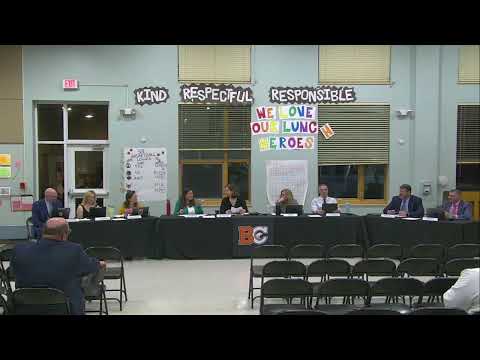
The Bethlehem Central School District heard a detailed presentation on the Tang Math elementary curriculum and its phased rollout during the board meeting presentation slot.
District staff said the program emphasizes a concrete–pictorial–abstract (CPA) progression and “supports meaningful discourse,” aligning with New York State Next Gen standards and NCTM principles, and is designed to build conceptual understanding, problem solving and procedural fluency.
Phil Fairmont, who identified himself as a master advisor, told the board the program uses manipulatives, number bonds and bar models and that teachers are reporting stronger number sense and more automatic facts among students who used the curriculum this year. “We’re seeing a lot of students come in with a much stronger skill set,” Fairmont said, describing a robust review unit that refreshed previous-year material and helped students enter the year more prepared.
Fairmont outlined the district’s timeline and supports: Tang Math was available for teacher exploration beginning in 2019, cabinet-level approval for full adoption occurred in 2024, and the district is rolling the program out in tiers (K–3 implemented this year, fourth grade next year, and fifth grade the following year). He said the publisher provides extensive professional development, live office hours, on-demand videos and a growing digital library of student lesson videos and fluency games. Fairmont described direct support from the Tang team, including scheduled one-on-one PD, and said an AI-enabled support tool and enhanced digital features will launch in the coming school year.
Board members asked how families can access lessons and whether parents can be assigned student lessons. Fairmont confirmed teachers can add student accounts and assign lessons so parents may view or assign content for home use. He said some materials—short “getting started” avatar videos and recorded classroom lessons—are intended both for absent students and as refreshers for families.
Members pressed on transition issues between elementary and middle school. Fairmont said the district will convene fifth- and sixth-grade teachers to build a “bridge” so students who experience Tang Math in elementary grades can move smoothly into middle-school expectations. “The fifth grade team has an opportunity to talk with the sixth grade team to say, these are our standards…so we have to bridge that gap,” Fairmont said.
Fairmont and other presenters also described differentiation and challenge opportunities in the program: leveled assessments, problems of the day, challenge problems and New York State preparation items available at multiple difficulty levels. He said teachers can assign higher-level pages or specific challenge tasks for advanced students.
The presentation included anecdotal feedback from teachers, students and parents describing increased engagement—tournaments, puzzles and fluency games—and an emphasis on consistent, cross-grade strategies that students can carry from kindergarten through fifth grade.
Board members and staff identified next steps: continued teacher supports, parent engagement events (virtual or in-person), and targeted meetings between elementary and middle school teachers to smooth curriculum transitions. No formal board action was taken on the presentation itself.
The district said additional rollout details and family-facing registration or access instructions will be posted on the district website and distributed to families.