Get Full Government Meeting Transcripts, Videos, & Alerts Forever!
Get email alerts on the Capital Improvement Plan topic
No spam. Unsubscribe anytime.
Auburn council reviews $11.7 million CIP proposal, debates vehicle and media-equipment funding
Summary
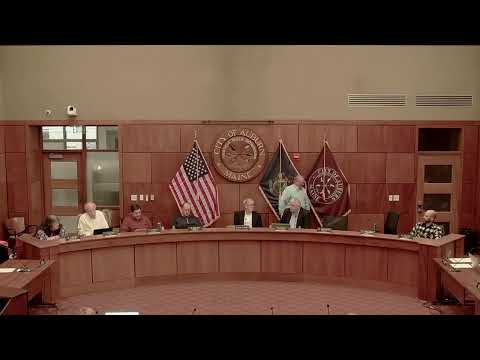
Auburn city officials spent their April 22 workshop reviewing a proposed FY2026 capital improvement plan (CIP) that would finance roughly $10.8 million in city projects and a $1 million allocation for the Auburn School Department, with discussion focused on school facility fixes, public-safety and drainage projects, IT upgrades and vehicle replacements.
Auburn city officials spent their April 22 workshop reviewing a proposed FY2026 capital improvement plan (CIP) that would finance roughly $10.8 million in city projects and a $1 million allocation for the Auburn School Department, with discussion focused on school facility fixes, public-safety equipment, IT upgrades and vehicle replacements.
Councilors and staff said the school department’s FY2026 request totals $1,000,000 for two projects: an $800,000 ventilation upgrade at East Auburn School and a $200,000 storage building at Edward Little High School. “When the high school was built, there was nothing for storage at all,” said Dr. Doris (superintendent), describing the plan for a cold-storage building near the tennis courts to house snow-removal and field equipment. The superintendent told councilors the storage building is roughly 40 by 62 feet.
Why it matters: staff and council framed the school requests as repairs and safety work prioritized in the Harriman facilities assessment, not new development. Councilor Adam Platts said the East Auburn HVAC project is listed in Harriman’s report as an “immediate priority” and said the school is focused on critical needs rather than new construction.
Public-safety and EMS items were a central focus. Auburn Fire Chief Robert L. Chase described a planned one-for-one replacement of an aging rescue boat with an inflatable hull reinforced by aluminum, a jet-pump drive (to reduce damage on rocky riverbeds) and required personal protective equipment. “It is the single biggest, most frequently used piece of rescue equipment that we have,” Chief Chase said, noting frequent river calls, searches and other deployments (including wildland access and spill containment). He estimated lake-related containment incidents at “no more frequently than once or twice a year.”
Chief Chase also urged replacement of a 20-year-old breathing-air fill station, citing repeated compressor rebuilds and growing bottle capacity after upgrades to self-contained breathing apparatus. He said a replacement would avoid periods with no fill capability and could be timed with other station work to avoid a gap in service.
EMS staff described a planned ambulance remount (moving an existing patient-care box onto a new chassis) and replacement of cardiac monitors and power stretchers on a scheduled recapitalization cycle. The remount reduces cost versus purchasing a new ambulance because the patient-care box is reused.
IT, communications and public-facing media equipment dominated another stretch of discussion. IT staff asked councilors to continue funding fiber network extensions (to reduce leased lines), security-camera replacements and expansion, and a multi-year plan for connections to new city sites such as Kitty Hawk and Lake Grove Park. Staff said the city currently uses roughly 12–14 leased fiber lines at about $125 per line per month and is proposing bond allocations over four years to extend municipal fiber to additional sites and reduce recurring lease costs.
Jill (IT) said Auburn has about 200 cameras already in service; the CIP includes $100,000 per year estimated to procure roughly 10 cameras (about $10,000 apiece on average, staff said) for replacements and new high-priority locations. Councilors pressed for location-level plans for new cameras and for moving recurring replacement work into operating capital rather than bonding.
Councilors also questioned a $35,000 TriCaster and meeting-room broadcast-equipment request. Staff noted cable-franchise funds currently cover some equipment maintenance but that those receipts flow into the general fund rather than a dedicated capital account. After discussion the council asked staff to explore shifting TriCaster funding to operating capital (using franchise revenues) rather than bonding the item.
Police technology purchases drew agreement to use a five-year financing arrangement for cruiser cameras and body-worn cameras. Police said the proposed agreement would cover replacement, cloud licensing and annual fees and would be treated similar to a lease: “they automatically ship us a new one, no charge,” the department said.
Engineering and public-works items included continuum projects (reconstruction, reclamation and resurfacing), retaining-wall assessments, major drainage and the Stetson Road culvert replacement. Engineering staff described recent inspections showing the Stetson culvert “unzipping” and the need for immediate closure after the structure’s condition deteriorated; the city reported that the road was closed following recommendations from the Maine Department of Transportation and that a bid was issued the same week.
Councilors debated several fleet purchases and asked staff to prioritize. Public Works staff described a large municipal fleet and recommended replacement for several aging trucks, including a 3/4-ton plow-capable vehicle and a crew-cab pickup used by parks crews; councilors proposed delaying or reducing the scope of some passenger-vehicle replacements (notably one engineering SUV and a half-ton pickup) to smooth CIP totals and delay operating impacts. Councilor Leroy Walker suggested cutting or deferring a $50,000 engineering-vehicle replacement; other councilors proposed reducing the budgeted amount and seeking lower-cost procurement options.
Other CIP items reviewed included Lake Grove Park parking and basketball-court improvements (grant match funding), airport match funding for a federal grant, dangerous-building and junkyard cleanup reserves, an ongoing comprehensive-plan budget, record-restoration funding ($50,000 annually, down from prior $100,000), parks furniture replacement, and a request to continue a $50,000 annual contribution toward LA Transit (LATC) bus replacement.
On process and next steps: staff and the finance director provided estimates of debt-service impacts from the proposed bonding plan. The manager and finance director told councilors bonding the proposed CIP this year would raise consolidated city-plus-school debt-service modestly; the council requested additional detail on the public-safety facility (referendum project) draw schedule and noted that earlier decisions (delaying facility projects) had increased later-year costs. Councilors also discussed broader risk factors—tariff-driven price increases and federal proposals affecting municipal bond tax status—that could raise borrowing costs in future years.
Votes and direction: councilors unanimously agreed to schedule a May 5 public hearing on the CIP and budget materials and asked staff to return with refined price estimates, revised vehicle needs, and a plan to move some recurring technology items into operating capital where franchise or operating revenues could cover them.
The council adjourned the workshop portion and resumed the regular meeting agenda afterward.