Get Full Government Meeting Transcripts, Videos, & Alerts Forever!
Get email alerts on the Budget Overview topic
No spam. Unsubscribe anytime.
City managers and finance director present conservative FY26 budget; committee gives preliminary approval to finance budget
Summary
City Manager Scott and Finance Director Emily Oster presented a conservative FY26 budget overview emphasizing a $30 million emergency reserve, a proposed 3% across‑the‑board pay increase and targeted investments in finance staffing and technology.
City Manager Scott and Finance Director Emily Oster presented a conservative FY26 budget overview to the Finance Committee on April 24, emphasizing tight revenue assumptions, a robust emergency reserve and targeted staffing and technology investments while acknowledging near‑term risks tied to national economic uncertainty.
Oster said the budget team set a conservative gross receipts tax (GRT) assumption of 5.9 percent growth for FY26 and built the city’s budget using three‑year averages and by removing one‑time expenditures from department base budgets. She told the committee the finance department now totals 57 full‑time equivalents and that the budget office is fully staffed after recent hires.
City Manager Scott emphasized both strengths and risks: the city projects a general fund balance near $32.6 million at fiscal year end and maintains an emergency reserve that approaches the Government Finance Officers Association guideline of 20 percent. "So the $30,000,000 emergency reserve is definitely a positive for our city," Scott said, noting the city’s relatively low debt and manageable pension obligations compared with many other municipalities.
At the same time, Scott listed several budgetary risks: ongoing uncertainty about GRT revenues, rising liability exposure for self‑insured claims, deferred facility and equipment replacement reserves, and continued challenges recruiting in a tight labor market. He warned the governing body it may need to revisit the budget in a few months depending on revenue performance.
Oster described a planned reduction in recurring general‑fund accounting consultant spending and a coordinated reallocation of consulting costs across enterprise funds. That restructuring would free recurring funds to create two new finance positions — a capital budgeting specialist and a vendor‑management position — while leaving a smaller ongoing allocation for consultant support. She said the proposed structure includes $500,000 in recurring general fund dollars for accounting professional services and an additional $500,000 of one‑time funding for FY26; Public Utilities would carry $1,000,000 in enterprise funds for CLA support.
On personnel and compensation, Scott urged continued investment in employees: the proposed package includes a 3 percent across‑the‑board increase costing about $4.5 million across all funds and roughly $3.2 million in the general fund. Staff also plan to implement the remaining tranches of the class‑and‑comp parity adjustments in July and January as part of multi‑year compensation steps.
City projects and capital needs highlighted by Scott included Midtown infrastructure, Shelby Street pedestrian bridge, Cerro Gordo bridge work, Warehouse 21 planning, ongoing street repaving financed partially through an approved $25 million debt issue, and wastewater treatment plant planning. He noted some projects have design funding but not construction funding.
Key technology and process initiatives presented by Oster include implementing the Questica budgeting system, migrating procurement functions to OpenGov, expanding Munis functionality for capital asset and grant accounting, and deploying an RTA fleet management tool. Oster said these investments are intended to modernize business processes and reduce long‑term reliance on consultants.
On accounting and audits, Oster said the finance team is back on a normal audit cadence after an accelerated period; the FY25 financial statement and compliance audit is expected to be completed on schedule and the city is issuing an RFP for audit services.
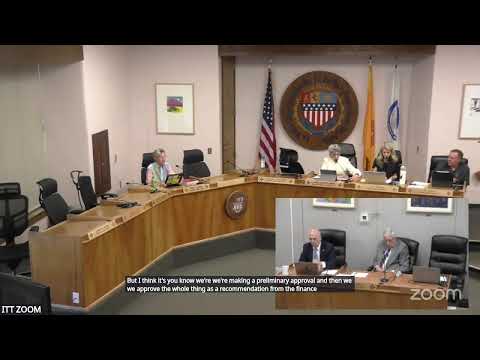
Committee action: After discussion, the Finance Committee voted to give preliminary approval to the Finance Department budget as presented. A roll‑call vote recorded four yes votes and one absence (Councilor Lindell); the committee will consider department‑level hearings in coming days as FY26 reviews continue.
Ending: City staff said they will continue to monitor GRT and national indicators and may return to the governing body for adjustments if revenues diverge from current assumptions.