Get Full Government Meeting Transcripts, Videos, & Alerts Forever!
Get email alerts on the Rezoning Keswick topic
No spam. Unsubscribe anytime.
Committee pauses contested Keswick Road rezoning amid legal concerns and divided neighborhood views
Summary
Council Bill 250017 to rezone the odd side of the 3400–3500 block of Keswick Road from C-1 to R-7 was recessed after public testimony raised legal and policy objections; Planning Commission proposed an amendment to exclude a church property.
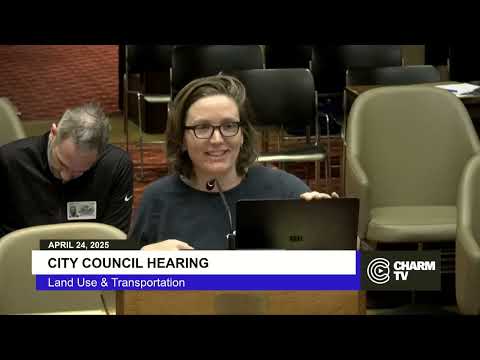
The Baltimore City Council Land Use and Transportation Committee on April 24 recessed consideration of Council Bill 250017, a proposal to rezone the odd-numbered side of the 3400–3500 block of Keswick Road in the Hamden/Wyman Park area from C-1 to R-7, after residents and agency staff raised legal, procedural and policy concerns.
Councilwoman Ramos, the bill sponsor, said the rezoning would make that short segment consistent with the surrounding R-7 neighborhood and would aid residents rebuilding after an October fire that damaged multiple houses on the block. "We want to rezone it to make it consistent with the area," Councilwoman Ramos said, noting six houses had been demolished and 14 were damaged by the fire.
The Planning Commission recommended an amendment to remove a single property — a church at 3439 Keswick Road — from the rezoning so the church would remain in a commercially oriented land-use category. Michelle Toth of the City Law Department advised the committee that the department did not view this measure as meeting the characteristics of a comprehensive rezoning and recommended the council "find facts" that would demonstrate a mistake in the prior (2017) comprehensive rezoning if it wished to proceed as a piecemeal change.
Public testimony at the hearing reflected a split among neighbors. Elizabeth Thornberry, a Willamette Park resident, opposed the bill on policy and legal grounds, arguing it would reduce housing options and that "spot zoning" that is not supported by the statutory mistake standard can invite lawsuits. "This bill does not add any uses. It simply takes them away," Thornberry said, and she warned that illegal downzoning could expose the city to litigation.
Representatives of the Hamlet Community Council and several residents supported the rezoning as a correction of an apparent drafting error from the comprehensive rezoning. "Because it, the other houses along Keswick, basically, all except for this one tiny little section are all in the R zoning. It seems that it would have been logical that they would have followed through," said Blazer Hearn of the Hamlet Community Council.
Tyler O'Shanell, deputy director for local affairs in the mayor’s office, told the committee the administration is increasingly requesting Finance provide analyses when downzonings would affect multiple or large parcels, noting potential property-tax revenue implications.
Committee members and the law department discussed the legal standard for a "mistake" finding under Maryland law and the 2017 comprehensive rezoning. Michelle Toth summarized the standard as requiring evidence that the council failed to take into account existing facts at the time of the prior comprehensive rezoning; she emphasized it is not merely a judgment change.
Given those legal concerns and the mixed testimony, Chair Ryan Dorsey recessed the item for further deliberation, saying the committee would return to it after other business or at a later date. The Planning Commission’s recommended amendment excluding the church remains part of the record; the committee did not adopt a final vote on the rezoning at this hearing.