Get Full Government Meeting Transcripts, Videos, & Alerts Forever!
Get email alerts on the Digital Billboards topic
No spam. Unsubscribe anytime.
Council, Planning Commission weigh Lamar proposal to digitize select billboards; staff and commission urge caution
Summary
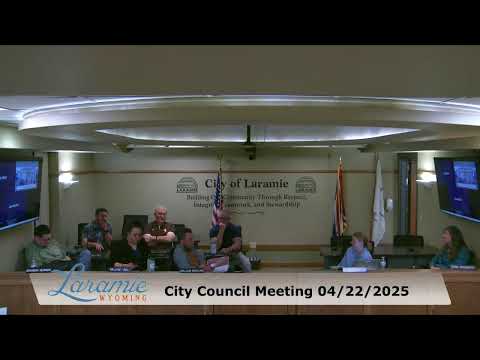
The Laramie City Council and Planning Commission held a joint work session April 22 to review a proposed Lamar Advertising text amendment that would allow conversion of select nonconforming billboards in Laramie to digital displays.
The Laramie City Council and Laramie Planning Commission spent the April 22 joint work session examining a proposed text amendment from Lamar Advertising to allow conversion of some nonconforming billboards inside city limits to digital displays.
City planning staff presented regulatory options and limits, emphasizing that municipalities can control location, spacing, size, height, illumination and motion of signs but cannot regulate content because of First Amendment constraints. Director Derek Tini told the council a major policy decision — allowing conversions or enlargements of nonconforming billboards — would likely be more appropriately considered as part of the city’s comprehensive‑plan update. "If we are looking at going that route, maybe a good idea to postpone, until we are able to have those discussions through the comprehensive‑planning process," Director Tini said.
Lamar representative Megan Getz and local Lamar staff described the company’s proposal and the technology. Getz said Lamar seeks a one‑for‑one conversion of existing static structures and provided technical exhibits and operational details, including a typical dwell time of eight seconds for digital slots and monitoring procedures to remove inappropriate content. "We provided the responses to those questions with exhibits," Getz said when asked about materials submitted to council and commission.
Lamar and its technical vendor emphasized dimming, louvers and engineering to reduce light spill; Daktronics representative Chris Bates answered technical questions about illumination and modules. Lamar also described that some inventory can be reserved for city messaging and that nonprofit rates are reduced, saying digital boards can be used for Amber Alerts, emergency notifications and community announcements.
Planning staff and several planning commissioners warned that changing the nonconforming standard would have broader consequences. Planning Commission Chair Matamore cautioned councilors that converting billboards could “open the door” to on‑premise elevated electronic message centers (EMCs) and added visual clutter on corridors such as Third Street and Grand Avenue. Commissioners noted Laramie’s existing comprehensive plan and sign code language that discourages expansion of billboards outside the I‑80 corridor and said the planning commission recommended denial of the specific nonconforming‑use text amendment presented earlier in the review process.
Councilors’ views were mixed: some described the proposal as a potential economic and communication tool that could expand local advertising opportunities, while others said they prefer to await the comprehensive‑plan revision and broader public engagement. Councilor Lockhart said the proposal could be “pro‑business,” while Councilor Bolling and Planning Commission members urged caution and public input. City Clerk Nancy reminded the council that any amendments at the May 20 first reading must be relevant to the ordinance under consideration (identified in staff materials as Ordinance 21‑02).
No formal council action was taken at the April 22 work session; staff said the text amendment and any proposed ordinance language could return for first reading on May 20. Planning staff advised that a broader comprehensive‑plan process launching next month — expected to run about a year — would be a logical venue for community discussion about sign policy and aesthetics.
Key points
• Scope of regulation: Municipal control includes location, spacing, size, height and illumination, but not content.
• Nonconforming status: Existing billboards are treated as nonconforming; staff said code currently prohibits enlargement or expansion of those structures outside expressly allowed corridors.
• Planning recommendation: Planning staff and the planning commission recommended denial of the current nonconforming‑use text amendment and encouraged broader public engagement tied to the comprehensive‑plan update.
• Lamar proposal: Lamar seeks to convert up to three Third Street boards and one on Twentieth & Grand (the company indicated it is interested in converting 3 on Third and 1 on Grand), proposing one‑for‑one digitization and offering a city slot for messaging.
• Next steps: Council discussion, potential motions or amendments at first reading on May 20; staff and commission urged careful drafting so any changes do not unintentionally allow elevated on‑premise EMC conversions elsewhere in the city.
The council and commission scheduled further consideration for the coming weeks; staff recommended any substantial policy change be informed by the comprehensive‑plan community engagement process now set to begin next month.