Get Full Government Meeting Transcripts, Videos, & Alerts Forever!
Get email alerts on the Consumer Finance topic
No spam. Unsubscribe anytime.
Senate approves House bill adjusting credit‑union merger voting and increasing allowable prepaid finance charge to 3%
Summary
Conference committee report number 1 for House Bill 1125 passed the Senate 44-1. The reconciled bill allows absentee voting for credit union mergers and raises the allowable nonrefundable prepaid finance charge on certain second mortgages and home equity loans from 2% to 3%.
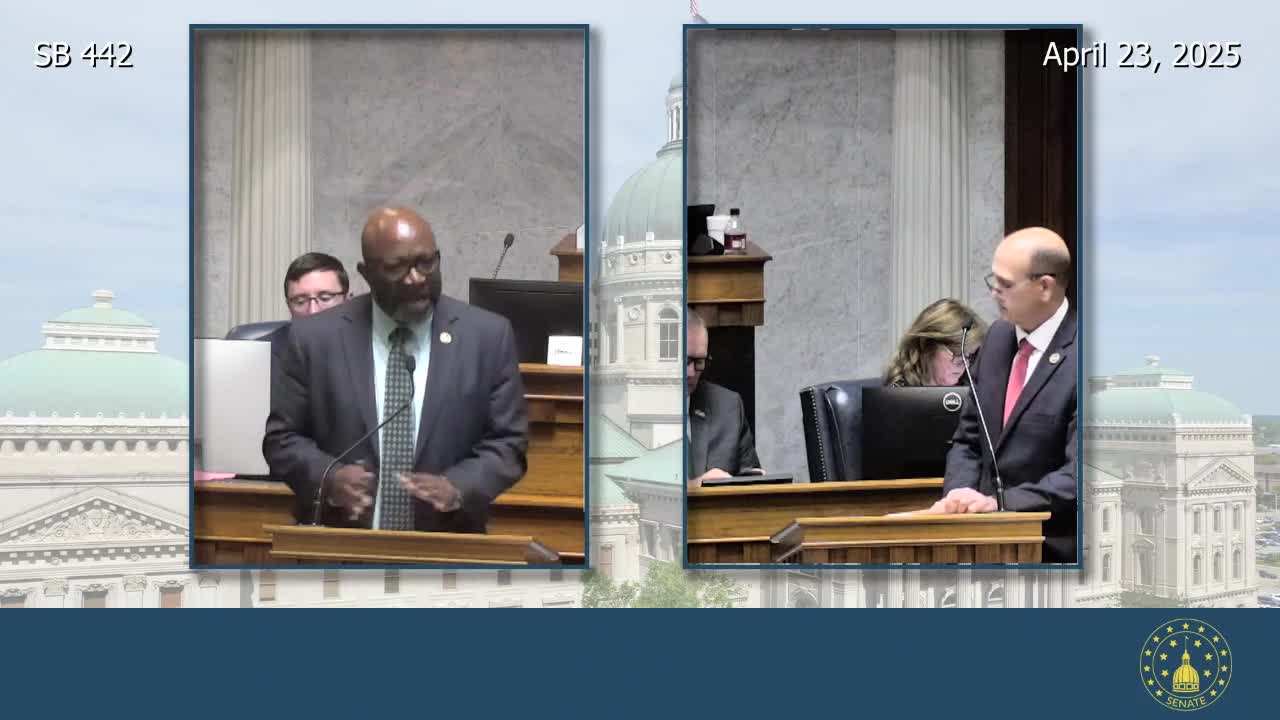
The Indiana Senate on April 23 adopted the conference committee report for House Bill 1125, a measure that makes two distinct changes: it allows absentee voting for credit union mergers and raises the allowable nonrefundable prepaid finance charge for second mortgages and home equity loans from 2% to 3%.
Senator Walker, presenting the report, said increasing the allowable prepaid finance charge from 2% to 3% would expand market access for some borrowers and help consumers at the margin obtain home‑equity products. In questions, Senator Taylor asked about disclosures and the financial tradeoffs; Walker described a sample scenario in which paying up to three points (about $1,500 on a $50,000 line) lowers monthly payment and produces a breakeven in about five years, while noting federal Truth in Lending disclosures required amortization and cost information.
Nut graf: Supporters said the change aligns Indiana with other states and could open access to home equity for borrowers close to lending thresholds; senators asked for additional consumer disclosure language for future sessions.
Formal action: The machine was closed and the clerk tallied 44 ayes and 1 no; the conference committee report passed and the secretary will inform the House.
Ending: Sponsors said they would work on consumer‑facing disclosure language in future bills; supporters urged colleagues to approve the change to expand market opportunities.