Get Full Government Meeting Transcripts, Videos, & Alerts Forever!
Get email alerts on the Sex Education Transparency topic
No spam. Unsubscribe anytime.
Senate approves requirement that school districts publish sex‑education materials, adds consent and fetal‑development video mandates amid heated debate
Summary
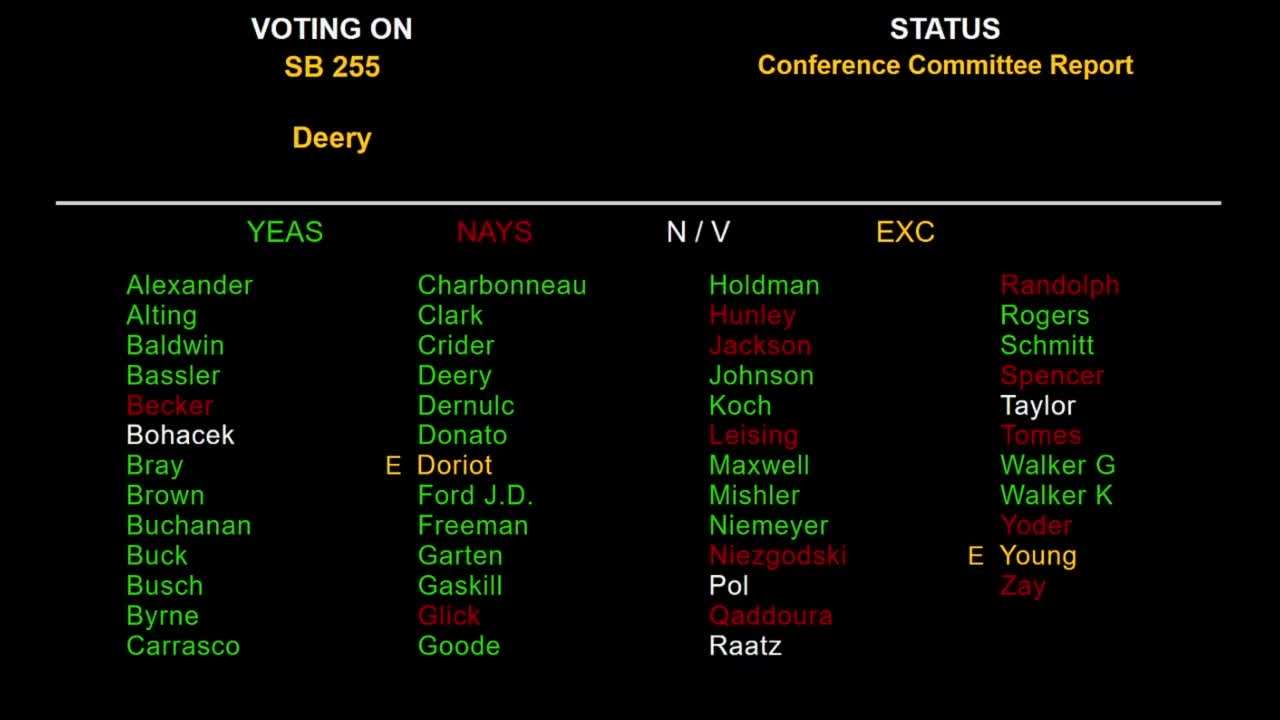
After extended floor debate about local control, prescription and parental rights, the Senate passed conference committee report number 1 for SB442 requiring school boards to approve and publish materials used in human sexuality education; the report passed 35-12.
The Indiana Senate on April 23 passed conference committee report number 1 for Senate Bill 442, a measure that requires local school boards to approve materials used to teach human sexuality education and to publish a list of those materials in a conspicuous place on the school district website.
Senator Byrne, the report author, told the Senate the bill requires that local school boards approve any material used to teach sexuality education and post a list of approved materials so parents can decide whether their child will participate or opt out; she said the bill "does not say you have to publish the full text of materials. It just says they have to publish the list of materials."
The reconciled text adopted in conference carries House amendments that include an age‑appropriate requirement to teach the importance of consent to sexual activity and to show “a high definition ultrasound video at least three minutes in duration” as part of lessons that address fetal development. Those additions prompted sustained floor debate about local control, administrative burden and specificity.
Nut graf: Supporters framed the measure as transparency for parents; critics said the House language made the bill overly prescriptive (down to video length, format and enumerated fetal‑development content) and risked increasing administrative work for districts or chilling instruction.
Floor debate: Multiple senators questioned why the House had added prescriptive details such as the three‑minute high‑definition fetal‑development video and the explicit list of organ systems to be shown; Senator Yoder and Senator Taylor said the measure is overly prescriptive and could politicize school boards’ curricular decisions. Senator Hundley said she would support comprehensive sexual‑health education but that this bill is not comprehensive and “flies in the face” of recent efforts to reduce mandates on districts. Senator Byrne repeatedly responded that the bill’s primary purpose is transparency and that school boards already approve curriculum materials.
Formal action: After extended discussion, the machine was closed and the clerk tallied 35 ayes and 12 noes. The conference committee report was approved and the secretary will inform the House.
Implementation note: The bill includes opt‑out procedures already in state law and adds requirements that approved materials be posted on district websites; sponsors said the measure is meant to make it easier for parents to find approved materials and thereby reduce administrative steps like multiple mailed notices.
Ending: Supporters called the measure local control plus transparency; opponents warned the prescriptive House additions could restrict local boards’ discretion and increase administrative burdens on districts.