Get Full Government Meeting Transcripts, Videos, & Alerts Forever!
Get email alerts on the Nuisance Ordinance topic
No spam. Unsubscribe anytime.
Spencer County Fiscal Court adopts revised nuisance ordinance after extended debate
Summary
After several hours of debate and multiple amendments, the Spencer County Fiscal Court approved a revised nuisance ordinance Tuesday by a 5-1 vote. Changes lengthen abatement deadlines, add limited farm-related provisions and remove criminal confinement language while retaining daily fines as a possible penalty.
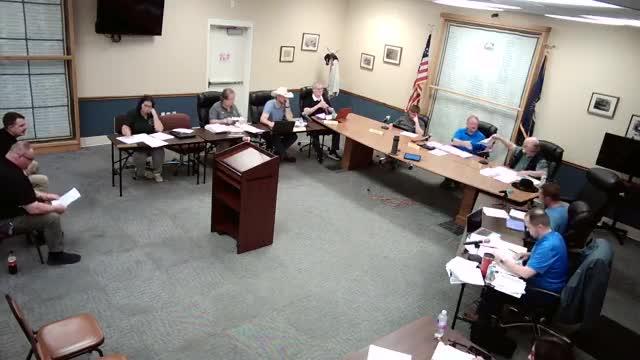
Spencer County Fiscal Court on April 21 approved a revised nuisance ordinance, voting 5-1 to adopt the measure after several hours of debate and multiple amendments.
The ordinance, adopted on second reading, makes several substantive changes to the county’s code enforcement rules. Key changes include extending the time property owners have to remove discarded items from three days to 30 days, adding limited language that makes certain rubbish provisions applicable to farms, striking phrases that referenced “vermin, rodents or insects,” and deleting a clause that would have allowed confinement (jail) of violators. The court did, however, approve an amendment restoring language that treats each day a violation continues as a separate offense.
The revision process drew sustained discussion from the court and members of the public over how to balance enforcement, public-health concerns and protections for longstanding farm practices. County officials said the adopted language is intended to give code enforcement staff discretion to address public-safety hazards while avoiding overreach into normal agricultural activity.
Court members debated several specific items during the meeting. Commissioners raised concerns that a three-day deadline was impractical for many residents and farm operators; the court’s adopted text moves the default abatement period to 30 days. Commissioners also discussed how to treat accumulations of tires and farm equipment, noting both the environmental and health risks of large, unmanaged piles (standing water in tires, for instance, can increase mosquito breeding) and the practical reality that farms sometimes keep parts or spare tires on hand. The final ordinance adopts an approach meant to give enforcement staff a framework while preserving an appeals route to the fiscal court for disputed cases.
The court also removed criminal confinement language from the penalties section and limited the daily-penalty language to apply after the statutory notice and appeal process. Under the adopted procedure, property owners first receive a written notice and are given the prescribed abatement period; if they do not remedy the condition and an administrative process is exhausted, the matter may be subject to fines and further action. The ordinance continues to permit the county to recover costs for cleanup and to place liens where appropriate.
County Attorney Corey (identified in meeting discussion as the official advising the court) and other staff explained that the ordinance’s definition of “farm” for several provisions remains narrow and tied to parcel size and specific land uses; several commissioners suggested that more detailed farm-specific code could be developed separately if needed. Commissioners repeatedly emphasized that enforcement should be exercised with “common sense and discretion” to avoid penalizing property owners for long-standing or benign land uses while still addressing public-health and safety hazards.
Judge Travis cast the lone recorded “no” vote when the court approved the ordinance 5-1. The court instructed staff to finalize the amended ordinance language, record the enacted ordinance with the county clerk, and to follow the adopted enforcement and appeals procedures outlined in the ordinance text.
The ordinance will be published and made available in full through the county clerk’s office; the fiscal court recorded the second-reading adoption during the April 21 meeting and asked staff to prepare the final, signed documents for recording.