Get Full Government Meeting Transcripts, Videos, & Alerts Forever!
Get email alerts on the Energy Nuclear Microreactors topic
No spam. Unsubscribe anytime.
Radiant pitches Casper site for factory of 1-megawatt microreactors; company, local leaders discuss jobs, safety and infrastructure support
Summary
Radiant (Radiant Nuclear) presented plans to site a factory north of Casper that would mass-produce 1-megawatt microreactors, describe safety features and fuel-handling, and asked local partners to pursue infrastructure funding and community outreach while the company progresses prototype testing and NRC licensing.
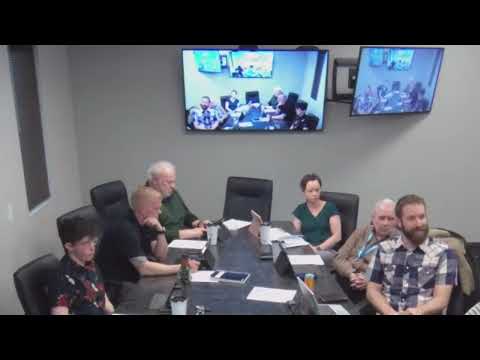
Radiant (Radiant Nuclear) representatives told Casper City Council members and local economic-development officials that the company is evaluating a site north of Casper to build a factory that would assemble 1-megawatt microreactors and handle routine refueling and storage.
The company said the factory would be an advanced-manufacturing campus of roughly 350,000 square feet on more than 100 acres, initially create about 75 jobs and grow to about 250 at scale, and aim to produce about 50 reactor units per year in the mid-2030s. Radiant described each unit as roughly the size of a shipping container, about 12 by 12 by 40 feet, weighing “70 plus tons,” intended to run for about five years between refuelings.
Why it matters: Radiant’s plan drew attention from city and county economic-development staff because it promises local jobs and a manufacturing campus, but it also raises questions about permitting, long-term fuel storage, local infrastructure needs and how public funding might be used to extend utilities and roads to a remote site.
Radiant senior operations manager Kai Cartman said Wyoming made the company’s shortlist because of the state’s role in uranium mining, its energy-industry workforce and available land near Casper. “If most of the uranium in the country is coming from Wyoming, but all that uranium is being sent out of the state, it would be really exciting if we could have that whole life cycle within Wyoming,” Cartman said.
Company officials said the reactors would use tristructural-isotropic (TRISO) fuel particles — a ceramic-encapsulated fuel form the company says has high temperature tolerances — and helium coolant. Cartman described passive cooling features and said the smaller power level of the units reduces some risks compared with large commercial reactors: “One of the aspects of our size is that we’re able to passively cool a reactor,” Cartman said. He added the company would return units to the factory every five years for refueling and store spent fuel in dry casks on-site in a separate building and on a concrete pad similar to other U.S. nuclear facilities.
Regulatory and community steps: Radiant said it will test its prototype at Idaho National Laboratory and pursue Nuclear Regulatory Commission (NRC) licensing. Company staff told the council they are preparing materials for the Economic Development Joint Powers Board and the Wyoming Business Council and asked local governments for letters of support and help with infrastructure planning for a property north of Westwinds Road, in the county near Bar Nunn.
City and county officials emphasized the difference between infrastructure support and direct company subsidy. A local official clarifed that the application the Economic Development Joint Powers Board is preparing would seek infrastructure funding to extend roads, water, sewer and electric — not a direct cash grant to Radiant. That application process and any state-level awards require multiple milestones and community cash matches, city staff said; the county’s initial engineering estimate for the Bar Nunn-Westwinds buildout was described as roughly $6–$8 million for the immediate infrastructure segments, with a larger, up-to-$25 million figure discussed at the state level as an upper range floated by the Business Council.
Concerns and clarifications: Council members asked Radiant to explain worst-case scenarios, fuel handling and why Wyoming. Cartman said the company modeled “worst-case” events with the NRC and that, in modeling he described to the council, the largest offsite impact radius would be small and contained within the company property because of the facility design and cask storage. He said dry-cask storage is a tested practice and that refueling/defueling and fuel storage areas would be constructed to NRC standards.
Cartman also addressed questions about supply chains and partnerships: Radiant is testing components now, plans prototype testing at Idaho National Laboratory, and expects first deliveries in 2028 if tests and licensing proceed. The company said it will not unilaterally source fuel fabrication yet; it is continuing to evaluate partners for fuel fabrication and expects to work with existing fuel and enrichment suppliers in the industry.
Local economic-development response: City and county economic-development representatives said they are compiling infrastructure cost estimates and milestones to support state-level applications and encouraged Radiant to continue public town halls. The company said it will hold additional town halls over the summer and in the coming weeks and is already working with Casper College on potential workforce pipelines that could include radiation-safety and nuclear-related technician training.
What comes next: Radiant will continue prototype testing and NRC engagement and is pursuing local and state infrastructure planning. Local officials will continue to assemble grant materials and consider letters of support and milestone-based infrastructure funding requests; no local vote or final subsidy was recorded at the meeting.
Ending: Radiant’s representatives left the council with requests for municipal and county cooperation on infrastructure and workforce development while the company pursues prototype testing and federal licensing. Council members encouraged continued public outreach and said they expect to review any formal infrastructure requests and provide local feedback as the company’s project and licensing process advance.