Get Full Government Meeting Transcripts, Videos, & Alerts Forever!
Get email alerts on the Infrastructure Bridges topic
No spam. Unsubscribe anytime.
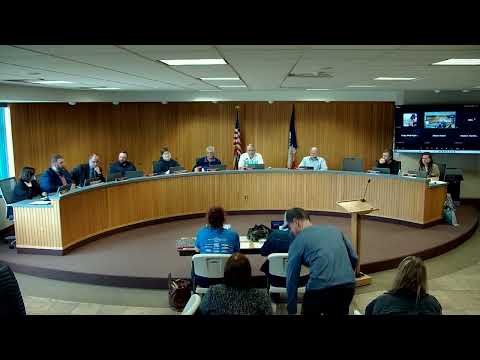
Decorah council hires WHKS for College Drive Bridge design amid public concern about extended closure
Summary
The Decorah City Council voted to hire WHKS for design and construction administration services for the College Drive Bridge project, approving a $51,600 professional services agreement on a motion that passed by voice vote.
The Decorah City Council voted to hire WHKS for design and construction administration services for the College Drive Bridge project, approving a $51,600 professional services agreement on a motion that passed by voice vote.
The contract will fund design, a 30% plan review by the council, and construction-phase services on an accelerated schedule that staff said could put construction between mid‑August and Oct. 31. The city manager and staff warned the accelerated schedule likely requires the bridge to be closed for the duration, though WHKS will study whether temporary lane restrictions or alternating traffic signals can keep some vehicle access open.
The matter drew the most pointed public comment of the meeting. "We've heard that the city may be considering completely closing the College Drive bridge for repair. We've seen closure estimates up to 2 and a half months," said Daryl Jensen, a Decorah resident. "We feel that any closure over a week would make things really difficult, especially for anyone that lives on the West Side and needs to go to work every day on the East Side of town." Jensen also raised emergency‑response concerns, saying, "It's gonna take a long time to get fire protection around to the West Side. Police protection and etcetera."
Travis, the city manager, told council members the timeline and access strategy will be clearer at the 30% design review. He briefed council that WHKS anticipates providing options at that milestone, including (a) maintaining one lane with temporary traffic controls, (b) alternating directional traffic using temporary signalization, or (c) full closure with a shorter construction window. "If we can't wire the two signals ... to send traffic, alternating, from either direction, this would lengthen the construction period, and we would expect higher costs with additional traffic control and additional labor on-site," Travis said.
Council members pressed staff to quantify the tradeoffs. Several members said they want WHKS to report back at 30% with estimated cost differentials and calendar impacts for each access option so council can weigh a higher price to keep more access versus a faster full closure. Staff also noted the bridge is a principal east–west arterial for vehicular traffic and that temporary pedestrian and bicycle access could be staged so one walkway remains open at a time.
Travis also flagged related budget context in the meeting: the city recently learned that some federal grant awards were rescinded, including BRIC funding the city had expected. "We lost the BRIC funds that we had allocated. Was that around $200,000, I think?" he said, adding that the loss affects planning for other resilience features linked to flood pumps at Dry Run Creek. That funding context was presented as background rather than a constraint on the WHKS award.
Council approved the WHKS professional services agreement on a motion moved by Zittergruen and seconded by Olsen. Staff will return to the council for the 30% design review, at which point the council expects WHKS to present lane‑control options and cost estimates.
Why it matters: College Drive is the primary local crossing linking Decorah's east and west sides; a prolonged vehicle closure would reroute traffic to state highways and affect commuters, emergency response times and downtown access. The council asked staff to prioritize options that preserve some traffic flow and to include clear cost comparisons at the next design milestone.
Votes and next steps: The professional services agreement was approved. WHKS will complete the 30% design and report back to council with recommendations on traffic staging, an updated schedule and probable cost ranges. If the council elects to require a lane remain open, staff warned that the contractor may need to revise the schedule and that additional traffic‑control costs are likely.