Get Full Government Meeting Transcripts, Videos, & Alerts Forever!
Get email alerts on the Traffic Safety topic
No spam. Unsubscribe anytime.
Police present school‑zone speed‑camera option, stress safety goals and statutory limits
Summary
Titusville police briefed council on automated school‑zone speed detection systems authorized by recent state law, described citation thresholds and revenue distribution, and responded to council and public questions about site selection and program mechanics.
Titusville Police Department representatives presented an informational briefing on school‑zone speed detection systems authorized by state law and described how an automated program would operate in city school zones.
The presenter, identified in the transcript as the police department speaker, said the state changed the law in 2023 (House Bill 657) to authorize automated speed detection systems in school zones and quoted the relevant statutory framework for a speed‑detection system. The presenter said staff conducted three independent speed studies that showed “a problem with speeding in school zones” and described the program’s operational rules: automated cameras operate 30 minutes before school, during school hours, and 30 minutes after school; the system issues civil citations only for vehicles traveling 11 miles per hour or more above the posted speed limit; and the first 30 days of any program must be a public-education and warning period.
On penalties and revenue distribution, the presenter summarized the civil‑citation breakdown required by statute: a $100 civil citation (no points for the driver) with $60 designated for the implementing municipality for public‑safety initiatives, $20 to the state general fund, $12 to the local school district for school safety, $3 to FDLE training/standards, and $5 toward the local school crossing‑guard program. The presenter said the program is typically vendor‑funded (the vendor provides equipment and is paid from fines) and that vendors offer different contracting models, including revenue‑share or a flat annual per‑zone fee (staff quoted a vendor flat fee example of about $7,000 per school zone or roughly $3,500 per camera).
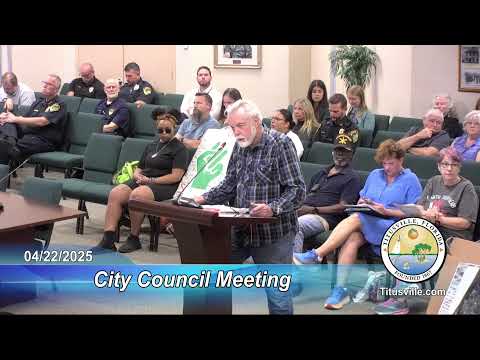
Council members and the public asked detailed questions about site selection, whether cameras would be installed at every school, how vendors handle evidence review, and potential impacts on families and drivers. Councilmember Muscoso pointed out that at least one school (Park Avenue) currently has zero students who walk or bike to school and asked whether a camera at that location would be appropriate; the presenter said site selection would be data driven and some zones with low vehicle traffic would not meet criteria. A public commenter, Shorten Mansfield, expressed opposition to automated enforcement and said he was “not necessarily for it.” Mansfield also asked whether points would be applied; the presenter and a councilmember clarified that citations issued by the automated program are civil and do not carry driving‑record points.
The presentation emphasized safety: the presenter repeatedly framed the goal as reducing pedestrian fatalities and said, “That’s our goal, 0. Right? We want 0 traffic fatalities.” The briefing was informational and no ordinance or formal action was requested at the special recognitions meeting; further deliberation and any decision would proceed in a future formal council meeting if the council chooses to pursue the program.