Get Full Government Meeting Transcripts, Videos, & Alerts Forever!
Get email alerts on the Opioid Prevention Schools topic
No spam. Unsubscribe anytime.
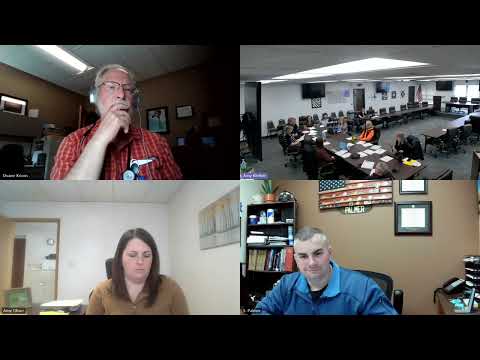
Vernon County task force discusses grant to fund deputy-led opioid prevention program for grades 7–12
Summary
Members of the Vernon County Opioid Task Force discussed a proposal to apply for grant funding so Deputy Willie Raesler could deliver a research-based opioid prevention curriculum to students in grades 7–12, with members urging a specific curriculum and clearer budget details before a likely May 1 application deadline.
Dr. Michaels, a member of the Vernon County Opioid Task Force, proposed writing a grant to free up Deputy Willie Raesler’s patrol time so Raesler could deliver a research-based opioid prevention curriculum to students in grades 7 through 12 across Vernon County school districts.
“I thought, would it be appropriate for me to write a grant so that Willie's patrol duties could be picked up by other people to enable him to have more time to deliver education programs to, including a research based, opioid prevention program to students in Vernon County,” Dr. Michaels said during the task force meeting.
Members said they favored the general idea but urged more detail before the grant is submitted. One task force member warned that funders are “reluctant to fund research time” and that applications are stronger when they specify the curriculum and how the money will be used. That member said programs receiving funding previously showed a “pretty clear sense of what exactly they are doing with the money.”
The proposal as discussed would: identify and select a research-based opioid prevention curriculum for grades 7–12; set a delivery schedule across the county’s six school districts; pilot the program in at least one district; and include an implementation period followed by evaluation. Dr. Michaels described the project as a one-year effort and said he envisioned implementation beginning this fall after preparation of materials and schedules.
Operational and budget details were discussed but not finalized. A speaker from the sheriff’s office said the grant would be used primarily to cover straight-time staff coverage and noted a $50-an-hour figure, adding, “It doesn't cover overtime.” Task force members and sheriff’s office staff said the department would try to use straight time and part-time officers where possible, and that any overtime would need to be covered by the grant while it exists.
Members suggested practical next steps: identify a specific, research-based curriculum before submitting the application, include as much curriculum detail as possible in the grant package, and confirm an achievable timeline with schools. Dr. Michaels and others also said they would reach out to sheriffs in nearby counties to learn what curricula and approaches they have used and to bring examples back to the next meeting.
No formal vote was taken on the grant proposal during the meeting. Task force members agreed to continue refining the application and to share a final version if the group chooses to submit before the May 1 deadline referenced in the discussion.
The task force plans to meet next on Tuesday, May 13, at 2:30 p.m.; members said they would bring more curriculum detail and budget clarification to that session.