Get Full Government Meeting Transcripts, Videos, & Alerts Forever!
Get email alerts on the K 12 Funding topic
No spam. Unsubscribe anytime.
Iowa Department of Education briefs board on unified allocation plan and rising graduation rates
Summary
The Iowa Department of Education updated the State Board on a federal waiver request to consolidate multiple ESEA funding streams into a unified allocation plan, and reported modest statewide gains in graduation rates for the Class of 2024 with continuing subgroup gaps.
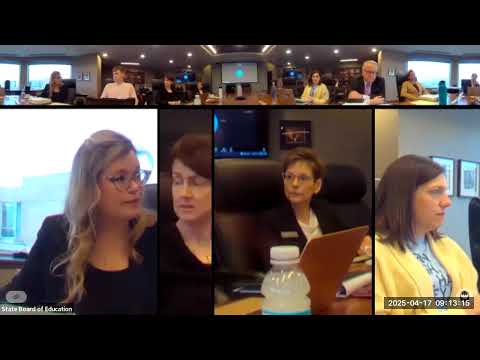
The Iowa Department of Education on Tuesday told the State Board of Education it has submitted a proposal to the U.S. Department of Education to allow the state to consolidate multiple Elementary and Secondary Education Act (ESEA) funding streams into a single, unified allocation plan.
Director Snow and agency staff said the proposal would let districts combine formula and competitive funds across ESEA programs so local education agencies could manage a single consolidated fund under existing statutory formulas, rather than operate hundreds of program streams separately. Department leaders emphasized the change would not change how much money districts receive but would change how funds are managed and reported.
Why it matters: Department officials said the unified plan is intended to reduce administrative burden and allow more local and state flexibility to target investments on classroom improvement and closing achievement gaps. The department noted the plan is subject to U.S. Department of Education review and may be revised during that process.
Department chief Jay Pennington also gave the board the agency’s annual statistical update. Pennington said Iowa’s four‑year graduation rate rose 0.8 percentage points to 88.3% for the Class of 2024, an increase of nearly 900 graduates from the prior class.
“Nearly 900 more students in the class of 2024, a total of 34,158 students, earned their high school diploma,” Pennington said during his presentation. He added that the state recorded gains for some student groups — including students with disabilities and students from low‑income backgrounds — while English learner graduation rates declined slightly.
The department outlined continuing disparities: for example, the four‑year graduation rate for students with disabilities was 70.3%, and English learners graduated at 73.4%, both below the statewide average.
Other items in the director’s report included an opening notice that the Students First education savings account (ESA) application for 2025–26 opened the day before; the department said all Iowa K‑12 residents now qualify for ESAs. Snow and Pennington also briefed the board on state legislative developments, including Senate File 167 — a school funding bill that, as discussed by staff, would raise teacher starting and experienced salaries and increase school aid.
What’s next: The department said it will return to the board with further details as the U.S. Department of Education assesses the unified allocation waiver request and as legislation moves through the capitol.