Get Full Government Meeting Transcripts, Videos, & Alerts Forever!
Get email alerts on the Taxes Revenue topic
No spam. Unsubscribe anytime.
Major business tax changes advance in Ways & Means hearing; employers urge targeted exemptions
Summary
Substitute House Bill 2,081, a broad revenue bill discussed April 23 in the Ways & Means Committee, would raise base B&O tax rates, add a temporary surcharge on very large taxpayers and increase the advanced computing surcharge; business groups pressed for exemptions and thresholds to protect small firms, food wholesalers and health providers.
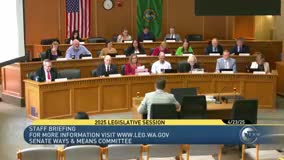
The Ways & Means Committee held an extended hearing April 23 on substitute House Bill 2,081, a broad revenue package that would raise business and occupation (B&O) rates, add temporary surcharges on very large taxpayers, and increase an advanced computing surcharge tied to workforce investments.
Committee staff summarized the bill as a multi‑part package that raises the base B&O rates for retail, wholesaling and manufacturing (to 0.5%) and increases the rate for the services classification for larger firms. The engrossed substitute includes an additional 0.5 percent surcharge on taxpayers with Washington taxable income above a large threshold (the bill as presented applies the surcharge to income above $250 million, then is set to expire after the near term) and raises the advanced computing surcharge to 7.5 percent with a higher annual cap. The bill contains a suite of exemptions and clarifications for certain activities and for tax administration.
Supporters of the revenue package — including unions, caregiving and health‑care advocates, education groups and some local government representatives — described services and programs they said depend on new revenue. Treasurer Mike MacKley said the bill would “make sure our most profitable corporations give back to the communities that make them so profitable.” Advocates for education and workforce training urged the committee to adopt provisions that raise revenue for higher education seats and skills programs.
Opponents — including the Association of Washington Business, the Washington Roundtable, Washington State Hospital Association, Washington Bankers Association and multiple trade and small‑business groups — warned the magnitude of the increases would either be passed to consumers, reduce hiring and investment, or force consolidation. Specific requests from the hearings included:
- Exempting wholesalers of food and the pharmaceutical wholesale supply chain from the new surcharge to avoid driving up food and drug costs, a request urged by the hospitality, grocery and pharmaceutical distribution witnesses. - Carving out small businesses or indexing a threshold (for example by exempting firms below $5 million in prior‑year receipts) so that local contractors, healthcare practices and small service firms would not face a sudden tax hike. - Removing or limiting the surcharge on hospitals and the financial services sector; the Washington State Hospital Association asked for an exemption after the first biennium because hospitals are incurring other cuts in this budget cycle.
Industry witnesses and local small business associations said the bill’s B&O increases would hit businesses that cannot immediately adjust prices or that operate on thin margins (for example, contractors, independent pharmacies and small grocery stores). The Department of Revenue was directed in the bill text to work with a taxpayer advisory group on administrative simplifications and to consider statutory and rule changes to ease compliance.
Supporters framed the package as a progressive step to restore revenue from highly profitable entities and to fund services that have been cut in recent years; opponents characterized it as a substantial tax increase that would be felt across the economy. No final committee vote occurred at the hearing; numerous stakeholders asked for amendments and for more targeted exemptions to protect small businesses and essential supply chains.