Get Full Government Meeting Transcripts, Videos, & Alerts Forever!
Get email alerts on the Juvenile Justice topic
No spam. Unsubscribe anytime.
Testimony presses committee to keep BECCA funding as bill would shift truancy petition timeline
Summary
House Bill 2,044 would change the timeline and process for filing truancy petitions and expand use of community engagement boards; juvenile court administrators, judges, school officials and advocates told the committee they fear the bill will remove or reduce BECCA‑related funding and weaken early‑intervention safeguards for vulnerable youth.
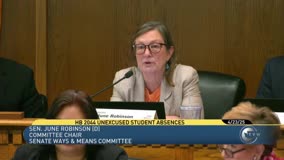
The Ways & Means Committee took testimony April 23 on House Bill 2,044, which would alter the state’s truancy process by changing when schools must file truancy petitions and by making community engagement boards a required option earlier in the process. Testimony focused heavily on funding for BECCA‑related supports and whether the bill would effectively defund local early‑intervention programs.
Kayla Hammer, staff to the committee, summarized the bill: it would require a school district to either enter into an attendance agreement or refer the child to a community engagement board after a student’s fifth unexcused absence within any month, and would require a truancy petition to be filed no later than the 15th unexcused absence in the school year if the district or board failed to enter an agreement within 20 days or the family failed to comply with the attendance agreement.
Speakers representing the superintendent of public instruction, juvenile court administrators, superior court judges and school districts testified mainly in opposition. Misha Chernisky (Office of the Superintendent of Public Instruction) said the bill “asks the whole system, especially school districts, to do a lot more” without enough funding; staff and courts flagged that much BECCA funding is locally distributed and that the House budget had removed grants tied to BECCA activities.
George Moya and Corey Stevens, juvenile court administrators, said the BECCA triage model focuses on early, community‑based intervention and not punishment, and they urged the committee to “not pass this bill out of committee and leave backup funding in the budget.” Superior court judges and administrators described how BECCA funding supports trauma‑informed case management, referrals to behavioral health and substance‑use treatment, and coordination with community partners.
Several parents, juvenile court administrators and school engagement specialists testified with personal examples linking BECCA procedures to concrete interventions. A parent who said her child received critical behavioral health supports through the truancy referral process asked lawmakers to “fully fund BECCA programming.” A Chelan County superior court judge said making court involvement permissive rather than mandatory would allow the Legislature to remove funding and “leave a huge gap in support for our most vulnerable youth and families.”
Committee staff and witnesses noted a House budget change that removed funding for certain BECCA grants, which testifiers said left districts and courts with the expectation they would have to provide more services without an identified funding source. No committee vote on the bill occurred during the hearing.