Get Full Government Meeting Transcripts, Videos, & Alerts Forever!
Get email alerts on the Asl Pay Differential topic
No spam. Unsubscribe anytime.
Panel hears bill to require ASL be eligible for public‑employee language pay differential
Summary
Senate Bill 731 would require public employers that pay a differential for bilingual or multilingual skills to provide the same differential for employees’ use of American Sign Language (ASL). Supporters said the change would recognize ASL as a language and help address interpreter shortages by incentivizing hiring of ASL‑proficient workers.
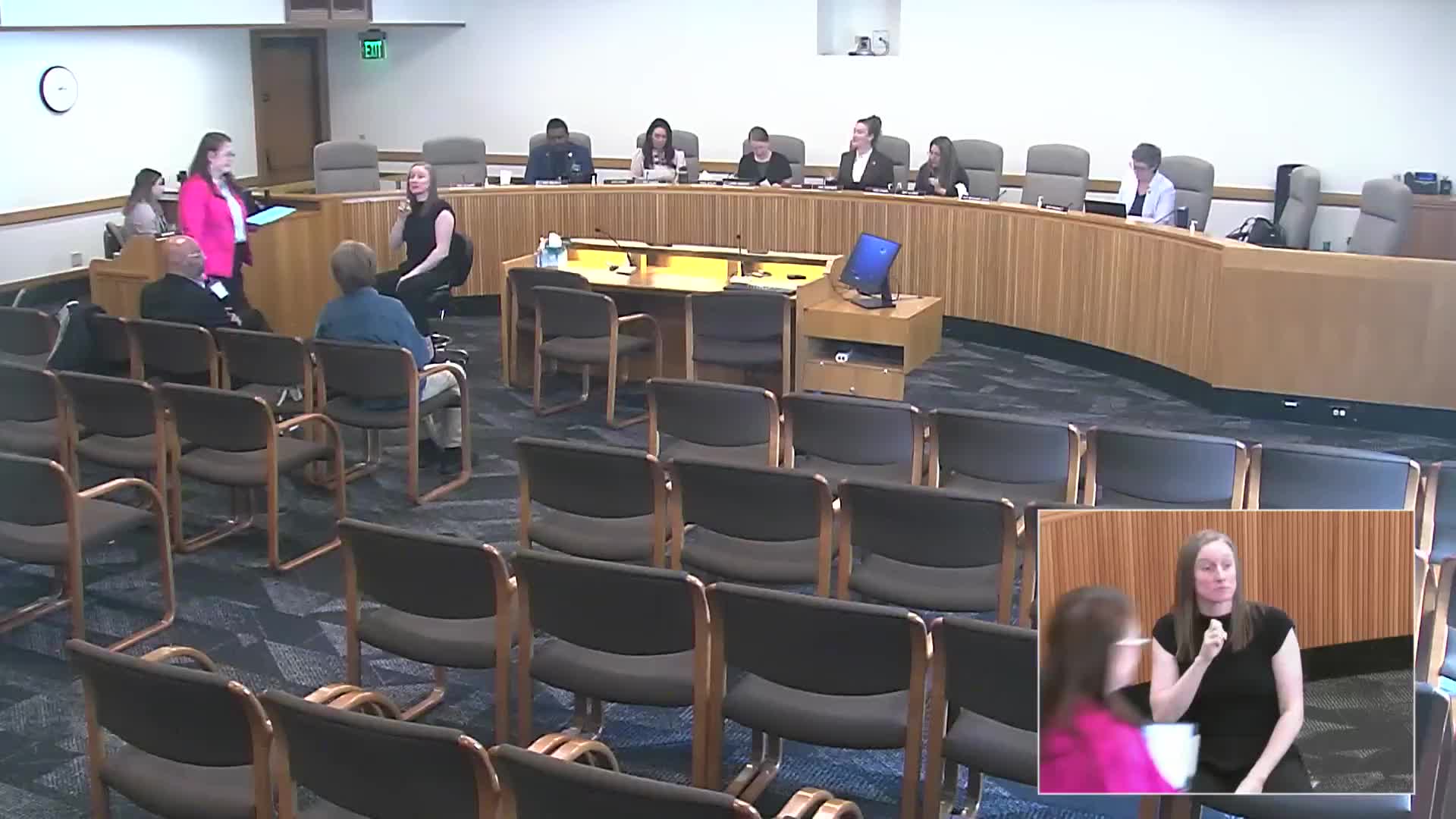
Senate Bill 731 was the subject of a short public hearing April 23 before the House Committee on Labor and Workplace Standards. The measure would require that when a public employer’s policy provides a pay differential for use of bilingual or multilingual skills in assigned duties, the policy must also provide a differential for an employee’s use of American Sign Language.
Senator Sarah Gelser‑Blue, state senator from Senate District 8, described the bill as “very simple” and said it would treat ASL “just as any other language” when public employers allocate pay differentials for skills used on the job. “In many public employer spaces, when an individual, as part of their job duties, utilizes a second language to carry out those job duties, they do receive a pay differential,” she said. “This bill simply says that ASL would be treated just as any other language in that regard.”
Adam Logan, who identified himself as hard of hearing and a community advocate, testified in support. “There’s an interpreter shortage in the state of Oregon,” Logan said. He told the committee that recognizing ASL in employer pay‑differential policies could “incentivize companies to hire employees proficient in ASL” and hoped that some hires would be deaf or hard‑of‑hearing people who face employment barriers.
Committee members and Chair Graber emphasized a clarification in testimony: the bill does not require every employer to add ASL pay; it requires parity only where an employer already has a program that pays a language differential. Committee staff said the measure carried a minimal fiscal impact and no revenue impact. No committee vote on SB 731 was recorded at the April 23 hearing.