Get Full Government Meeting Transcripts, Videos, & Alerts Forever!
Get email alerts on the Housing Production topic
No spam. Unsubscribe anytime.
State officials brief committee on governor’s housing-production bills covering middle housing, preapproved plans and infrastructure funding
Summary
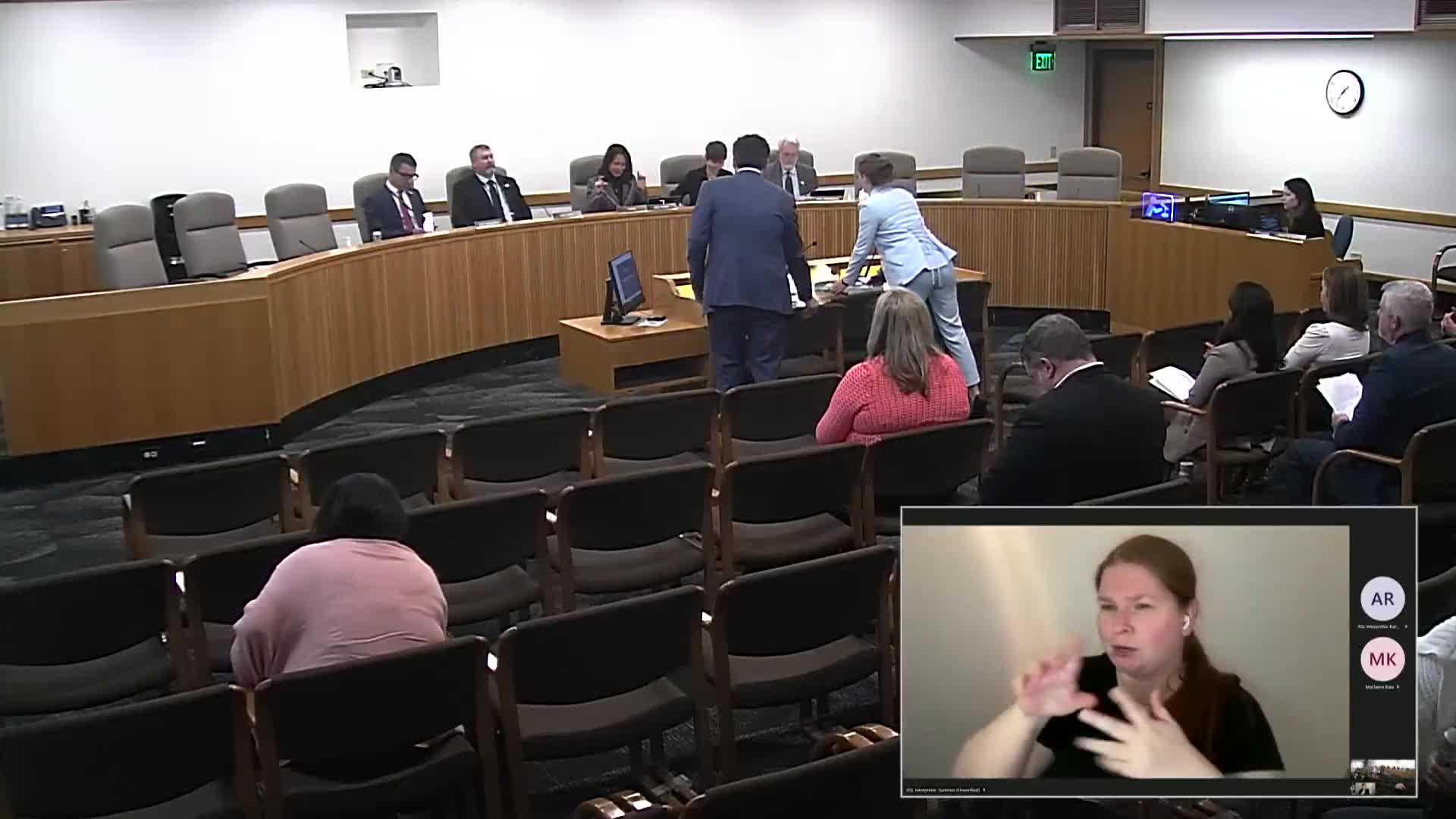
Chair Pham opened an informational hearing for the committee on the governor’s priority housing bills in Ways and Means. Matthew Schaubold, director of the Governor’s Housing and Homelessness Initiative, Aurora Jettl of the Department of Land Conservation and Development (DLCD), and agency and local-government partners summarized three bills aimed at increasing housing production: HB 2138 (middle housing and infill), HB 2258 (preapproved building and land‑use plans, called “Oregon Homes”), and HB 3031 (an infrastructure-for-housing financing program).
Chair Pham opened an informational hearing for the committee on the governor’s priority housing bills in Ways and Means. Matthew Schaubold, director of the Governor’s Housing and Homelessness Initiative, Aurora Jettl of the Department of Land Conservation and Development (DLCD), and agency and local-government partners summarized three bills aimed at increasing housing production: HB 2138 (middle housing and infill), HB 2258 (preapproved building and land‑use plans, called “Oregon Homes”), and HB 3031 (an infrastructure-for-housing financing program).
The briefing focused on the state’s housing shortfall and how the three bills would address different barriers. “We need to build 500,000 units to meet the housing needs of Oregonians over the next 20 years,” Aurora Jettl, legislative and policy analyst, DLCD, told the committee, citing a current deficit of about 100,000 units and a projected additional need of roughly 400,000 units. Jettl added that the governor set a production goal of 36,000 units per year by executive order.
Why it matters: presenters said shortages are concentrated among lower‑income households and that rising home prices and cost burdens require both regulatory changes and targeted funding. Jettl said “most of those needs are concentrated for our low income communities,” and noted widening racial gaps in homeownership for Black and Native communities.
HB 2138 (middle housing and infill). Matthew Schaubold (Governor’s Housing and Homelessness Initiative director) described the bill’s goals as legalizing thousands of additional units, removing barriers to development, and requiring local incentives for affordable or accessible units. Key provisions discussed include: statewide requirements to allow middle housing (duplexes, triplexes, quadplexes, townhomes and cottage clusters) in urban areas subject to an urban‑services capacity test; invalidation of private deed restrictions that prohibit middle housing (modeled on California AB 670 language, as presenters described it); allowing middle housing on lots that already have a single‑family home; combining subdivision and middle‑housing land‑division processes; eliminating public notice and appeal for middle‑housing land divisions in locations where middle housing is legally allowed; limiting off‑site traffic impact exactions for small infill middle‑housing projects; and a density bonus tied to delivery of one affordable for‑sale unit or one Type A accessible unit on a voluntary basis. Speakers emphasized that the bill is intended not to preempt stronger local programs.
HB 2258 (Oregon Homes — preapproved plans). Alexis Hammer (legislative and policy manager, DLCD) and Swetha Ambati (senior housing adviser, Governor’s Office) explained that HB 2258 would create statewide preapproved building plans and corresponding land‑use/design standards for specified housing types on eligible sites. The bill would limit eligible sites to parcels inside urban growth boundaries that are generally flat and vacant or occupied by a nonresidential or unusable structure; parcel sizes discussed were at least 1,500 square feet and no larger than 20,000 square feet. Preapproved unit size limits described in testimony were up to 2,200 square feet per unit for single‑unit, duplex, triplex, quadplex and townhomes, and an average of up to 1,400 square feet per unit for cottage clusters and small multifamily under 12 units. DLCD/Building Codes Division (BCD) would develop the plans and the list of eligible sites in rule. The presenters said the program aims to reduce duplicative review and lower costs for developers who reuse the same plans across jurisdictions.
HB 3031 (housing infrastructure financing). Schaubold and partners described HB 3031 as a governor‑recommended infrastructure program administered through the Oregon Infrastructure Finance Authority or Business Oregon to provide grants, forgivable loans and loans (the governor’s recommended budget included $100 million) for water, sewer, stormwater and transportation infrastructure tied to housing production. The program would set aside funding by community size to ensure access for rural communities, allow capacity upgrades (for example, pump stations), and require coordination with other state funding sources. Presenters said forgivable loans would be targeted for income‑restricted housing (projects with units at or below about 120% of area median income, as described in testimony) while repayable loans would be the likely tool for market‑rate portions.
Local and developer perspectives. Builders and affordable‑housing developers at the hearing generally supported the package. Deb Flanagan, vice president of Hayden Homes, said the bills would cut red tape and cited a new Albany community built under earlier middle‑housing law (HB 2001 and SB 458) as an example of permitted middle housing reaching the market. Karen Sachs of DevNW and Mary Kyle McCurdy of 1000 Friends of Oregon emphasized that infrastructure costs are a major barrier (testimony estimated infrastructure can account for roughly 30% of total construction cost on recent projects) and that predictable, statewide plan approvals and targeted infrastructure funding would speed development and reduce per‑unit costs.
Outstanding details and next steps. Presenters said DLCD, BCD, Business Oregon and other agencies will develop rulemaking details if bills move forward. They acknowledged several implementation questions — for example, how preapproved plans will be mapped to eligible sites, how affordability covenants will be tracked when projects change hands, and how to ensure urban‑services capacity tests protect local sewer/water systems. Committee members asked about fiscal‑free policy options and tracking metrics; Schaubold said the governor’s office is building dashboards to track production and the effects of policy changes.
The hearing was informational only; no formal committee votes were taken. Chair Pham closed the informational hearing after the panel presentations and discussion.
Ending: Sponsors and agency staff said the three bills are part of a broader housing production agenda they described as informed by the Housing Production Advisory Council and complementary programs under consideration in the House and Senate. They urged continued coordination in rulemaking and funding design if the proposals move forward.