Get Full Government Meeting Transcripts, Videos, & Alerts Forever!
Get email alerts on the Dcbs Fees Money Transmitters Check Cashing topic
No spam. Unsubscribe anytime.
DCBS proposes higher renewal fees for money transmitters and check‑cashing businesses during public hearing on Senate Bill 55 45
Summary
The Department of Consumer and Business Services held a public hearing April 23 on Senate Bill 55 45, proposing to raise renewal fees for money transmitters and check‑cashing licenses after a rule advisory committee found revenue shortfalls; agency officials said the increases are intended to preserve oversight and consumer protection.
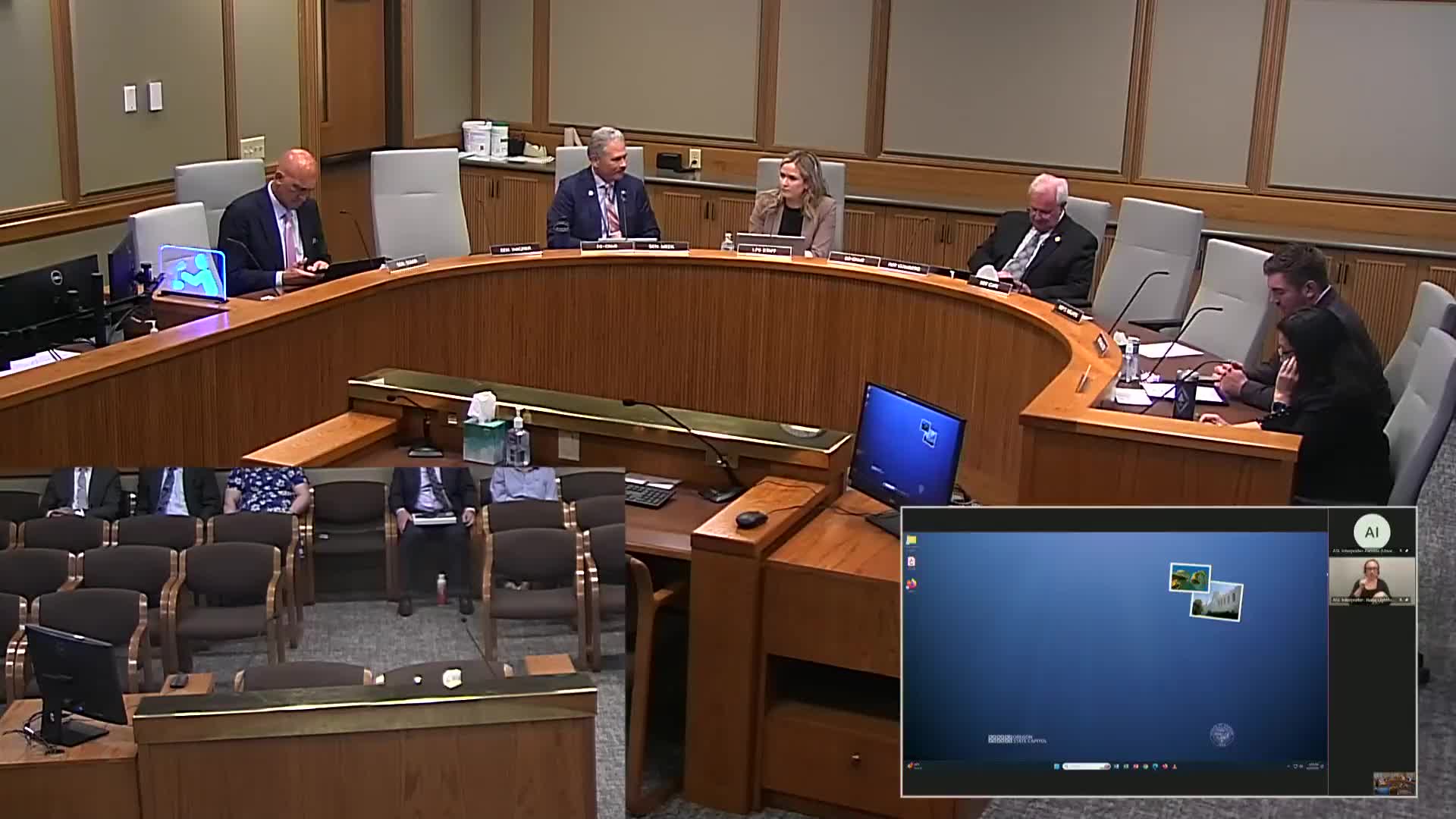
Co‑Chairs Meek and Gomberg opened a public hearing April 23 on Senate Bill 55 45, a fee‑ratification request from the Department of Consumer and Business Services (DCBS) to raise renewal fees for non‑depository programs that regulate money transmitters and check‑cashing businesses.
DCBS Division of Financial Regulation Administrator TK Keane said the agency is proposing to raise the annual money transmitter renewal fee from $500 to $1,000 and to increase the check‑cashing two‑year license fee from $150 to $350. "We are proposing that we increase the money transmitter renewal fee from $500 to $1,000," Keane said, citing increased personnel and complexity in supervising digital transactions such as cryptocurrency in addition to traditional services. Deputy Commissioner Kirsten Anderson said the division convened rule‑advisory committees and "did not receive any opposition to these fee requests." The division said industry representatives and some small and large licensees participated; consumer groups were invited but chose not to participate.
The agency told the subcommittee the proposed changes would yield a relatively small revenue increase—roughly $65,000 for the biennium, according to statements during the hearing. Anderson noted that initial licensing fees are set in statute and could not be changed through the rulemaking process, so the request covers renewal fees only.
Committee members asked how DCBS would respond if the fee increase did not pass. Keane and Anderson said the division would reallocate staff time to other non‑depository programs that have revenue streams and reduce the scope or timeliness of examinations and consumer assistance in these programs. "We would not be able to fulfill all of our consumer protection mission by doing examinations timely to these program areas," Anderson said. The agency emphasized the increases are meant to support examinations, oversight and customer service for Oregon consumers.
Co‑Chair Meek closed the hearing after no members of the public signed up to testify. The subcommittee record remains open for written testimony for 48 hours from the start of the meeting.
Background: the transcript refers to the Check Cacher's Act (passed in 2007) as the statutory basis for check‑cashing licensing. DCBS said fees in these programs have remained static for many years while program costs and regulatory complexity have grown.
Next steps: because the hearing was a rule‑making/public hearing rather than a vote, no formal action was taken on the fee changes during the session; the agency may proceed through its rule process and related legislative steps as required.