Get Full Government Meeting Transcripts, Videos, & Alerts Forever!
Get email alerts on the Poison Center topic
No spam. Unsubscribe anytime.
Oregon Poison Center: most accidental home poisonings managed at home; center says it saves state money
Summary
Witnesses told the Ways and Means subcommittee that the Oregon Poison Center handled roughly 48,000 toxic‑exposure cases in 2023, manages the overwhelming majority at home and helps reduce emergency department visits and costs.
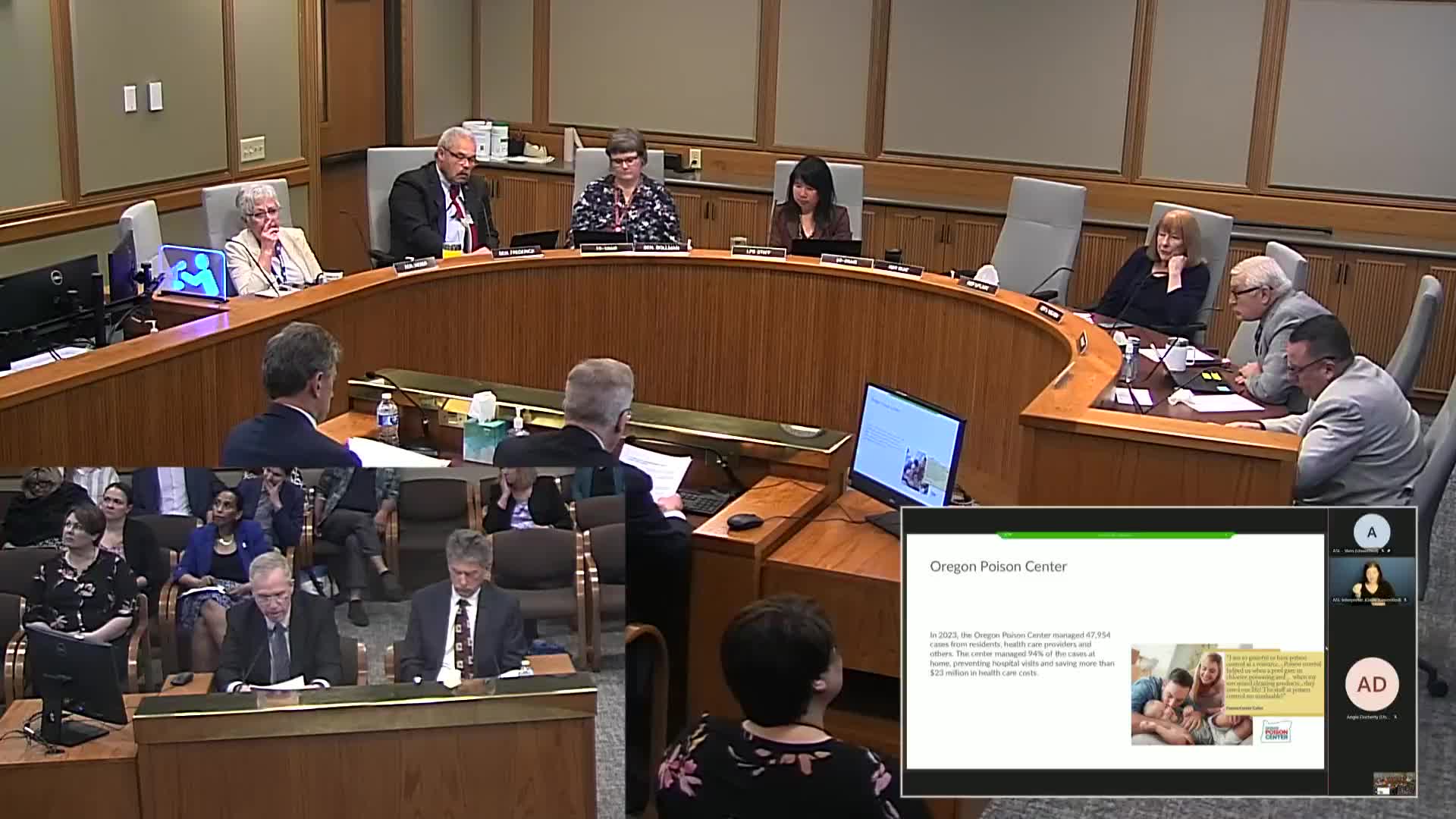
The Oregon Poison Center told the Joint Committee on Ways and Means Subcommittee on Education on April 23 that its hotline and consultation services keep most accidental home poisonings from generating emergency‑room visits and produce measurable cost savings.
“Last year, 93 percent of accidental home poisonings were managed and kept at home,” said Charisse Pizarro Osilla, managing director of the Oregon Poison Center at OHSU, during the public hearing. She said the center managed nearly 48,000 cases in 2023 and that about 94 percent of those exposures originated at home.
Pizarro Osilla told the committee that the Poison Center’s work shortens hospital stays when a referral is required and that specialized toxicology consultation can lower length of stay and related costs. OHSU presenters earlier in the day told legislators that the Poison Center’s work — by reducing emergency visits and hospital utilization — yielded an estimated $23,000,000 in avoided health care costs in 2023.
Members of the committee and other witnesses offered anecdotal praise from callers who said Poison Center nurses provided calm, informative and reassuring triage and stayed on the line for follow‑up. Pizarro Osilla said caller surveys indicate that, without the Poison Center, about one‑third of callers would have gone to an emergency room.
The Poison Center is largely funded to pay clinical staff who answer calls and perform follow‑up; presenters told lawmakers the center relies on state appropriation dollars that make up a material portion of its budget. Testimony at the hearing highlighted both the center’s public‑health role and its role in reducing costly emergency care.