Get Full Government Meeting Transcripts, Videos, & Alerts Forever!
Get email alerts on the Climate Resiliency topic
No spam. Unsubscribe anytime.
City outlines climate-resiliency steps, from codes to fleet electrification, ahead of Earth Day
Summary
City planning staff presented existing and recent climate-resiliency actions — updated building codes, conservation subdivision policies, electrified fleet and volunteer park restoration — and noted ongoing studies including PFAS in stormwater.
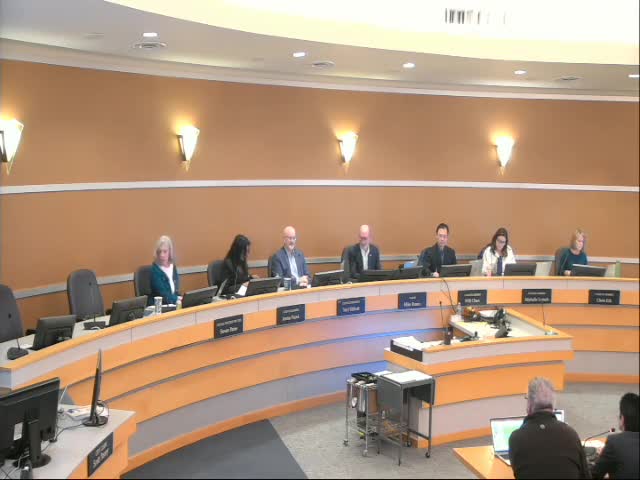
At the April 21 Edmonds City Council meeting, interim Planning and Development Director Shane Hope and Planning Manager Mike Clugston summarized the city’s recent and ongoing climate-resiliency work as the council prepared to recognize Earth Day.
Hope told the council Edmonds has taken a series of incremental actions intended to reduce greenhouse-gas emissions, strengthen flood resilience and protect habitat. He highlighted administrative and regulatory items such as digital permitting (which he said has reduced paper use), commute-trip reduction programs and updated flood damage prevention chapters in the development code to address climate-related flood risk.
Key items staff described included: - Updated building and energy codes adopted after 2021 state rules and subsequent local updates, including construction-waste management requirements and “solar-ready” design in new development. - Conservation-subdivision provisions adopted initially in 2021 to retain existing trees and green features on development sites. - The 2023 Climate Action Plan update, which established a greenhouse-gas inventory and objectives aimed at climate neutrality by 2050. - Fleet- and facilities-related investments: Hope listed 19 hybrid fleet vehicles and 23 electric vehicle compact cars in the city fleet, 12 fleet charging stations and 12 public electric vehicle stations at city facilities and parks; staff are implementing energy-efficiency measures at the Francis Anderson Center and installing a solar array at the Public Safety Complex. - Active-transportation expansion: public-works projects that added roughly 1,500 linear feet of new sidewalks and about 6.5 miles of bicycle lanes in one-year periods described as part of ongoing multi-year work. - Volunteer and partnership activity: parks and volunteers planted hundreds of native trees and understory plants in 2024 with partners such as Sound Salmon Solutions; the city coordinated nearly 2,400 volunteer hours and planted “2 to 300” trees and shrubs at several sites, staff said. - New or upcoming work: staff said the city will study PFAS (per- and polyfluoroalkyl substances) and stormwater pathways, pursue optional green-building incentives, and continue to update environmental-area regulations and the comprehensive plan’s climate element.
Hope described the city role as both operator and influencer, noting that some objectives (for example, achieving deep greenhouse-gas reductions) will require coordination beyond the city’s authority and resources. He also told councilmembers the city lacks a single full-time climate specialist but has coordinated actions across departments.
Councilmembers praised the overview and asked about realistic timelines and staffing for continued implementation. Councilmember Nand asked whether conservation-subdivision rules could better protect wildlife corridors and mature trees; staff answered that the conservation-subdivision approach is intended to retain habitat and tree cover when feasible. Councilmember Payne emphasized the importance of funding and youth engagement referenced in the Earth Day resolution earlier in the meeting.
Ending: Staff framed the presentation as a status update — a mix of completed projects, ongoing programs and items planned for further study — and said they will return as specific code or program changes are proposed.