Get Full Government Meeting Transcripts, Videos, & Alerts Forever!
Get email alerts on the Wildlife Conservation topic
No spam. Unsubscribe anytime.
Volusia County outlines beach‑driving limits, sea turtle protections ahead of May nesting season
Summary
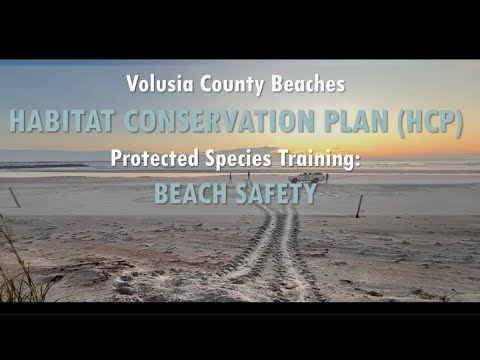
At a Volusia County training, sea turtle habitat conservation plan manager David Zylo reviewed federal protections, beach‑driving time and space limits, nest‑marking and volunteer roles before the May 1 start of nesting season.
David Zylo, Volusia County sea turtle habitat conservation plan program manager, told a county training that the Habitat Conservation Plan (HCP) and associated federal permits guide how the county restricts beach driving and protects nesting wildlife.
The Endangered Species Act of 1973 and an incidental take permit underpin the HCP’s rules, Zylo said, and the county combines restrictions, mitigation and volunteer monitoring to reduce accidental harm. “This act is a federal law and it’s aimed at protecting species from extinction,” Zylo said. He also noted the county relies on mitigation partners: “The Marine Science Center is thus far cared for, I believe, 250 stranded green turtles this year,” he said.
Why it matters: Volusia County’s sea turtle nesting season starts May 1 and runs through October; county staff and volunteers plan to mark nests, smooth vehicle ruts that block hatchlings, and enforce time‑and‑area driving limits intended to cut incidental take and protect shorebird habitat. Zylo framed those measures as part of a broader effort to allow beach driving while reducing harm to turtles, shorebirds and other species.
The training summarized the HCP’s main elements: limits on when and where vehicles may use the beach, marked conservation zones around dunes and nests, conspicuous flagging of suspected nests, and different rules for “natural/transition” and urban areas. During the nesting season, public driving hours are allowed only “8 a.m. or after a nesting survey has been completed until 7 p.m. or sunset,” Zylo said; outside nesting season the county treats access as November 1 through April 30. The county has reduced public driving access by about 35% compared with pre‑HCP conditions and does not allow public driving in certain higher‑nesting areas north and south of the county.
Zylo described biological context and trends for species the HCP covers. Loggerheads are the county’s most common nesting turtle and have shown a general upward trend since the late 1980s. Greens are the county’s second‑most common nesters and have shown large recent increases; Zylo noted a record year in 2023 (about 260 nests) and said 2024–2025 season expectations were high. Leatherback nesting is much rarer in Volusia County; the county’s maximum observed annual total is in the low teens. Zylo also described Kemp’s ridley and hawksbill turtles, piping plovers and other shorebirds, and the southeastern beach mouse at Smyrna Dunes Park.
The HCP’s mitigation approach includes rehabilitation and release by the Marine Science Center and federal measures offshore, such as the shrimp‑trawl turtle excluder device requirement, Zylo said. He warned that vehicle ruts a few inches deep can be insurmountable obstacles for hatchlings and described how heavy vehicles can compact or crush nests even when eggs lie about 2 feet deep.
The training stressed local roles and enforcement: volunteers and staff will mark likely nests with prominent signs and flags to discourage driving near them; the county defines a marked conservation zone in urban areas that starts 15 feet landward of the dune or seawall and initially requires 30 feet seaward clear for routine driving and parking rules. Zylo said the county also prohibits e‑bikes in certain traffic‑free natural zones and asked attendees to report violations.
Zylo cautioned that different species have different behaviors that affect management. Kemp’s ridleys often nest during daylight, he said, increasing collision risk where daytime driving occurs. Shorebird nests are surface scrapes that rely on camouflage and parental attendance; Zylo said eggs can overheat within “15 or 20 minutes” if parents are repeatedly flushed.
The presentation noted geographic patterns: about 80% of Volusia County’s sea turtle nests occur in natural areas to the south near Canaveral and to the north in a state park, not on county‑managed driving areas. Of nesting that occurs in county‑managed areas, Zylo said about 16% is inside driving areas within conservation zones and only about 4% is in driving areas outside those zones.
The presentation was training and informational; no formal county actions or votes were recorded in the transcript. Zylo framed the policies as an attempt to balance the county’s long history of beach driving with federal species protections and community use.
Looking ahead, Volusia County’s nesting season opens May 1. Zylo asked attendees to follow time‑of‑day and area restrictions, avoid driving through seaweed or bird flocks, and to report e‑bike or vehicle violations in marked natural zones so volunteers and staff can protect nests and hatchlings.