Get Full Government Meeting Transcripts, Videos, & Alerts Forever!
Get email alerts on the Data Processing topic
No spam. Unsubscribe anytime.
Jackson County hears introduction to draft data‑processing (mining) rules; commission peers at noise, setbacks and overlay options
Summary
Commissioners received a staff introduction to a draft data‑processing (cryptocurrency/data center) ordinance; staff removed wind‑specific technical terms, proposed ADLS/FAA exclusions, discussed overlay zoning versus full rezoning, and flagged decibel and fire‑service proximity (5‑mile) as key concerns.
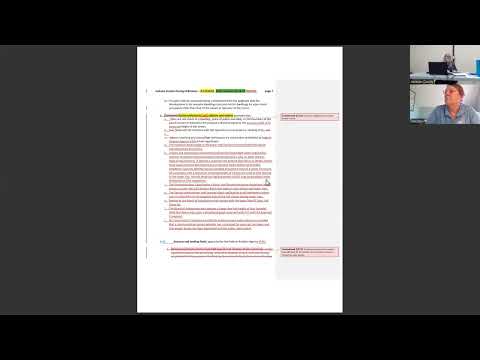
Jackson County Planning staff introduced a first draft of a new ordinance section to regulate data‑processing operations — the term used in the draft to cover bitcoin/cryptocurrency “mining” pods and other server‑based facilities — and asked commissioners for initial guidance rather than formal action.
Lede: The presentation, which staff described as a preliminary working draft, removed many wind‑industry terms from earlier templates and focused on land‑use controls: setbacks, building height limits that default to the base zoning district, noise standards measured at the nearest dwelling, fire‑suppression access, bonding and decommissioning requirements, signage and electrical code compliance.
Nut Graf: Commissioners discussed whether to regulate by overlay (temporary M‑1/M‑2 overlay that reverts to A‑1 when the use ceases) or by standard rezoning; staff cautioned that an overlay’s administrative lifecycle can be hard to track over decades. The commission also concentrated on how to regulate exterior noise (decibel limits and measurement points), proximity to fire stations, and referencing state or industry standards for cooling and noise mitigation.
Key items discussed
- Scope and definitions: Staff said they adapted a wind‑ordinance template and removed wind‑specific metrics (height, rotor diameter, shadow flicker, meteorological towers, view‑shed language) because data centers look and operate more like buildings than turbines. The draft focuses on “data processing facilities” built of pods, containers or buildings proximate to utility substations.
- Overlay district option: Staff described a renewable‑energy style overlay that imposes M‑1/M‑2 rules on a parcel while the data‑processing use is active and reverts the parcel to A‑1 when the use ends. Commissioners discussed pros and cons: overlay eases temporary industrial conversions but raises questions about long‑term recordkeeping, GIS flags and whether subsequent non‑data industrial uses should need a fresh rezoning.
- Noise and setback strategy: Commissioners and members of the public repeatedly urged decibel limits measured at the nearest dwelling or a specified setback (one resident asked for 1,500 feet as a target). Staff suggested regulating operational sound levels at the nearest residence and selected setbacks to ensure emergency access, noting that many data centers must be near substations and therefore may be located closer to neighbors than typical industrial plants.
- Cooling and mitigation technology: Staff noted technologies range from air‑cooled and water‑cooled systems to enclosed building solutions. Commissioners cautioned against overly prescriptive technology mandates (for example, requiring water cooling), which could quickly become outdated. Instead they favored outcome‑based standards (noise, emissions, safety) and clear decommissioning/bonding rules.
- Fire service and emergency access: Staff proposed conditions to ensure properties are within reasonable response distance; the draft includes a 5‑mile by normal travel route proximity as a condition for certain higher‑impact uses.
- Enforcement and monitoring: Commissioners asked whether the county can require periodic sound studies and who would perform them. Staff said the draft contemplates periodic engineering reports keyed to permit conditions and suggested a multi‑year reporting cadence to allow follow‑up if performance standards are exceeded.
No formal action was taken; staff asked commissioners to return written comments and said they would circulate a revised draft before the next meeting.
Ending: The commission set follow‑up work for subsequent meetings. Staff asked commissioners not to share the very early draft outside the commission because it is a working document that will change pending research and public input.